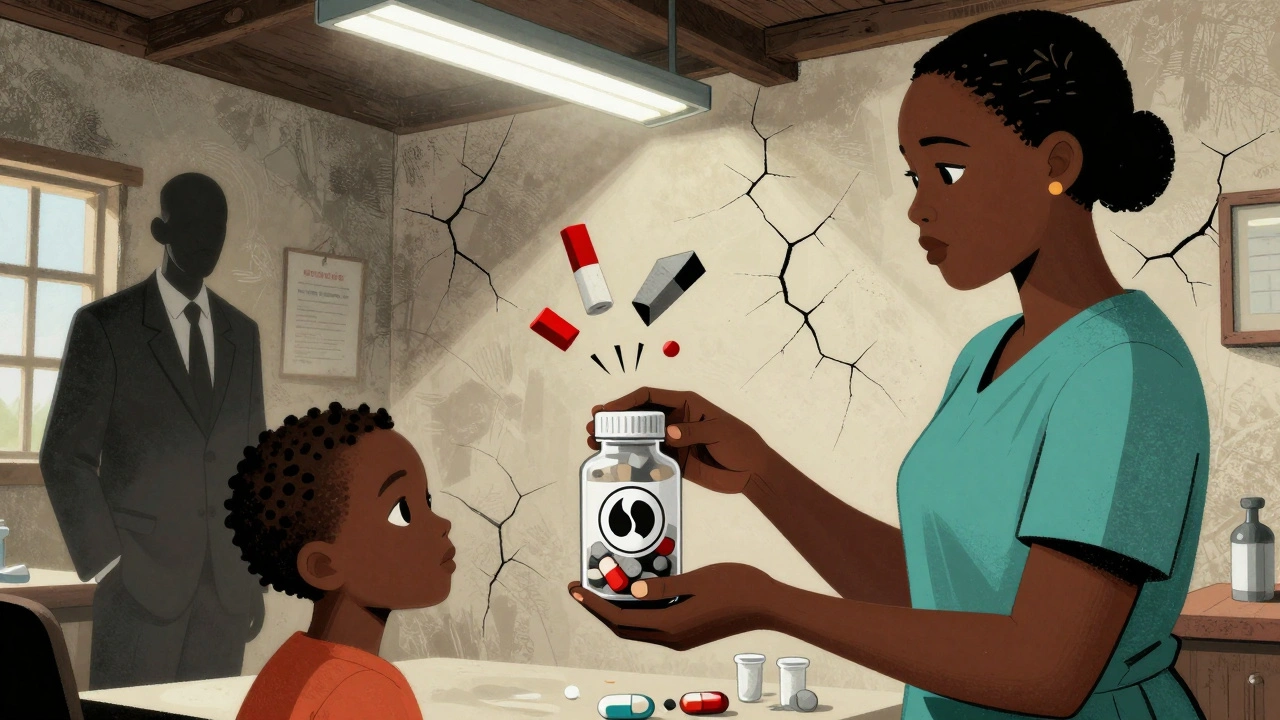
Every year, counterfeit drugs kill more children than malaria alone. In rural clinics across Africa, Asia, and Latin America, people are dying not because they lack access to medicine-but because the medicine they’re given is fake. These aren’t knockoff sneakers or fake handbags. These are pills that contain no active ingredient, or worse, toxic chemicals that poison the body. And they’re everywhere.
What Exactly Are Counterfeit Drugs?
Not all fake medicines look like junk. Many are perfect copies-same color, same logo, same packaging. The World Health Organization defines two types: substandard and falsified. Substandard drugs are real products that failed quality control-maybe they expired, got stored wrong, or were diluted. Falsified drugs are outright frauds: made in secret labs, often in China or Bangladesh, with no real medicine inside. Some have chalk, rat poison, or cement. Others have the right active ingredient but only 10% of the needed dose. Either way, they don’t work.
According to WHO data from 2025, 1 in 10 medicines in low-income countries are fake or substandard. In some regions, like parts of Southeast Asia, that number jumps to 1 in 2 for antimalarials. In West Africa, nearly 20% of all drugs tested fail basic quality checks. And it’s not just malaria pills. Cancer drugs, heart medications, antibiotics, even vaccines-all are being counterfeited.
Why Is This Happening?
The answer isn’t simple. It’s a mix of poverty, weak systems, and greed.
Legitimate medicines are expensive. In Nigeria, a full course of real artemisinin-based malaria treatment can cost $15. A fake version? $1.50. For families living on $2 a day, the choice is obvious. They don’t know they’re being scammed. They trust the pharmacy. They trust the packaging. They trust the person selling it.
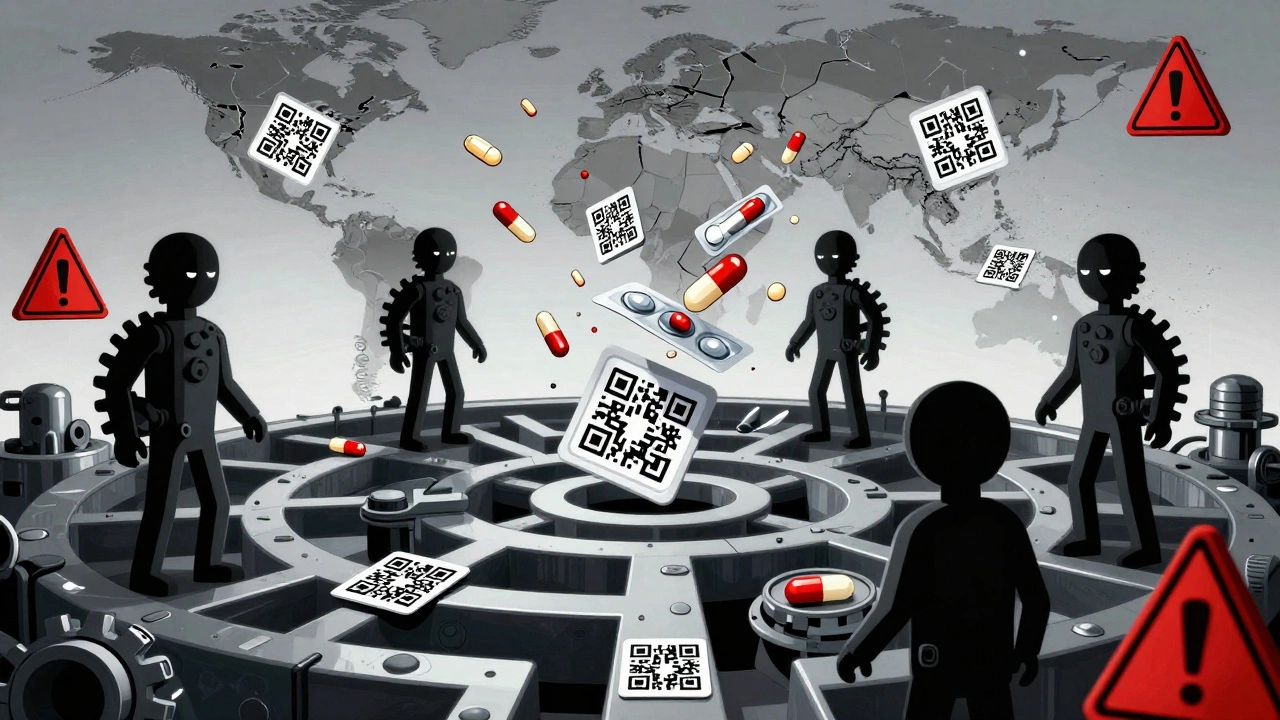
Meanwhile, the supply chain is a maze. A single pill can pass through five or six middlemen before reaching a village clinic. Each stop is a chance for substitution. A truck gets hijacked. A warehouse gets swapped. A shipment gets rerouted. By the time it gets to the patient, there’s no way to trace it back.
And the criminals? They’re smart. They use 3D printers to replicate blister packs with 99% accuracy. They fake QR codes that look real but lead nowhere. They use social media and WhatsApp to sell directly to consumers. In 2024, Interpol shut down over 13,000 websites selling fake drugs. But within weeks, new ones popped up.
The Human Cost
Numbers don’t always tell the whole story. Let’s talk about real people.
In 2012, over 200 people in Lahore, Pakistan died after being given counterfeit heart medication. The pills contained a toxic chemical used in industrial cleaners. Families buried their parents, siblings, children-all because a batch of pills was swapped in a warehouse.
In 2022, a mother in rural Kenya gave her 5-year-old daughter fake antibiotics for pneumonia. The child didn’t improve. Two weeks later, she was dead. The pharmacy owner didn’t know the pills were fake. He bought them from a distributor who bought them from a wholesaler who got them from a smuggler. No one checked.
The WHO estimates that counterfeit antimalarials alone cause more than 116,000 deaths in sub-Saharan Africa every year. The OECD says fake antibiotics are contributing to 72,000-169,000 child pneumonia deaths annually. And that’s just the tip of the iceberg. These numbers don’t include the people who survive but develop drug-resistant infections because the pills didn’t kill all the bacteria-just weakened them.
Drug resistance is the silent pandemic. When you take a fake antibiotic, you’re not just risking your life-you’re making future treatments useless for everyone.
How Do You Spot a Fake Drug?
It’s nearly impossible without tools.
Visual inspection? Only 30% effective. The packaging looks real. The color matches. The expiry date is legible. Even pharmacists can’t tell.
Some countries have launched verification systems. In Ghana, you can send a text message with a code from the pill pack to a free number. You get a reply: “Authentic” or “Fake.” The system, called mPedigree, has saved lives. But only 28% of people in low-literacy areas can use it without help. And it’s not available everywhere.
Some clinics use handheld spectrometers that scan the chemical makeup of the pill. They’re 95% accurate. But they cost $10,000. They need electricity. They need training. In 85% of rural health centers in Africa, they don’t exist.
There are cheap kits-$5-$10 tests that change color if the drug is real. They’re 70% accurate. But they’re hard to find. And even if you have one, you need to know how to use it.
The truth? Most people have no way to verify. They rely on trust. And trust is being exploited.
Who’s Behind This?
It’s not rogue pharmacies. It’s organized crime.
Chinese labs produce 78% of the high-quality fake drugs. Bangladesh, Lebanon, Syria, and Turkey are major distribution hubs. These aren’t small-time operators. These are networks with connections to human traffickers, arms dealers, and terrorist groups. The UN Office on Drugs and Crime found that 63% of seized counterfeit drug operations had ties to broader criminal enterprises.
The profit margins? Up to 9,000%. A pill that costs 2 cents to make sells for $10. Compare that to legitimate drugs, where profit is typically under 30%. No wonder criminals see this as the safest, most profitable business in the world.
And the penalties? In many countries, getting caught selling fake medicine is like getting a parking ticket. Fines are tiny. Jail time? Rare. In 2024, there were 3,658 arrests worldwide for pharmaceutical crimes. That sounds like a lot-until you realize there were over 6,400 incidents reported. Most cases never even get investigated.

What’s Being Done?
There are glimmers of hope.
In 2025, the WHO launched the Global Digital Health Verification Platform-a blockchain system that tracks every pill from factory to patient. It’s already live in 27 countries. It’s 99.9% accurate. But it’s expensive. And it only works if every player in the chain-manufacturers, distributors, pharmacies-joins in. Most don’t.
The EU is pledging €250 million by 2026 to help 30 developing nations strengthen their drug safety systems. Pfizer, through its anti-counterfeiting program, has blocked over 302 million fake doses since 2004. That’s impressive. But it’s a drop in the ocean.
Simple fixes are working too. Solar-powered verification devices are being tested in 12 African countries. They don’t need electricity. They’re cheap. And they’re being handed to community health workers-people who already visit homes and know the community. In pilot areas, counterfeit use dropped by 37%.
But progress is slow. Only 22% of pharmacies in low-income countries use any kind of verification system. In high-income countries? 98% do.
What Can You Do?
If you live in a developed country, you’re probably safe. The FDA keeps counterfeit drugs out. The system works. But if you’re traveling-or if you’re buying medicine online-you’re at risk.
Never buy drugs from websites that don’t require a prescription. Never buy from social media sellers. Never trust a deal that’s too good to be true. If a malaria pill costs $1, it’s fake.
If you’re in a developing country and you suspect a medicine is fake, report it. Talk to your local health worker. Use any verification system available-even if it’s just texting a code. And if you’re a community leader, push for training. Teach people how to spot red flags: misspelled words, blurry logos, different pill shapes than before.
And if you’re part of an organization, fund verification tools. Support local regulators. Don’t assume someone else will fix it. This isn’t a problem that will solve itself.
The Future Is Either Bright or Bleak
Right now, the counterfeit drug market is growing at 12.3% per year. Legitimate drugs? Only 5.7%. If nothing changes, by 2027, fake medicines will be worth $120 billion. By 2030, they could cause 5.7 million deaths in developing nations.
But it doesn’t have to be this way.
Technology exists. Tools are available. People are fighting back. The question is: will the world act before it’s too late?
Every fake pill sold is a death sentence. Not for one person. For generations. Because when a child dies from a fake antibiotic, the bacteria survive. And next time, that same antibiotic won’t work for anyone.
Counterfeit drugs aren’t just a health issue. They’re a justice issue. A human rights issue. And until we treat them that way, more people will keep dying.
Sam Mathew Cheriyan
December 7, 2025 AT 17:27Ted Rosenwasser
December 9, 2025 AT 00:25Helen Maples
December 10, 2025 AT 11:30David Brooks
December 10, 2025 AT 13:22Sangram Lavte
December 10, 2025 AT 21:51Oliver Damon
December 11, 2025 AT 16:03Kurt Russell
December 12, 2025 AT 06:10Stacy here
December 12, 2025 AT 22:28Kyle Flores
December 13, 2025 AT 15:29Ryan Sullivan
December 14, 2025 AT 08:00Wesley Phillips
December 14, 2025 AT 20:05Olivia Hand
December 15, 2025 AT 14:08Desmond Khoo
December 16, 2025 AT 22:32Kyle Oksten
December 18, 2025 AT 06:00