Decongestant Safety Checker
Why This Matters
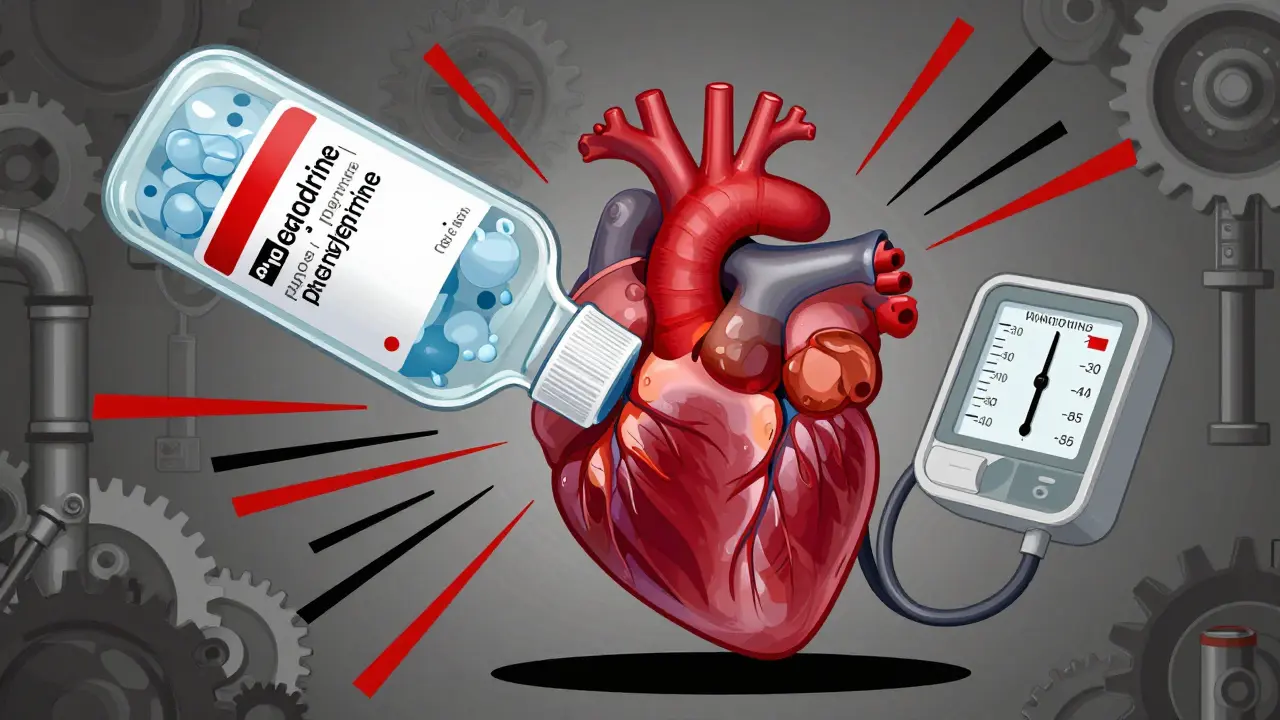
Decongestants like pseudoephedrine and phenylephrine cause blood vessel constriction, which can dangerously raise blood pressure—especially when combined with hypertension medications. Even over-the-counter products labeled for sinus pressure or colds may contain these ingredients.
This tool evaluates your specific situation based on medical guidelines from the article. Always consult your doctor or pharmacist for personalized advice.
Every winter, millions of people reach for cold and flu medicines without a second thought. But if you have high blood pressure, that little bottle of sinus relief could be silently raising your blood pressure-potentially to dangerous levels. You might not feel anything unusual. No pounding headache. No dizziness. Just a stuffy nose that’s finally clearing up. That’s the problem. The danger isn’t always obvious. It’s hidden in plain sight, tucked into multi-symptom formulas you assume are harmless.
How Decongestants Actually Work (and Why That’s a Problem)
Decongestants like pseudoephedrine and phenylephrine don’t just shrink swollen nasal passages. They tighten blood vessels everywhere-in your nose, yes, but also in your arms, legs, and heart. That’s how they work: by activating alpha-adrenergic receptors. This causes vasoconstriction, which reduces swelling and mucus buildup. But when those same receptors in your arteries get stimulated, your blood pressure rises. Your heart has to pump harder against tighter vessels. Your pulse may quicken. You might feel your heartbeat in your chest. For someone with healthy blood pressure, this is usually a minor blip. For someone already managing hypertension, it’s a red flag.
Studies show that even a single dose of pseudoephedrine can raise systolic blood pressure by 2 to 5 mm Hg on average. That might sound small, but in people with uncontrolled hypertension, it can push readings into dangerous territory. A 2023 meta-analysis in US Pharmacist found that immediate-release formulations cause sharper spikes than extended-release versions. And while most people see little change, about 5-10% of hypertensive patients experience major increases-sometimes enough to trigger chest pain, irregular heart rhythms, or even a stroke.
Which Decongestants Are the Most Dangerous?
Not all decongestants are created equal. Pseudoephedrine (found in Sudafed) has the most documented risk. It’s been studied since the early 2000s, and the data is clear: it raises blood pressure. That’s why it’s kept behind the pharmacy counter in the U.S. under the Combat Methamphetamine Epidemic Act. Pharmacists are supposed to ask if you have high blood pressure before selling it.
Phenylephrine, now the most common decongestant in OTC products after pseudoephedrine was restricted, was once thought to be safer. But recent research challenges that assumption. A 2023 case report in US Pharmacist described a 5-year-old girl whose blood pressure jumped to 135/80 after taking phenylephrine for four days. Her numbers returned to normal once she stopped. That’s not an isolated case. Many adults with hypertension have reported similar spikes after using products labeled “phenylephrine-based.”
Other culprits include:
- Naphazoline and oxymetazoline (Afrin nasal sprays)-these can cause rebound congestion and systemic absorption, especially with overuse.
- Ephedrine-rarely used now, but still found in some dietary supplements and older formulas.
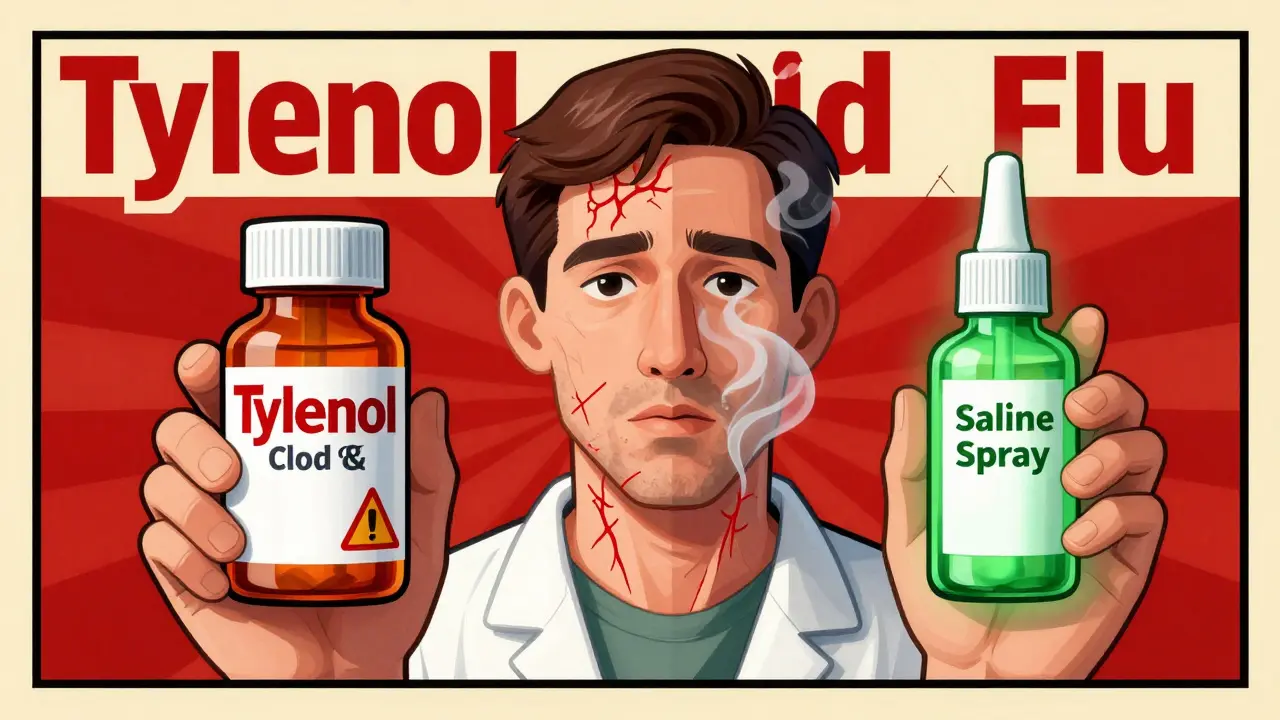
And here’s the catch: you won’t always know you’re taking them. They’re hidden in dozens of multi-symptom cold and flu products. Tylenol Cold & Flu, Advil Multi-Symptom, Benadryl Allergy Plus Congestion, and Mucinex Sinus Max all contain decongestants. If you’re taking one of these for a cold, you’re not just treating congestion-you’re potentially interfering with your blood pressure meds.
How Decongestants Interfere With Your Blood Pressure Meds
It’s not just about raising blood pressure directly. Decongestants can also make your prescribed medications less effective. Beta-blockers, ACE inhibitors, diuretics, and calcium channel blockers all work to lower blood pressure. But when a decongestant forces your blood vessels to constrict, it’s like trying to fill a leaky bucket while the faucet is on full blast. Your meds are doing their job, but the decongestant is undoing it.
Some interactions are even more dangerous. If you’re taking an MAOI (like Nardil or Marplan) for depression, mixing it with a decongestant can cause a life-threatening surge in blood pressure. The same goes for tricyclic antidepressants like amitriptyline. These combinations can cause sudden, severe hypertension, rapid heartbeat, or even a heart attack. That’s why pharmacists are trained to ask about your full medication list-not just your blood pressure pills.
Who’s at the Highest Risk?
Not everyone with high blood pressure reacts the same way. But certain groups are far more vulnerable:
- People with uncontrolled hypertension-if your BP is consistently above 140/90, avoid decongestants entirely.
- Those with heart disease-including past heart attacks, heart failure, or angina.
- People with Prinzmetal angina-a rare form of chest pain caused by artery spasms. Decongestants can trigger these spasms.
- Those with kidney disease or glaucoma-both conditions can be worsened by vasoconstriction.
- Elderly patients-they’re more likely to be on multiple medications and may not realize how OTC drugs interact with them.
Even if your blood pressure is “controlled,” you’re not off the hook. A 2023 Harvard Health report found that individual responses vary wildly. One person might see no change. Another might jump 20 points. That’s why monitoring is key.
What to Do Instead: Safe Alternatives for Congestion
You don’t need a decongestant to breathe better. There are safer, proven ways to clear your nose:
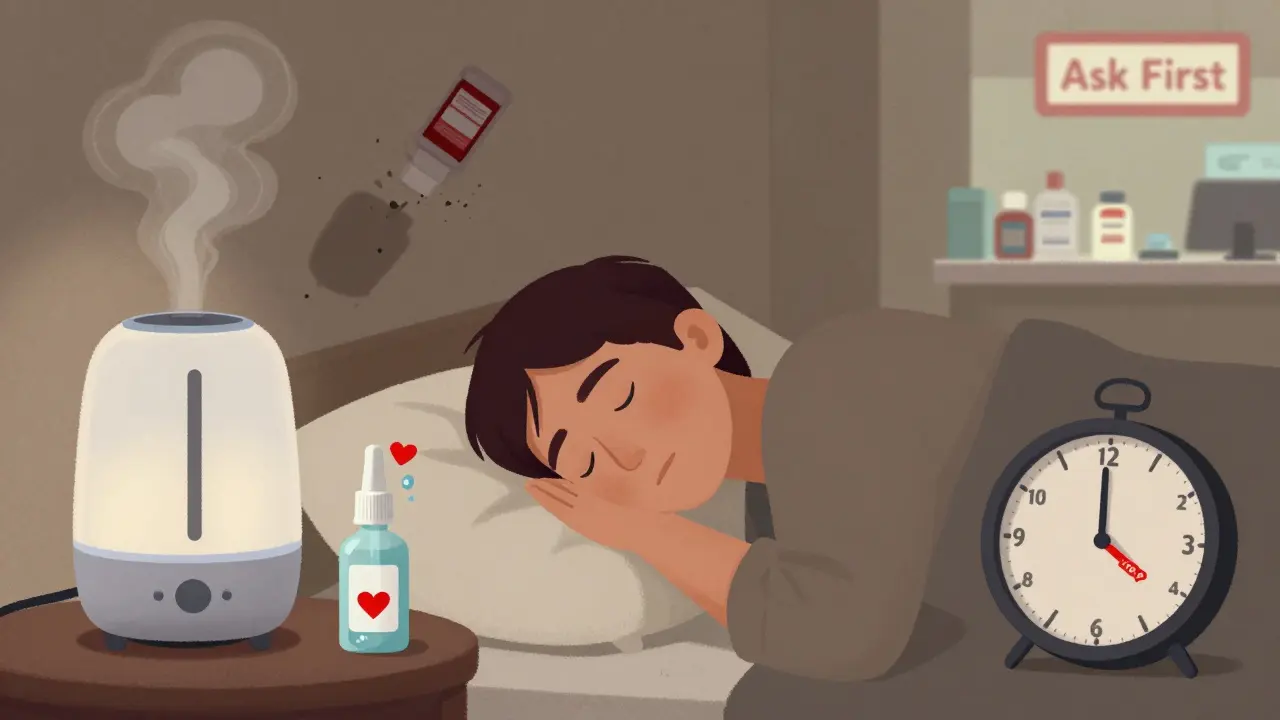
- Saline nasal sprays-these are saltwater solutions that moisturize and flush out mucus. No drugs. No side effects. Use as often as needed.
- Steam inhalation-breathe in warm, moist air from a bowl of hot water (add a drop of eucalyptus if you like). Cover your head with a towel to trap the steam. Do this 2-3 times a day.
- Humidifiers-dry air makes congestion worse. Adding moisture to your bedroom at night helps.
- Antihistamines without decongestants-like loratadine (Claritin) or cetirizine (Zyrtec). These help with allergy-related congestion but won’t raise blood pressure.
- Elevating your head while sleeping-this reduces nasal swelling overnight.
Even these alternatives need caution. Some antihistamines can cause drowsiness, which might affect your balance or interact with other meds. Always check with your pharmacist or doctor before starting anything new.
How to Read Labels Like a Pro
The biggest mistake people make? Assuming “cold medicine” means “safe.” OTC products are designed to treat multiple symptoms at once. That’s why you’ll find decongestants in products labeled for sinus pressure, cough, allergy, or even nighttime sleep aids.
Here’s how to scan a label quickly:
- Look for these ingredients: pseudoephedrine, phenylephrine, ephedrine, naphazoline, oxymetazoline.
- Check the “Active Ingredients” section-not the brand name.
- Watch out for “-D” or “-D” in the name: Tylenol Cold & Flu = contains decongestant. Tylenol Cold = does not.
- Read the sodium content. Some liquid cold medicines use sodium chloride as a preservative. Too much salt can also raise blood pressure.
When in doubt, don’t guess. Take the bottle to your pharmacist. They’ll check it against your meds and tell you if it’s safe.
When to Call Your Doctor
If you’ve taken a decongestant and notice any of these symptoms, stop the medicine and contact your doctor immediately:
- Severe headache
- Chest pain or pressure
- Heart palpitations or irregular heartbeat
- Shortness of breath
- Sudden vision changes
- Confusion or dizziness
Even if you feel fine, if you’ve been taking a decongestant for more than 3-5 days, it’s time to talk to your provider. Long-term use can lead to rebound congestion and worsen underlying conditions.
Why This Problem Keeps Happening
Despite warnings on every bottle, about 15% of hypertensive patients still use decongestants, according to the American Society of Health-System Pharmacists. Why? Because they don’t realize the medicine they’re taking contains a decongestant. They think, “It’s just a cold remedy.” Or, “I’ve taken this before and nothing happened.”
But your body changes. Your blood pressure changes. Your meds change. What was safe last year might not be safe now. The American Heart Association’s “Medication Check-Up” campaign launched in 2022 specifically targets this gap. Their message is simple: Just because it’s available without a prescription doesn’t mean it’s safe for everyone.
Pharmacists are on the front lines. In Canada, where pseudoephedrine is still available over the counter, pharmacists are trained to ask about blood pressure before dispensing. In the U.S., behind-the-counter rules mean you have to talk to someone. Use that moment. Tell them you’re on blood pressure medication. Ask: “Is this safe for me?”
Bottom Line: Don’t Risk It
If you have high blood pressure, decongestants aren’t worth the gamble. The small relief they offer isn’t worth the risk of a spike in blood pressure, a heart event, or a stroke. There are safer, effective ways to manage congestion-ones that won’t undo the work of your blood pressure meds.
Check every label. Talk to your pharmacist. Use saline sprays and steam. And if you’re ever unsure-skip it. Your heart will thank you.
Emma Duquemin
December 30, 2025 AT 04:13I used to pop Sudafed like candy during winter until my BP spiked to 170/105 and I nearly passed out in the grocery store. No warning. No symptoms. Just… boom. Now I keep saline spray in every bag, my car, my desk. It’s not glamorous, but it works. And I actually breathe better without that chemical buzz. If you’re on meds, don’t gamble with your heart. Your future self will thank you.
Also, side note: I started using a humidifier and it’s like my sinuses finally got a vacation. Best $30 I ever spent.
Duncan Careless
December 30, 2025 AT 17:58Just read this and thought of my dad. He’s 72, on three different BP meds, and still grabs those ‘cold & flu’ packs like they’re candy. Never checks the label. I printed out a little cheat sheet with the bad ingredients and taped it to his medicine cabinet. He still rolls his eyes… but last week he asked me if ‘Mucinex Sinus Max’ had phenylephrine. Progress, i guess.
Samar Khan
December 31, 2025 AT 09:43OMG I just took a Mucinex-D yesterday 😭😭😭 my heart was racing and I thought I was having a panic attack but it was the phenylephrine 😭 my bp was 158/94 😭 why do they even sell this?? 🤮我妈说这药是毒药 🤬
Russell Thomas
January 2, 2026 AT 02:29Oh wow. So you’re telling me that the thing I’ve been using since college to get through work meetings… is basically a slow-motion heart attack in a bottle? Wow. I feel like a genius. Thanks for the wake-up call, Dr. Google. I’ll just keep taking it and hope for the best. My boss doesn’t care if I’m breathing through my mouth - he just wants the TPS reports.
Also, saline spray? That’s what they’re selling now? I thought we were past the Stone Age of nasal care.
Joe Kwon
January 2, 2026 AT 05:23Great breakdown - this is exactly the kind of pharmacovigilance we need in OTC spaces. The systemic vasoconstrictive effect of alpha-1 agonists is well-documented in the literature, but consumer awareness remains abysmal. I’ve seen patients on beta-blockers with uncontrolled HTN who don’t realize that ‘-D’ on the label means ‘danger.’
Also, sodium content in liquid formulations is a silent killer - many don’t realize that 10mL of some syrups can contain 100+ mg NaCl. For renal-compromised patients, that’s a double whammy.
Pro tip: Use a pill organizer with ‘safe’ vs. ‘unsafe’ compartments. Makes it visual. Works wonders.
Nicole K.
January 3, 2026 AT 05:38People are so stupid. You think a cold is worth dying for? Just don’t take it. Simple. If you can’t read a label, maybe you shouldn’t be allowed to buy medicine. My grandma died from this exact thing. Don’t be her.
Fabian Riewe
January 4, 2026 AT 20:44Man, I’m so glad I stumbled on this. I’ve been using Afrin for years - ‘just a few sprays’ - and never thought twice. Now I’m switching to saline and a neti pot. Also, humidifier on full blast. Honestly? I feel way better. No more that jittery, wired feeling after a spray. My wife says I’ve been less grumpy too. Win-win.
Also, shoutout to pharmacists. They’re the real MVPs. Next time I’m in, I’m buying them a coffee.
Sharleen Luciano
January 4, 2026 AT 21:08How is this even still a conversation? The science has been settled since 2005. Anyone who doesn’t know this is either willfully ignorant or was raised in a cave. You don’t need a degree to read a label - just basic literacy and a functioning brain. I’m genuinely shocked this needs to be said in 2025. The fact that people still think ‘OTC’ means ‘safe for everyone’ is a public health tragedy.
Also, ‘saline spray’? How quaint. You’re treating a vascular condition with a toddler’s nasal rinse. Maybe try actual medicine - like, I don’t know, *not taking decongestants*?
Jim Rice
January 6, 2026 AT 01:58Actually, I think this whole thing is overblown. I’ve been taking pseudoephedrine for 15 years with high BP and I’m fine. My doctor even told me it’s okay if I monitor. You people are scared of everything. Next you’ll say water is dangerous for diabetics. Wake up. The real problem is that people don’t trust their own bodies anymore. If you feel fine, you’re fine. Stop letting Big Pharma scare you into buying saline sprays.