Supplement Interaction Checker
Check Your Potential Interactions
Enter the medications and supplements you're taking. This tool helps you identify potential interactions, but is not a substitute for professional medical advice.
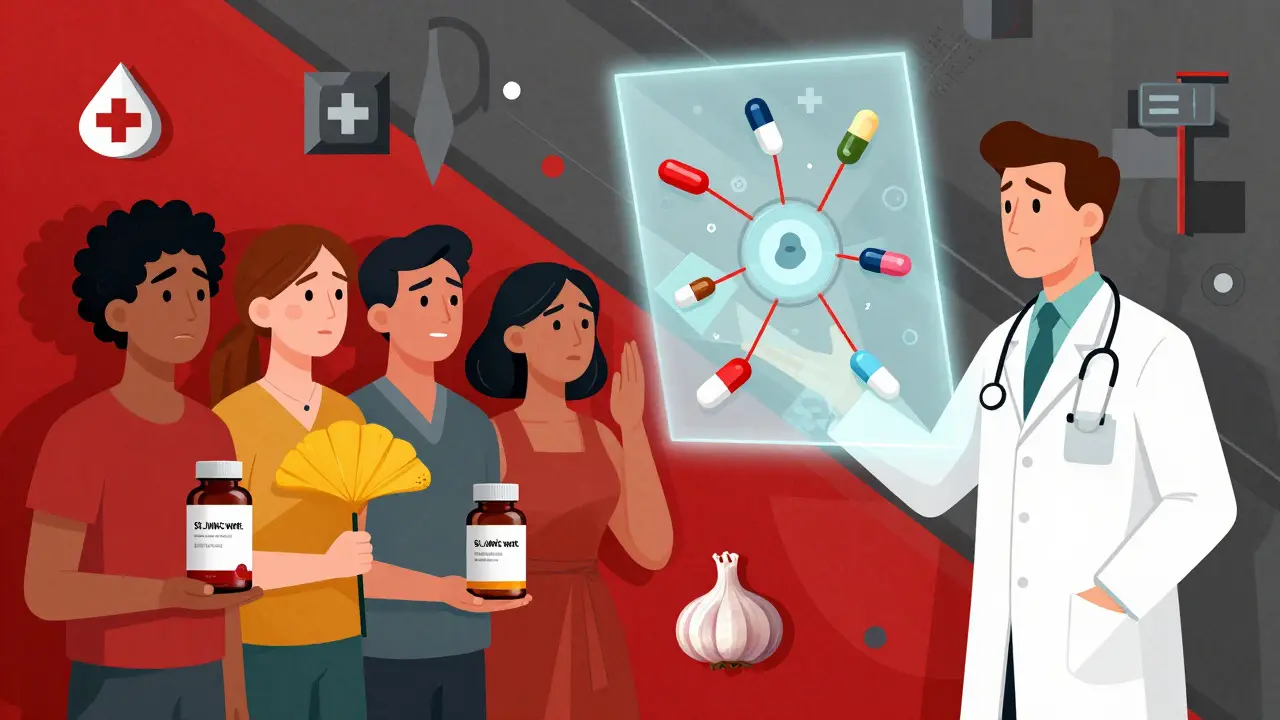
Most people think if it’s natural, it’s safe. But that’s not true. You might be taking ginseng for energy, St. John’s wort for mood, or glucosamine for your knees-and not telling your doctor. You’re not alone. In fact, 77% of American adults use dietary supplements, and more than half have chronic conditions like high blood pressure, diabetes, or heart disease. Yet, only about one in three people tell their doctor about them. That’s not just an oversight-it’s a risk.
Why Your Doctor Needs to Know What You’re Taking
Supplements aren’t like vitamins you take to fill a gap. Many are powerful. St. John’s wort, for example, can cut the effectiveness of birth control pills, blood thinners, antidepressants, and even some cancer drugs by up to 57%. Ginkgo biloba, often taken for memory, can cause dangerous bleeding when mixed with warfarin or aspirin. Garlic supplements can lower blood pressure so much that they interfere with anesthesia during surgery. These aren’t hypothetical risks-they’re documented cases that show up in emergency rooms every day. The FDA doesn’t test supplements before they hit the shelf. Unlike prescription drugs, which go through years of clinical trials, supplements are sold under a 1994 law that lets manufacturers skip safety and efficacy reviews. The agency can only act after something goes wrong. In 2022, there were over 16,900 reported adverse events linked to supplements-though experts say less than 1% of actual incidents are ever reported. If your doctor doesn’t know you’re taking something, they can’t see the full picture. And that’s when mistakes happen.The Disclosure Gap: Why People Stay Silent
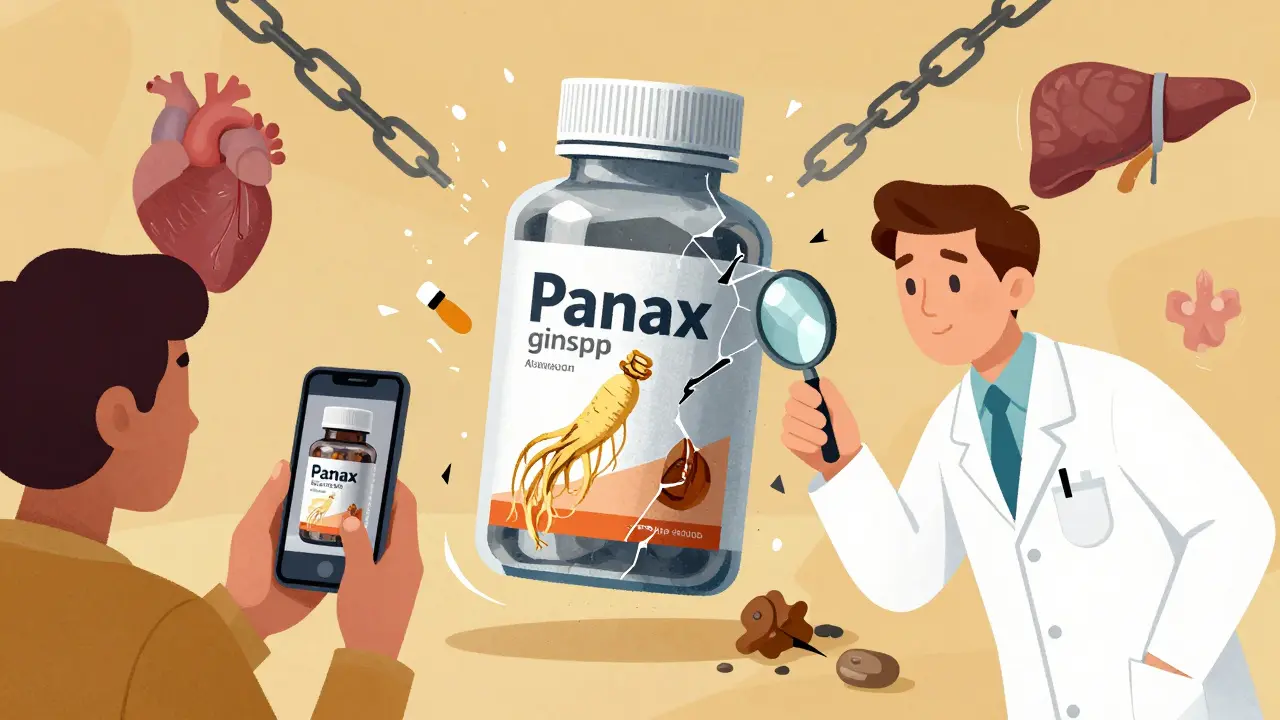
Many patients don’t tell their doctors because they assume their provider won’t care. Or worse-they think their doctor will judge them. A 2022 survey found that 68% of patients felt dismissed when they brought up supplements. Others believe natural means harmless. One patient told the AMA Journal of Ethics: “I didn’t think my doctor needed to know about ‘natural’ stuff.” That’s the dangerous myth. Providers aren’t always better prepared. Medical students get less than three hours of training on supplements during four years of school. Many doctors don’t know the names of common herbs, their dosages, or how they interact with medications. When a patient says “I take ginseng,” the doctor might not know whether it’s Panax ginseng or American ginseng-two different plants with different effects. Without specifics, there’s no way to check for risks.How to Talk to Your Care Team-Without Feeling Awkward
The problem isn’t just patients hiding information. It’s also that doctors rarely ask. Research shows that when providers use open-ended questions, disclosure jumps from 29% to 72%. Here’s how to make it easy:- Don’t wait for them to ask. Bring it up during your first visit: “I’ve been taking a few supplements to help with my energy and sleep. Can we talk about whether they’re safe with my other meds?”
- Use clear language. Say “supplements,” “herbs,” “natural products,” or “vitamins you don’t get from food.” Avoid saying “I just take a little something.”
- Bring the bottle. Or take a photo of the Supplement Facts label. That way, your doctor sees the exact ingredient, dosage, and brand.
- Be specific. “Ginseng” isn’t enough. Say “Panax ginseng, 400 mg daily.”
- Include everything-even if you think it’s minor. Peppermint oil, echinacea, fish oil, turmeric, melatonin-all of them can interact.
One nurse practitioner in Toronto started asking: “What supplements or natural products are you taking that your pharmacist might not know about?” Disclosure in her practice doubled within six months. The key? Making it normal. Not weird. Not judgmental. Just part of the conversation.
What Your Provider Should Do
It’s not just your job to speak up. Providers need to ask-and document properly. The American Medical Association now recommends screening for supplement use at every visit. Hospitals across the U.S., including major ones in Toronto and Vancouver, have started requiring it on admission forms. But it’s still not standard everywhere. Good documentation includes:- Exact name of the product (e.g., “Ashwagandha (Withania somnifera)”)
- Dosage and frequency (e.g., “500 mg twice daily”)
- Reason for use (e.g., “for anxiety” or “for joint pain”)
- Where it was purchased (retail store, online, imported)
- Any side effects noticed
Electronic health records now have tools to flag interactions. Epic Systems, one of the largest EHR platforms, is adding a dedicated supplement module in mid-2024 that will automatically check for 1,200 known drug-supplement interactions. But that only works if the data is entered. If you say “vitamin D,” and the system doesn’t know the dose, it won’t catch anything.
Common Supplements with High Risk, Low Disclosure
Some products are used by millions but rarely disclosed. Here are the top offenders based on national survey data:| Supplement | Common Use | Disclosure Rate | Key Risk |
|---|---|---|---|
| St. John’s wort | Depression, anxiety | 8.4% | Reduces effectiveness of birth control, SSRIs, blood thinners, and cancer drugs |
| Ginkgo biloba | Memory, circulation | 12.7% | Increases bleeding risk with warfarin, aspirin, NSAIDs |
| Garlic | Heart health, immunity | 10.9% | Can lower blood pressure too much, interfere with anesthesia |
| Echinacea | Cold prevention | 18.9% | May interact with immune-suppressing drugs |
| Glucosamine/chondroitin | Joint pain | 22.3% | May affect blood sugar in diabetics, interact with blood thinners |
| Green tea extract | Weight loss, antioxidants | 15.1% | Can cause liver damage at high doses |
These aren’t outliers. They’re common. And they’re dangerous when taken with prescription drugs.
What You Can Do Right Now
You don’t need to wait for your next appointment. Start today:- Go through your medicine cabinet. Write down every supplement, herb, or natural product you take-even if you haven’t used it in a while.
- Take a photo of each label. Include the Supplement Facts panel.
- Check your prescription list. Are you taking blood thinners, antidepressants, diabetes meds, or heart drugs? Those are the ones most likely to interact.
- Call your pharmacy. Ask them to run a check for interactions between your prescriptions and supplements. Many offer this for free.
- Next time you see your doctor, say: “I’ve been taking a few things on my own. I want to make sure they’re safe with what you’ve prescribed.”
There’s no shame in taking supplements. Many people use them to feel better, manage stress, or support their health. But safety comes from transparency-not secrecy.
What’s Changing-and What’s Next
There’s movement to fix this. The FDA launched the Dietary Supplement Ingredient Database (DSID-5) in January 2023, which gives providers verified ingredient amounts for 650 supplements. The Supplement Safety Act, introduced in March 2023, would require manufacturers to list all products with the FDA-a step toward accountability. And more hospitals are making supplement screening mandatory. But the biggest change has to come from you. Until patients start speaking up, and providers start asking, the risk stays the same. And that’s a risk no one should take.Do I really need to tell my doctor about vitamins and fish oil?
Yes. Even common supplements like fish oil, vitamin D, or multivitamins can interact with medications. Fish oil, for example, can thin the blood and increase bleeding risk if you’re on warfarin or aspirin. Vitamin D can affect calcium levels, which matters if you have kidney disease or take certain heart medications. You can’t assume they’re harmless just because they’re sold over the counter.
What if my doctor says supplements are a waste of money?
You don’t need their approval-you need their awareness. Some doctors dismiss supplements because they lack training, not because they’re ineffective. If they respond dismissively, say: “I’m not asking if they work-I’m asking if they’re safe with my other meds.” That shifts the conversation from opinion to safety. If they still won’t engage, consider asking for a referral to a pharmacist or integrative care provider who specializes in interactions.
Are natural products safer than prescription drugs?
No. “Natural” doesn’t mean safe. Many prescription drugs are derived from plants-like aspirin from willow bark or morphine from poppies. The difference is, those drugs are tested for dosage, purity, and interactions. Supplements aren’t. A 2015 study found over 23,000 emergency room visits each year were linked to dietary supplements. That’s more than many prescription drugs. Safety comes from regulation, not origin.
Can I trust supplement labels?
Not always. A 2022 analysis by Consumer Reports found that 20% of supplements didn’t contain the ingredient listed on the label, and 15% had hidden pharmaceuticals. Some “natural” weight-loss products contained banned stimulants. Even reputable brands can have inconsistencies. That’s why bringing the bottle or photo to your provider matters-it’s the only way to know what’s actually in it.
I take supplements because I don’t trust pharmaceuticals. How do I reconcile that?
It’s okay to have concerns about pharmaceuticals. But supplements aren’t an alternative-they’re a complement. And they can interfere with the very treatments you’re trying to avoid side effects from. For example, if you’re on blood pressure medication and take garlic supplements to lower it naturally, you might end up with dangerously low pressure. The goal isn’t to choose between natural and pharmaceutical. It’s to use both safely, together. Your care team can help you find the right balance.
Where can I find reliable information on supplement interactions?
The Natural Medicine Database and the National Institutes of Health’s Office of Dietary Supplements offer evidence-based, free resources. Your pharmacist is also a trusted source-they see drug-supplement interactions daily. Avoid relying on websites selling supplements; they often have a financial interest in promoting use. Stick to unbiased, science-backed sources.
Jeane Hendrix
January 6, 2026 AT 12:07I’ve been taking ashwagandha for anxiety and fish oil for my joints-never told my doc because I thought it was ‘just supplements.’ But after reading this, I took a pic of the bottles and brought it to my next appointment. She actually asked follow-up questions. Wild, right? I didn’t even know she’d know what ashwagandha was. Turns out she’s been asking everyone lately. Maybe we’re finally breaking the stigma.
Also, I started keeping a little notebook. Name, dose, why. It’s dumb but helpful. Like, I didn’t realize I was taking two things that both lower blood pressure. Oops.
Gabrielle Panchev
January 6, 2026 AT 18:03Let’s be real-this whole ‘natural equals safe’ myth is a marketing scam cooked up by wellness influencers who’ve never cracked open a pharmacology textbook. St. John’s wort? It’s a CYP3A4 inducer-period. It doesn’t ‘interfere’ with SSRIs-it actively accelerates their metabolism, rendering them useless. And don’t get me started on green tea extract: hepatotoxic at doses over 800mg, yet sold in 1,200mg capsules with zero warning. The FDA? They’re asleep at the wheel. The 1994 DSHEA law is a disaster. We’re not talking about ‘vitamins’-we’re talking about unregulated psychoactive compounds sold next to protein powder in gas stations. And people wonder why ERs are full?
Venkataramanan Viswanathan
January 8, 2026 AT 07:47In India, we have a long tradition of Ayurveda and herbal remedies. Many people take turmeric, neem, or triphala daily. But here’s the thing-we also respect our doctors. When I was in medical school, we were taught to ask patients: ‘What are you taking from home?’ Not as a judgment, but as part of the history. Even if it’s ‘just’ ginger tea. Because in a patient on warfarin, ginger can be dangerous. I’ve seen it. So I appreciate this post. It’s not about rejecting tradition-it’s about integrating it safely. Knowledge is power, not fear.
Kiran Plaha
January 8, 2026 AT 20:54I never thought about how garlic supplements could mess with anesthesia. I take them for colds. My mom had surgery last year and they had to delay it because her blood was too thin. Turns out she was taking garlic pills every day. She didn’t think it mattered. Now she keeps a list. So do I. Simple. Just write it down. It’s not hard.
Matt Beck
January 9, 2026 AT 18:21So… we’re all just living in a simulation where corporations sell us ‘natural’ snake oil while doctors are too busy to care? 🤔
And yet… we still think we’re ‘in control’ because we ‘chose’ the supplement. But who controls the label? Who controls the narrative? Who controls the FDA’s budget? 🤯
It’s not about supplements. It’s about trust. And we’ve lost it. Everywhere.
Also, I took a photo of my bottle. Now I feel like a spy. 😎
Kelly Beck
January 10, 2026 AT 12:56Y’all, I’m so proud of how many of you are starting to speak up about this! 🙌 Seriously-taking a photo of your supplement bottle? Writing it down? Bringing it to your appointment? That’s HUGE. You’re not being ‘weird’-you’re being smart. And you’re helping your doctor do their job better. I used to think ‘vitamin D’ was harmless. Then I found out it can mess with my thyroid meds. Now I bring the bottle. No shame. Just safety. And if your doctor rolls their eyes? Smile and say, ‘I just want to make sure we’re all on the same page.’ You’ve got this. 💪❤️
Katie Schoen
January 12, 2026 AT 07:15My doctor asked me about supplements once. I said ‘Oh, just melatonin.’ She said, ‘How much?’ I said ‘A little.’ She said, ‘You’re on 5mg. That’s a high dose. You’re probably sleeping too hard and waking up groggy.’ I didn’t know that. So I cut it to 1mg. Now I sleep like a baby and I’m not a zombie in the morning.
Point is: doctors aren’t mind readers. But they’re not idiots either. Just tell them. It’s not that hard.
Tiffany Adjei - Opong
January 13, 2026 AT 13:30Okay but let’s be honest-this whole post is just fearmongering dressed up as ‘health advice.’ You say ‘77% of Americans take supplements’ like that’s a crisis. It’s not. It’s called self-care. And yes, some supplements interact-but so do coffee, grapefruit, and kale. Do we ban those too? No. We educate. But instead, we act like people who take turmeric are dangerous criminals. Meanwhile, big pharma is selling pills with side effect lists longer than War and Peace. But hey, at least they’re ‘regulated.’ 🙄
Also, ‘natural’ doesn’t mean safe? Tell that to poison ivy. Or botulism. Or hemlock. Nature is full of killers. But we don’t demonize plants. We learn. Maybe we should stop treating supplements like witchcraft and start treating them like science.
Ryan Barr
January 15, 2026 AT 02:00Supplements are unregulated. End of story. Don’t be naive.
Cam Jane
January 16, 2026 AT 05:50As a nurse, I’ve seen this too many times. Patient on blood thinners takes ginkgo because ‘it’s good for circulation.’ Then they come in with a subdural hematoma. No one’s to blame-it’s just a gap. But here’s what works: I started handing out little cards that say ‘Bring your supplements’ with a checklist. Patients love it. It’s not scary-it’s practical. And guess what? Disclosure went from 25% to 80% in my clinic. Why? Because we made it easy. No judgment. Just a card. You can do this too. Print one. Tape it to your fridge. Bring it to your next visit. You’re not a burden. You’re a partner.
Dana Termini
January 18, 2026 AT 00:44I used to think if it was sold in a health food store, it was fine. Then I found out my ‘natural’ energy pill had caffeine and synephrine-both banned in some countries. I didn’t know. And I felt stupid. But now I check everything on NIH’s website before I buy. And I always tell my doctor. It’s not about trusting labels. It’s about trusting yourself enough to ask. And that’s okay.