DOAC Dosing Calculator for Renal Impairment
Important: Apixaban ABC Rule
For apixaban, use reduced dose (2.5 mg twice daily) if you meet at least two of these criteria:
- Age ≥ 80 years
- Body weight ≤ 60 kg
- Serum creatinine ≥ 1.5 mg/dL
This applies even if your CrCl is normal. Always check these criteria before dosing.
When your kidneys aren’t working well, taking a blood thinner can be risky. That’s why DOACs - direct oral anticoagulants like apixaban, rivaroxaban, dabigatran, and edoxaban - need careful dosing in people with kidney problems. These drugs replaced warfarin for many patients because they’re easier to use: no weekly blood tests, fewer food interactions, and more predictable effects. But here’s the catch: your kidneys clear most of these drugs from your body. If your kidneys are weak, the medicine builds up. Too much? Risk of dangerous bleeding. Too little? Risk of stroke or clot. Getting this right isn’t optional - it’s life-or-death.
Why Renal Impairment Changes Everything
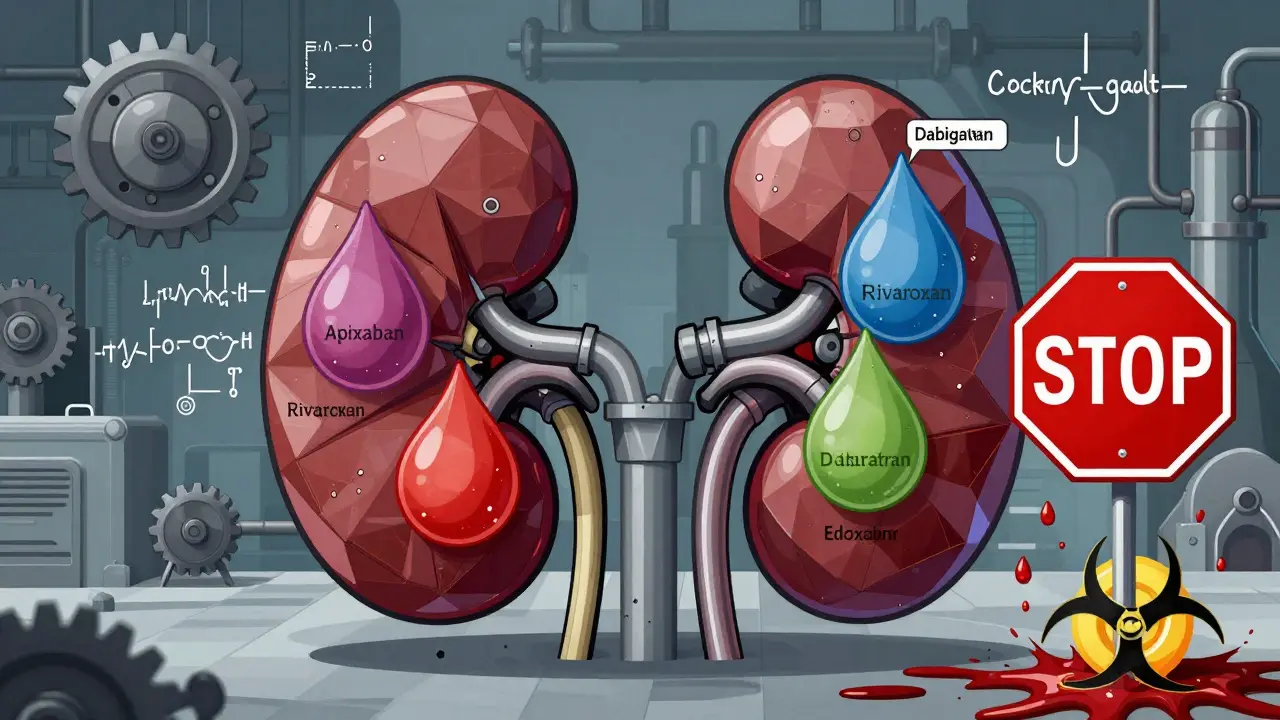
About 1 in 3 people with atrial fibrillation (AF) also have chronic kidney disease. That’s not a coincidence. The same aging, high blood pressure, and diabetes that damage your heart often damage your kidneys too. DOACs were designed to be safer than warfarin - and they are, for most people. But in advanced kidney disease, that safety advantage disappears if the dose isn’t adjusted. The problem isn’t just about how much you take. It’s about how your body handles it. Apixaban is mostly cleared by the liver. Rivaroxaban? About one-third is cleared by the kidneys. Dabigatran? Almost all of it. Edoxaban? Nearly half. So if your kidneys are failing, some DOACs stick around much longer than they should. That’s why the same dose that works for a 50-year-old with healthy kidneys can be deadly for an 80-year-old with stage 4 kidney disease.The Only Formula That Matters: Cockcroft-Gault
You’ll hear doctors talk about eGFR - estimated glomerular filtration rate. It’s the number on your lab report. But here’s what no one tells you: do not use eGFR to adjust DOAC doses. The FDA, the American Heart Association, and the European Society of Cardiology all say: use the Cockcroft-Gault formula. Why? Because eGFR was developed for general kidney function tracking, not for dosing medications. Cockcroft-Gault uses your age, weight, sex, and serum creatinine to estimate creatinine clearance (CrCl) - and that’s what the drug labels are based on. The formula looks like this: CrCl (mL/min) = [(140 - age) × weight (kg) × (0.85 if female)] / (72 × serum creatinine mg/dL) For example: a 78-year-old woman weighing 55 kg with a creatinine of 1.4 mg/dL? Her CrCl is around 28 mL/min. That’s severe kidney impairment. If she’s on rivaroxaban, she shouldn’t take it at all. If she’s on apixaban, she needs the low dose. If she’s on dabigatran, she needs the reduced dose - but only if her CrCl is above 15. Below that? No DOACs are approved.Dosing Rules for Each DOAC
Each drug has its own rules. Mix them up, and you risk harm. Here’s what you need to know:- Apixaban (Eliquis): Standard dose is 5 mg twice daily. Reduce to 2.5 mg twice daily if you meet at least two of these: age 80+, body weight ≤60 kg, or serum creatinine ≥1.5 mg/dL. It’s the only DOAC that can still be used in patients on dialysis - but only at the reduced dose. Never use full dose in someone with CrCl under 15 mL/min.
- Rivaroxaban (Xarelto): 20 mg once daily is standard. Reduce to 15 mg once daily if CrCl is 15-49 mL/min. Do not use if CrCl is below 15 mL/min. It’s not safe on dialysis.
- Dabigatran (Pradaxa): Standard is 150 mg twice daily. Reduce to 75 mg twice daily if CrCl is 15-30 mL/min. Not approved below 15 mL/min. Even at reduced doses, bleeding risk rises sharply in advanced kidney disease.
- Edoxaban (Savaysa): Standard is 60 mg once daily. Reduce to 30 mg once daily if CrCl is 15-50 mL/min. Not approved below 15 mL/min. Studies show it becomes less effective in advanced CKD.
Apixaban stands out. It’s the only DOAC with enough data to support use in patients on hemodialysis. A 2023 study of 127 dialysis patients on apixaban 2.5 mg twice daily showed major bleeding in only 1.8% per year - far better than warfarin’s 3.7%. That’s why many nephrologists now prefer it in end-stage kidney disease.
What Happens When Dosing Goes Wrong
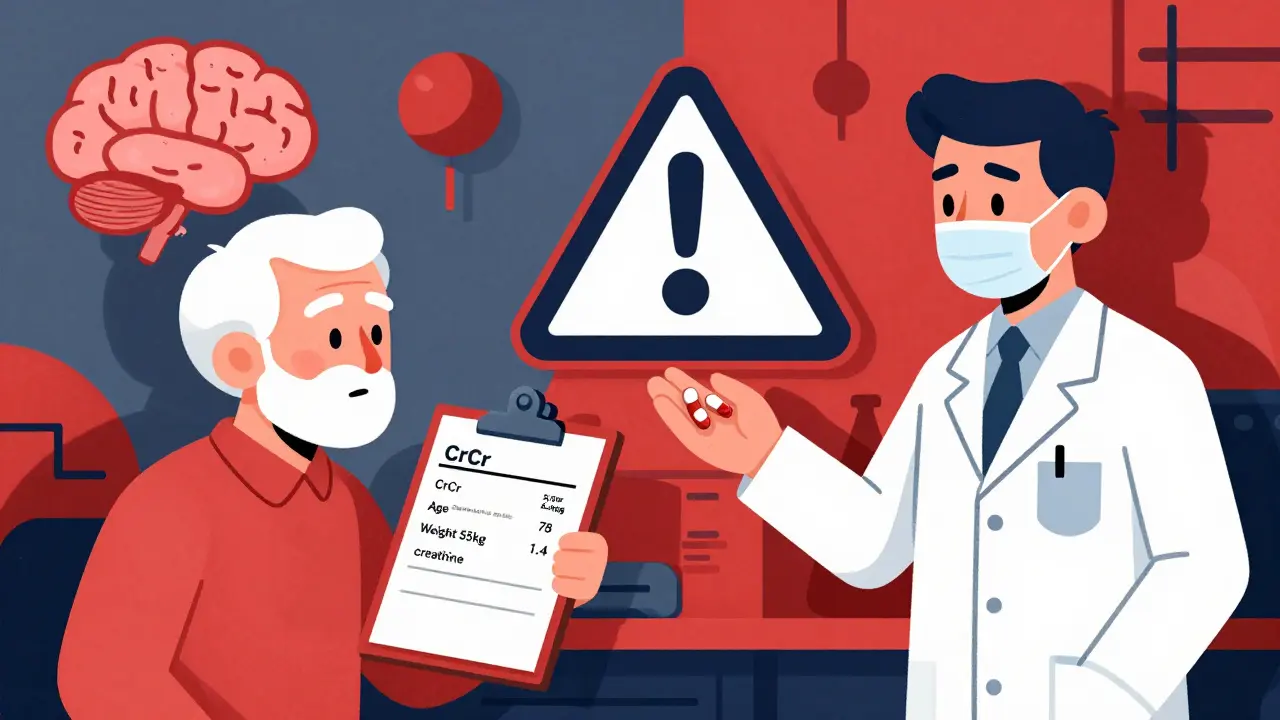
In a 2022 study of over 1,500 patients with kidney disease on DOACs, nearly 4 out of 10 had the wrong dose. Most were on too much - not too little. Why? Doctors often assume a patient’s eGFR is enough. Or they forget the weight or age criteria for apixaban. Or they don’t realize that a 60-year-old woman weighing 58 kg with a creatinine of 1.4 still qualifies for the reduced dose. The results? Life-threatening bleeds. GI bleeds. Brain bleeds. In one case, a 78-year-old man on full-dose apixaban (5 mg twice daily) had a fatal gastrointestinal bleed. He met two criteria for dose reduction - age and creatinine - but no one checked his weight. He weighed 57 kg. He should have been on 2.5 mg. On the flip side, underdosing is just as dangerous. A patient with CrCl of 25 mL/min on a reduced dose of rivaroxaban might think they’re safe - but if they’re not taking enough, they’re at higher risk of stroke. One study found that patients on subtherapeutic DOAC doses had a 3.5 times higher risk of stroke than those on the right dose.When to Avoid DOACs Altogether
There are times when no DOAC is safe:- CrCl under 15 mL/min - all DOACs are contraindicated except apixaban, which can be used at reduced dose.
- Severe liver disease - especially if it affects clotting factors.
- Active bleeding or recent major surgery.
- Patients on strong P-gp inhibitors like ketoconazole or cyclosporine - these can spike DOAC levels dangerously.
Warfarin still has a role here. For patients on dialysis with CrCl under 15 mL/min, warfarin remains an option. But it’s not ideal. Studies show higher rates of intracranial bleeding and calcium buildup in blood vessels compared to apixaban. Still, if apixaban isn’t available or affordable, warfarin with careful INR monitoring (target 2-3) is better than nothing.
What You Should Do
If you or someone you care for has kidney disease and needs a blood thinner, here’s what to ask for:- Ask for your CrCl - not just eGFR. Make sure it’s calculated using Cockcroft-Gault.
- Ask which DOAC is being prescribed - and why.
- Ask if the dose matches your age, weight, and creatinine level.
- Ask if you’re on dialysis - and whether the drug is approved for that.
- Ask for a copy of the dosing chart from your pharmacist.
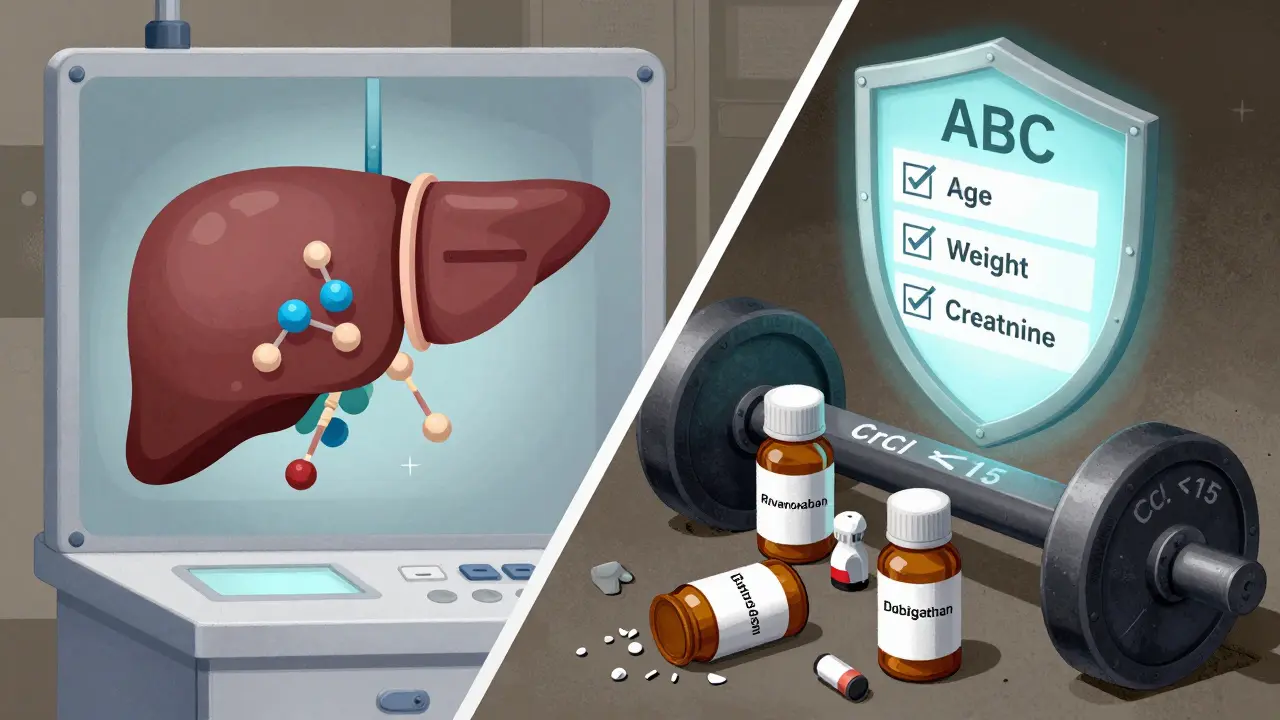
Use the ABCs for apixaban: Age ≥80? Body weight ≤60 kg? Creatinine ≥1.5 mg/dL? If two or more apply, you need the lower dose. Write it down. Show it to your doctor. Don’t assume they know.
The Future Is Coming - But Not Yet
Two big trials are wrapping up in 2025. The RENAL-AF trial is comparing apixaban to warfarin in patients with severe kidney disease. The AXIOS trial, though stopped early, is releasing data on apixaban’s effects in dialysis patients. We may finally get clear answers on which drug is safest in end-stage kidney disease. Until then, stick to the rules. Apixaban at 2.5 mg twice daily is the most evidence-backed choice for advanced kidney disease. Avoid rivaroxaban and dabigatran if CrCl is below 30. Never use edoxaban in dialysis. And never, ever rely on eGFR alone.Doctors are human. Pharmacies are busy. You’re the only one who knows your body. If something feels off - unusual bruising, dark stools, dizziness - speak up. A simple dose check could save your life.
Can I take a DOAC if I’m on dialysis?
Yes - but only apixaban, and only at the reduced dose of 2.5 mg twice daily. Rivaroxaban, dabigatran, and edoxaban are not approved for use in patients on dialysis. Apixaban is cleared mostly by the liver, so it’s safer when kidneys aren’t working. Studies show it has lower bleeding rates than warfarin in dialysis patients when used correctly.
Why can’t I just use eGFR to adjust my DOAC dose?
eGFR was designed to track general kidney health, not to guide medication dosing. DOAC dosing guidelines are based on creatinine clearance (CrCl) calculated using the Cockcroft-Gault formula. Using eGFR can lead to over- or under-dosing. For example, eGFR often overestimates kidney function in elderly or underweight patients, making them appear healthier than they are. That’s why the FDA and major guidelines require Cockcroft-Gault for DOACs.
Is apixaban really safer than warfarin in kidney disease?
In patients with moderate to severe kidney impairment (CrCl 15-50 mL/min), apixaban has been shown to cause fewer major bleeds than warfarin. In dialysis patients, early data suggests apixaban at 2.5 mg twice daily has similar or lower bleeding risk than warfarin. Warfarin carries a higher risk of brain bleeds and blood vessel calcification in advanced kidney disease. But warfarin is still used when apixaban isn’t available or affordable.
What if I’m over 80 and weigh less than 60 kg - do I need a lower dose even if my kidneys are fine?
Yes. For apixaban, you need the reduced dose (2.5 mg twice daily) if you meet at least two of these: age 80 or older, body weight 60 kg or less, or serum creatinine 1.5 mg/dL or higher. This isn’t about kidney function - it’s about how your body handles the drug. Even with normal CrCl, these factors increase your risk of bleeding. Many doctors miss this rule. Always check.
How often should my kidney function be checked if I’m on a DOAC?
At least once a year. But if you have moderate to severe kidney disease, or if you’re over 75, take other medications that affect kidney function, or have unstable health, check every 3 to 6 months. Kidney function can change quickly - especially after a hospital stay, infection, or dehydration. A drop in CrCl from 40 to 25 mL/min means your DOAC dose may need to change immediately.
Ryan Cheng
December 27, 2025 AT 09:14Just want to say this post is gold. I’m a nurse in a nephrology clinic and I see this mistake ALL the time - doctors relying on eGFR alone. I’ve had to step in twice last month alone to correct apixaban doses because the chart said ‘eGFR 38’ but Cockcroft-Gault showed CrCl at 22. Patient was on full dose. Scary stuff.
Always double-check weight and age too. That 58kg 78-year-old woman? She’s not ‘just a little small’ - she’s in the reduced-dose zone. Write it down. Stick it on the chart. Save lives.
christian ebongue
December 29, 2025 AT 06:11so eGFR is useless for doacs huh. wow. who knew. 🤦♂️
Alex Ragen
December 30, 2025 AT 13:31One must wonder - is this merely a pharmacological dilemma, or is it emblematic of a deeper epistemological rupture in modern medicine? We have reduced the body to a series of numerical abstractions - eGFR, CrCl, mg/dL - while the patient, that sacred, ineffable entity, is rendered mute beneath the weight of algorithmic orthodoxy.
Apixaban, 2.5 mg… a quantified palliative for a system that has forgotten how to listen. The kidneys don’t merely ‘clear’; they whisper. And we? We deafen them with spreadsheets.
Lori Anne Franklin
December 30, 2025 AT 20:54my grandma is on apixaban and her doc just used eGFR and gave her the full dose… she started bruising like crazy. i had to google this stuff myself and bring the cockcroft-gault formula to her next appt. she’s now on 2.5mg and feels way better.
pls dont be like my doc 😭
Bryan Woods
December 31, 2025 AT 23:04Well-articulated and clinically sound. The emphasis on Cockcroft-Gault over eGFR is not only guideline-aligned but essential for patient safety. I’ve observed similar discrepancies in institutional prescribing patterns, particularly among non-specialists. This level of detail should be included in mandatory CME modules for primary care providers.
Additionally, the mention of apixaban’s utility in dialysis patients is a critical update - many still default to warfarin out of habit rather than evidence.
wendy parrales fong
January 1, 2026 AT 01:30thank you for writing this. i was so scared when my dad got diagnosed with kidney disease and afib. i thought he’d have to take warfarin and get poked every week.
now i know apixaban at 2.5mg is okay and we can actually have a normal life. i printed out the dosing chart and taped it to the fridge. we’re going to be okay.
you made me feel less alone.
Jeanette Jeffrey
January 2, 2026 AT 18:57Oh wow. Another ‘guide’ for people who can’t do basic math. Congrats, you’ve turned a simple drug into a fucking spreadsheet. Who cares if your CrCl is 28? Just give the low dose. Everyone knows that. Why do we need 2000 words to say ‘don’t be dumb’?
Also, ‘apixaban is safest’? Sure. Until the next study says otherwise. Medicine is a guessing game with better branding now.
Shreyash Gupta
January 4, 2026 AT 08:35in india we dont even have access to doacs most of the time... warfarin is all we got. and even then, labs are closed on weekends. so what do you suggest? 😔
also why is everyone obsessed with cockcroft-gault? i thought creatinine clearance was outdated? 🤔