Fall Risk Medication Assessment Tool
Medication Risk Assessment
This tool helps you assess fall risk based on the sedating medications you're taking. Select all medications you're currently using from the list below.
Every year, more than 36 million older adults in the U.S. fall - and nearly 32,000 of them die from it. Falls aren’t just accidents. For many, they’re the quiet result of a medication that was never meant to be taken long-term. Sedating drugs like benzodiazepines, opioids, antidepressants, and muscle relaxants are often prescribed to manage pain, anxiety, or insomnia. But they don’t just calm the mind - they slow the body. And when balance, reaction time, and awareness start slipping, a simple trip to the bathroom can turn deadly.
What Makes a Medication a Fall Risk?
Not all medications are equal when it comes to fall risk. The ones that cause the most trouble are called Fall Risk Increasing Drugs (FRIDs). These include:
- Benzodiazepines (like diazepam, lorazepam)
- Antidepressants (especially tricyclics like amitriptyline)
- Opioids (oxycodone, hydrocodone, morphine)
- Antipsychotics (quetiapine, risperidone)
- Muscle relaxants (baclofen, cyclobenzaprine - with baclofen having the highest documented risk in its class)
- Sedatives and hypnotics (zolpidem, eszopiclone)
- Antihypertensives (especially when doses are too high or changed too fast)
It’s not just the drug itself - it’s how it hits the body. These medications can cause dizziness, low blood pressure when standing (orthostatic hypotension), confusion, slow reflexes, and blurred vision. Even one of these drugs can double a person’s fall risk. Take two or more? The risk multiplies.
Polypharmacy - taking three or more medications daily - is one of the biggest red flags. A 2021 study found that older adults on five or more medications had nearly triple the fall risk compared to those on one or none. And many of these meds are prescribed without ever asking: Is this still necessary?
The STEADI-Rx Model: A Proven System for Safer Prescribing
The CDC’s STEADI (Stopping Elderly Accidents, Deaths & Injuries) initiative, expanded in 2018 to include pharmacist-led medication reviews (STEADI-Rx), offers a clear, step-by-step approach. It’s not theory - it’s working in community pharmacies across the country.
Here’s how it works in practice:
- Screen: Use a simple tool to ask: Have you fallen in the past year? Do you feel unsteady? Do you worry about falling?
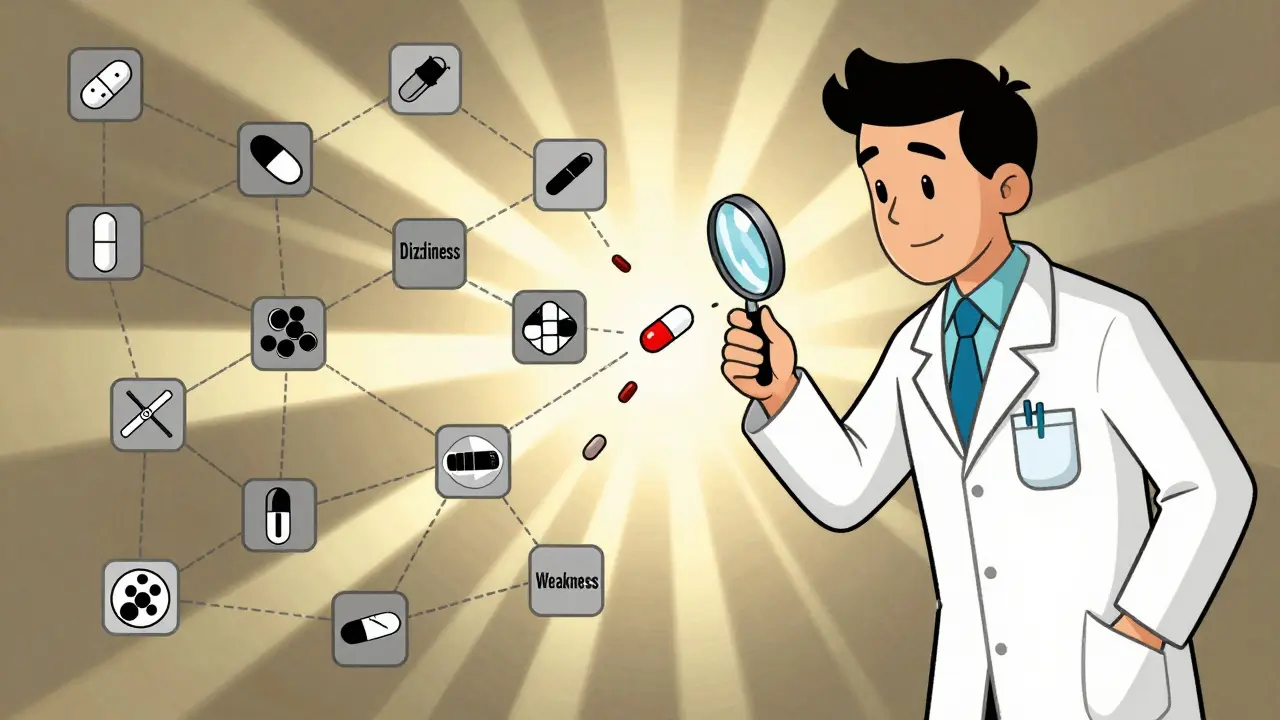
- Assess: Review every medication. Look for FRIDs. Check for drug interactions. Ask how long each drug has been taken.
- Intervene: Work with the prescriber to reduce, switch, or stop risky meds - not just cut them.
What’s powerful about STEADI-Rx is that it’s not just the doctor’s job. Pharmacists are on the front lines. They see the full list of meds, catch duplicates, spot dangerous combinations, and talk to patients in ways doctors often can’t. In one study, 75% of pharmacist recommendations involved switching a sedating drug to a safer alternative - not just stopping it.
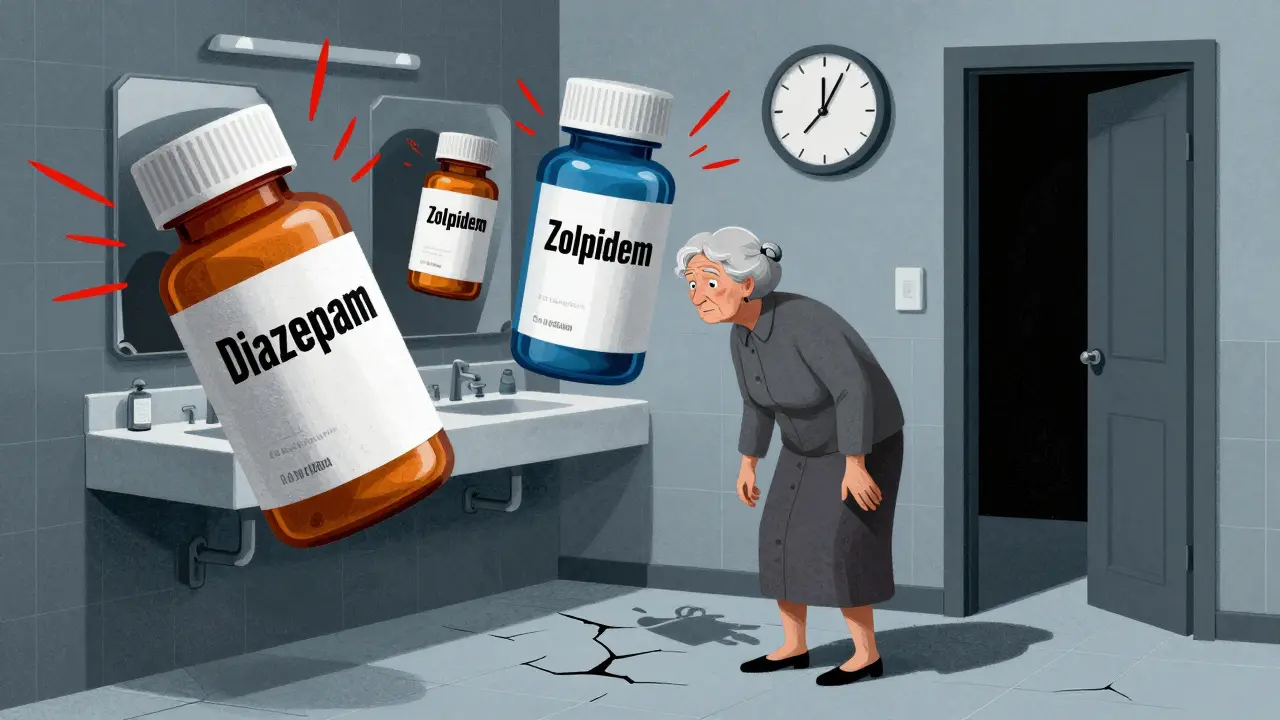
For example: A 78-year-old woman on diazepam for anxiety and zolpidem for sleep was falling twice a week. Her pharmacist flagged both as high-risk FRIDs. After a slow taper and referral to cognitive behavioral therapy for insomnia, her falls stopped completely within six months.
Medication Review Alone Isn’t Enough - But It’s the Starting Point
Some people think: If I just stop the meds, I’ll be fine. But stopping sedating drugs cold turkey can be dangerous. Withdrawal from benzodiazepines can cause seizures. Opioid withdrawal brings intense pain, nausea, and anxiety. Depression can flare if antidepressants are pulled too fast.
The key is structured deprescribing. That means:
- Reducing dose slowly, over weeks or months
- Monitoring for rebound symptoms
- Replacing the medication’s function with non-drug solutions
For sleep: Try sleep hygiene, CBT-I (cognitive behavioral therapy for insomnia), or melatonin instead of zolpidem.
For anxiety: Exercise, mindfulness, or talk therapy can be as effective as benzodiazepines - without the dizziness.
For pain: Physical therapy, heat/cold therapy, or acetaminophen may replace opioids - especially if the pain isn’t severe.
And here’s the hard truth: 63% of older adults say they’ve tried to stop a sedating medication but couldn’t - because their doctor wouldn’t help, or they were afraid of the symptoms coming back. That’s why support matters. A pharmacist who walks you through the process makes all the difference.
Exercise and Vitamin D: The Other Half of the Equation
Medication review is powerful - but it’s not the whole story. The U.S. Preventive Services Task Force and the American Geriatrics Society both agree: Exercise is the most effective single intervention for preventing falls.
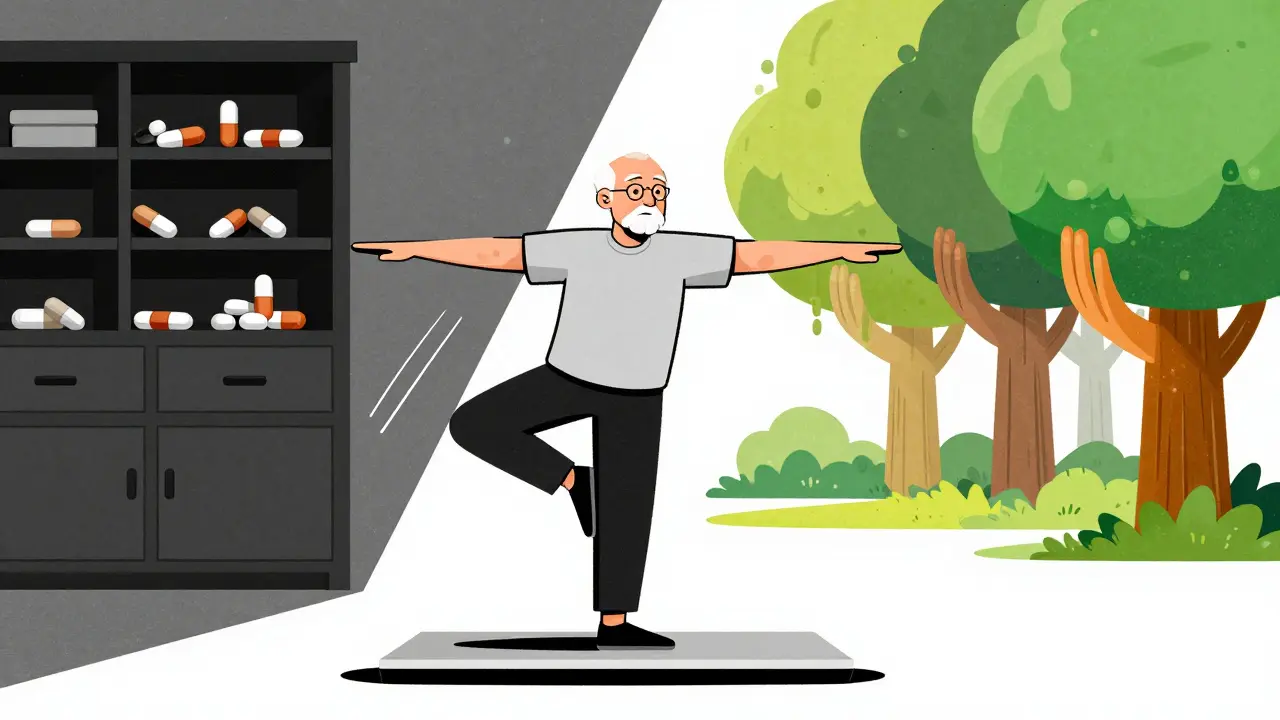
What kind? Balance training. Strength work. Gait practice. Programs that combine all three, done 2-3 times a week for at least 12 weeks, reduce falls by 15-29%. They cut fractures by 61%. That’s not small. That’s life-changing.
And vitamin D? The evidence is mixed. The USPSTF recommends 800 IU daily. Some studies say it helps. Others say it doesn’t. But for people with low levels - common in older adults who don’t get outside - 1,000 IU daily is a safe, low-cost step that might help.
The real win? Combining medication review with exercise. One study showed that when both were used together, fall risk dropped more than either alone. A person who stops a sedating med but still can’t stand on one foot? Still at risk. A person who does daily balance exercises but keeps taking lorazepam? Still at risk. Do both? The risk plummets.
Why This Isn’t Happening Everywhere
So why aren’t all older adults getting this care?
First, time. Primary care doctors see 20+ patients a day. Reviewing 10+ medications for one person takes 20 minutes - maybe more. Pharmacists want to help, but 82% say they believe medication reviews reduce falls - and only 45% have enough time to do them right.
Second, resistance. Some doctors are reluctant to change meds they’ve prescribed for years. Some patients think their sleeping pill is the only thing keeping them sane. And insurance? Most plans don’t pay for pharmacist-led medication reviews unless you’re in a specific program.
Third, no standard. There’s no universal checklist. No electronic alert in every EHR that says: This patient is on three FRIDs. Fall risk: HIGH.
But change is coming. The CDC’s STEADI toolkit is now used by 78% of state health departments. The American Society of Consultant Pharmacists has certified over 1,200 geriatric pharmacotherapy specialists since 2022. And in 2023, the CDC added new guidance for safely tapering benzodiazepines - a major step forward.
What You Can Do Right Now
If you or someone you care for is over 65 and taking any sedating medication, here’s what to do:
- Get the full list of meds. Include vitamins, supplements, and over-the-counter drugs like diphenhydramine (Benadryl) - which is a powerful sedative.
- Ask the pharmacist. Take the list to your pharmacy. Ask: Are any of these linked to falls? Pharmacists are trained to spot FRIDs.
- Ask the doctor. Say: Is this medication still necessary? Is there a safer option? Don’t be afraid to challenge a prescription.
- Start moving. Join a SilverSneakers class. Do chair yoga. Walk with a cane if needed. Even 10 minutes a day of balance work helps.
- Track falls. Keep a simple log: When? Where? What were you doing? Did you feel dizzy before? This helps your care team see patterns.
There’s no magic pill to stop falls. But there are proven steps. And they start with asking the right questions - about the pills you’re taking, and the way you move.
Can stopping a sedating medication really reduce falls?
Yes - and often dramatically. Studies show that removing one or more fall-risk increasing drugs can cut fall rates by 30-50% in older adults. For example, switching from a benzodiazepine like diazepam to non-drug treatments for anxiety or insomnia has led to complete cessation of falls in multiple real-world cases. The key is doing it slowly and with medical supervision to avoid withdrawal effects.
Which medications are the most dangerous for falls?
Baclofen (a muscle relaxant), benzodiazepines (like lorazepam), and opioids (like oxycodone) carry the highest documented risk. Antidepressants - especially tricyclics like amitriptyline - are also high-risk because they cause dizziness and low blood pressure. Even over-the-counter antihistamines like diphenhydramine (Benadryl) can be dangerous for older adults. The Beers Criteria, updated every three years by the American Geriatrics Society, lists all these as potentially inappropriate for seniors.
Is vitamin D supplementation effective for fall prevention?
The evidence is mixed. The U.S. Preventive Services Task Force recommends 800 IU daily for older adults at risk of falls. A Cochrane review found no significant benefit overall, but other studies show improvement in people with low vitamin D levels - which is common in seniors who stay indoors. Taking 1,000 IU daily is safe for most and may help, especially if you don’t get sunlight or eat fortified foods.
Can pharmacists help me stop a sedating medication?
Absolutely. Pharmacists trained in geriatric care can review your full medication list, identify fall-risk drugs, and work with your doctor to create a safe tapering plan. Programs like STEADI-Rx empower pharmacists to use a Provider Consult Form to communicate directly with prescribers. Many community pharmacies now offer Medication Therapy Management (MTM) services at no extra cost to Medicare beneficiaries.
What if my doctor won’t change my medication?
Ask for a referral to a geriatrician or a pharmacist specializing in older adults. Bring printed evidence - like the CDC’s STEADI guidelines or the Beers Criteria - to your appointment. You can also request a medication review through your pharmacy’s MTM program. If you’re in a nursing home, federal rules require fall risk assessments and medication reviews. Don’t accept silence - your safety matters.
How long does it take to see results after changing medications?
Improvement can start within days or weeks - especially if dizziness or confusion is caused by a drug. For example, switching from a long-acting benzodiazepine to a non-sedating alternative often leads to better balance within 1-2 weeks. But full benefits, like improved strength from exercise, take 8-12 weeks. The key is consistency: stick with the new plan, track changes, and follow up with your care team.
Sue Stone
January 23, 2026 AT 23:55My grandma took lorazepam for years. One day she just stopped walking right. We didn’t connect it until she fell in the kitchen. Took her 6 months to get back up. This post? Needed.
Stacy Thomes
January 24, 2026 AT 01:14STOPPED BENZOS. STARTED WALKING. NO MORE FALLS. I’M 72. I’M STRONGER THAN MY PRESCRIPTION.
YOU CAN TOO.
Andrew Smirnykh
January 25, 2026 AT 05:03I’m a nurse in rural Ohio. We see this all the time. Grandpa on 8 meds, all for sleep or pain. His wife says he’s ‘just getting old.’ But when we did a med review? He was on two FRIDs that were making him dizzy. Switched him to melatonin and physical therapy. Now he’s gardening again. It’s not magic. It’s just care.
Sallie Jane Barnes
January 25, 2026 AT 20:48As someone who has spent over two decades advocating for geriatric safety, I must say this is one of the most clinically accurate summaries I’ve encountered in a public forum. The STEADI-Rx model is not merely a guideline-it is an ethical imperative. Pharmacists, as frontline clinicians, must be empowered with time, training, and reimbursement to conduct comprehensive medication reviews. The data is unequivocal: polypharmacy in older adults is a public health crisis, and deprescribing is not abandonment-it is stewardship. We owe our elders more than convenience. We owe them dignity.
Kerry Evans
January 26, 2026 AT 04:43Everyone’s blaming the meds. But let’s be real-most of these people are just lazy. If they’d get off the couch and do real exercise instead of whining about their prescriptions, they wouldn’t fall. I’ve seen 80-year-olds lift weights. You think a little dizziness is an excuse? No. It’s weakness. And weakness is a choice.
Vanessa Barber
January 27, 2026 AT 15:02Actually, I think this is all hype. My aunt took zolpidem for 15 years and never fell once. Meanwhile, her neighbor who ‘stopped everything’ broke her hip doing yoga. Sometimes the meds are the only thing keeping people functional. Maybe the real problem is we’re pushing old people to do too much?
Oladeji Omobolaji
January 28, 2026 AT 06:23Here in Nigeria, we don’t even have access to most of these drugs. Our elderly take ginger tea and walk barefoot to market. They fall less. Maybe we need less medicine and more movement. Not more pills to fix the pills.
dana torgersen
January 28, 2026 AT 10:05Okay, but… have you considered… that maybe the body just… needs… to… slow… down…? Like… maybe… falling… isn’t… the… enemy…? Maybe… it’s… the… system… that’s… broken…? We… don’t… need… to… ‘prevent’… falls… we… need… to… build… softer… floors… and… less… pressure… to… be… ‘productive’… at… 80…?!
Anna Pryde-Smith
January 29, 2026 AT 12:54My mother’s doctor told her to ‘just cut the diazepam’ and walked out. She had seizures. Now she’s in a nursing home. This isn’t advice-it’s a death sentence if you don’t have a team. Why is it so hard to get help? Because no one gets paid to care. And that’s criminal.
Janet King
January 31, 2026 AT 12:01Medication review should be standard for all adults over 65 during annual wellness visits. Pharmacists should be reimbursed for MTM services under Medicare Part D. Electronic health records must include automated FRID flags. These are not suggestions. They are necessary clinical safeguards. The CDC’s STEADI-Rx framework is evidence-based and scalable. Implementation is a matter of policy, not possibility.
Dawson Taylor
February 1, 2026 AT 19:51Medication is a tool. Exercise is a practice. Both require intention. The tragedy isn’t the pills-it’s the silence around them. We don’t ask. We don’t listen. We just keep writing scripts. And then we wonder why people fall.
Laura Rice
February 3, 2026 AT 08:43OMG I JUST REALIZED MY DAD’S ON THREE OF THESE. HE’S BEEN TAKING AMITRIPTYLINE FOR ‘SLEEP’ SINCE 2010. I’M TAKING HIS MED LIST TO THE PHARMACY TOMORROW. HE’S BEEN SAYING HE FEELS ‘CLOUDY’ BUT I THOUGHT IT WAS JUST AGING. THIS POST JUST GAVE ME A MIRACLE. THANK YOU. I’M CRYING. I’M SO GLAD I READ THIS. I’M GOING TO MAKE HIM DO CHAIR YOGA WITH ME. WE’RE STARTING TOMORROW. I LOVE HIM. AND I’M NOT LETTING HIM FALL.