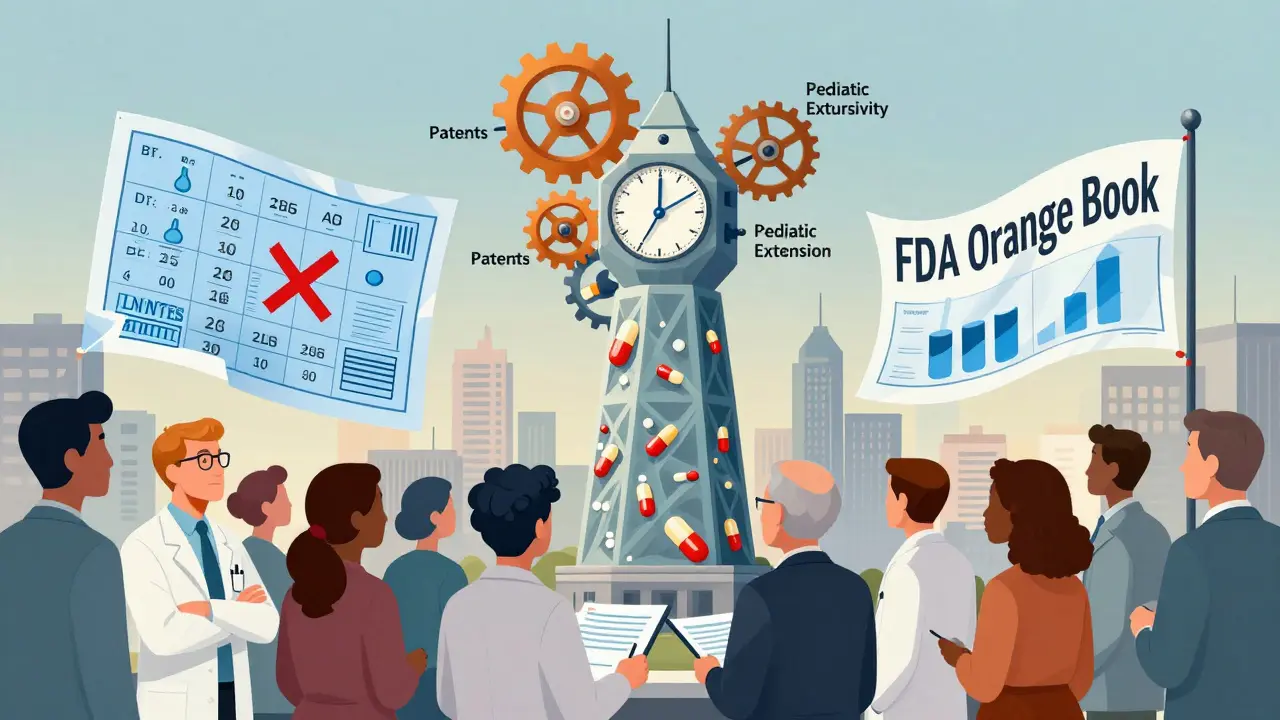
The FDA Orange Book is the single most important tool for anyone trying to figure out when a brand-name drug will open up to generic competition. If you're a pharmacist, a generic drug manufacturer, a patient waiting for a cheaper version of your medication, or even a researcher tracking drug pricing trends, knowing where to find patent expiration dates in the Orange Book saves time, money, and guesswork. But it’s not as simple as typing in a drug name and seeing a date. There are layers, exceptions, and hidden traps that can mislead even experienced users.
What the FDA Orange Book Actually Is
The FDA Orange Book, officially called Approved Drug Products with Therapeutic Equivalence Evaluations, is not just a list of approved drugs. It’s a legal registry created by the Hatch-Waxman Act of 1984 to balance innovation and access. Brand-name companies get patent protection, but the system also gives generic makers a clear path to enter the market once those protections expire. The Orange Book lists every small-molecule drug approved by the FDA, along with the patents tied to them and any regulatory exclusivity periods.It’s not a patent database. It’s not a drug safety record. It’s a map of legal barriers to generic entry. And the expiration dates you see here are the countdown clocks for when generics can legally launch.
Where to Find Patent Expiration Dates
The easiest way to find patent expiration dates is through the Electronic Orange Book on the FDA’s website. Here’s how to do it step by step:- Go to the Electronic Orange Book.
- Search by the brand name (like "Brilinta"), active ingredient (like "ticagrelor"), or application number.
- Click on the Application Number link for the drug you’re looking up.
- Scroll to the bottom of the page and click View under "Patents and Exclusivity."
- You’ll see a table listing each patent number, its expiration date, and the patent use code.
For example, if you look up Brilinta (ticagrelor), you’ll see multiple patents listed with expiration dates ranging from 2018 to 2021. But don’t stop there. You also need to check the "Exclusivity Expiration Date"-this is separate from patents and can delay generic entry even if all patents have expired.
Understanding the Numbers: What the Dates Really Mean
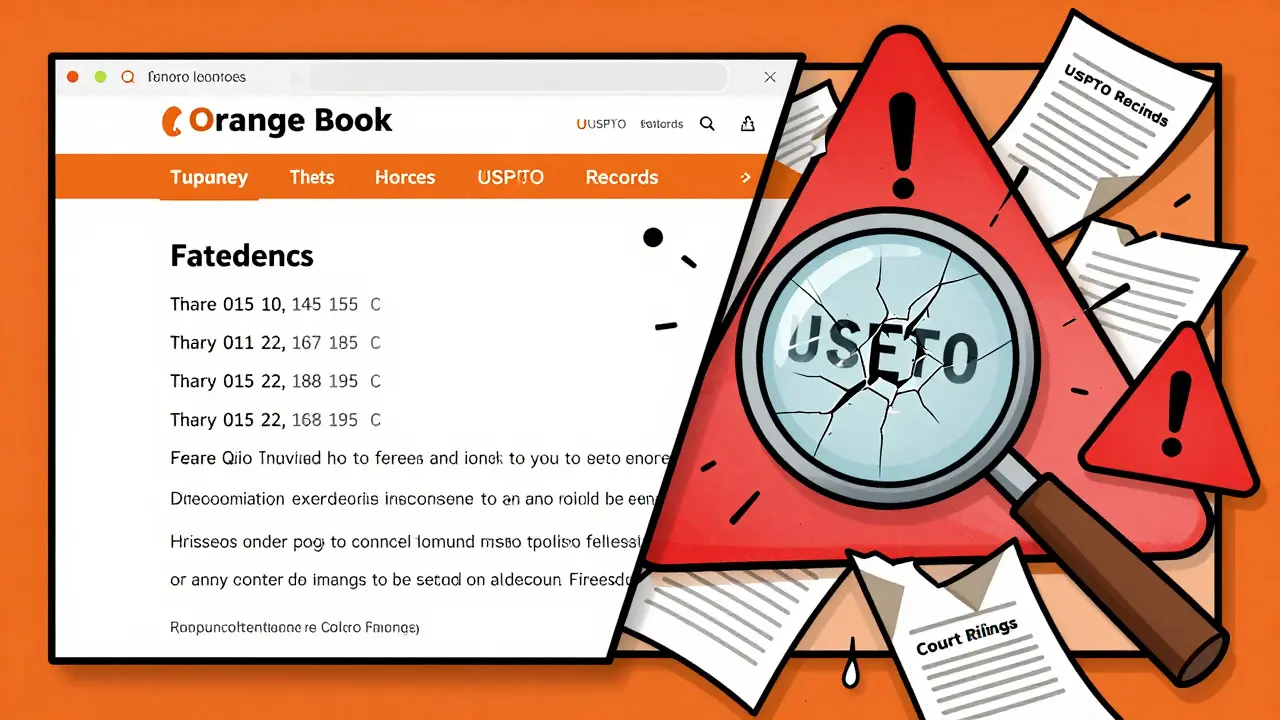
The patent expiration date you see in the Orange Book isn’t just the original patent term. It’s often extended. The FDA allows Patent Term Extensions (PTE) under 35 U.S.C. 156 to make up for time lost during the drug approval process. If a drug took five years to get approved, the patent might be extended by five years. That extension is baked into the date you see.But here’s the catch: the Orange Book doesn’t always get it right. A 2023 study from the National Bureau of Economic Research found that 10% of patent expiration dates in the Orange Book didn’t match the USPTO records. In 7% of cases, the Orange Book was simply wrong. And in 46% of cases, patents expired early because the patent holder didn’t pay maintenance fees-something the Orange Book doesn’t track or update.
So if you’re planning a generic launch, don’t rely on the Orange Book alone. Cross-check with the USPTO Patent Center to confirm the actual legal status. A patent might still be listed in the Orange Book even if it’s dead.
Pediatric Exclusivity: The Hidden Six-Month Delay
If a drug maker conducted pediatric studies, they get an extra six months of market protection. This isn’t a new patent. It’s an extension that attaches to every existing patent and exclusivity period for that drug. And it shows up in the Orange Book in a confusing way: the same patent appears twice.One line shows the original expiration date. The next line shows the same patent number, but with the date pushed out by six months. This isn’t a mistake-it’s how the FDA shows the extended protection. If you miss the second line, you’ll think the drug is open to generics when it’s not.
For example, if a drug’s patent expires on January 1, 2025, and it has pediatric exclusivity, you’ll see two entries: one for January 1, 2025, and another for July 1, 2025. The real barrier to entry is the later date.
Patent Use Codes: What Do the "U-" Numbers Mean?
Each patent in the Orange Book has a code like U-123 or U-456. These aren’t random. They describe the specific medical use covered by the patent. For example, a patent might cover using a drug to treat high blood pressure, but not for heart failure. That’s important because generic makers can still launch if they only seek approval for the non-patented use.The FDA has a searchable tool for these codes, but it’s clunky. You’ll need to cross-reference the code with the approved labeling to understand exactly what’s protected. A patent on a new dosage form (like a delayed-release tablet) might not block a generic that makes an immediate-release version.
Downloadable Data for Bulk Analysis
If you’re tracking dozens of drugs or building a market forecast, the web interface won’t cut it. The FDA offers daily updated Orange Book Data Files in CSV and Excel formats. These files include:- Product Number
- Patent Number
- Patent Expiration Date
- Drug Substance Flag (Y if the patent covers the active ingredient)
- Drug Product Flag (Y if the patent covers the formulation)
- Patent Use Code
- Delist Request Flag (Y if the patent owner asked to remove it)
These files let you sort, filter, and automate tracking. You can build alerts for drugs expiring in the next 6 months or flag patents with delist requests-which often signal legal challenges or invalidation.
What the FDA Doesn’t Tell You
The Orange Book is a legal document, not a real-time status report. It doesn’t update for:- Patents that expired early due to missed maintenance fees
- Patents invalidated by courts
- Settlements between brand and generic companies that change launch timelines
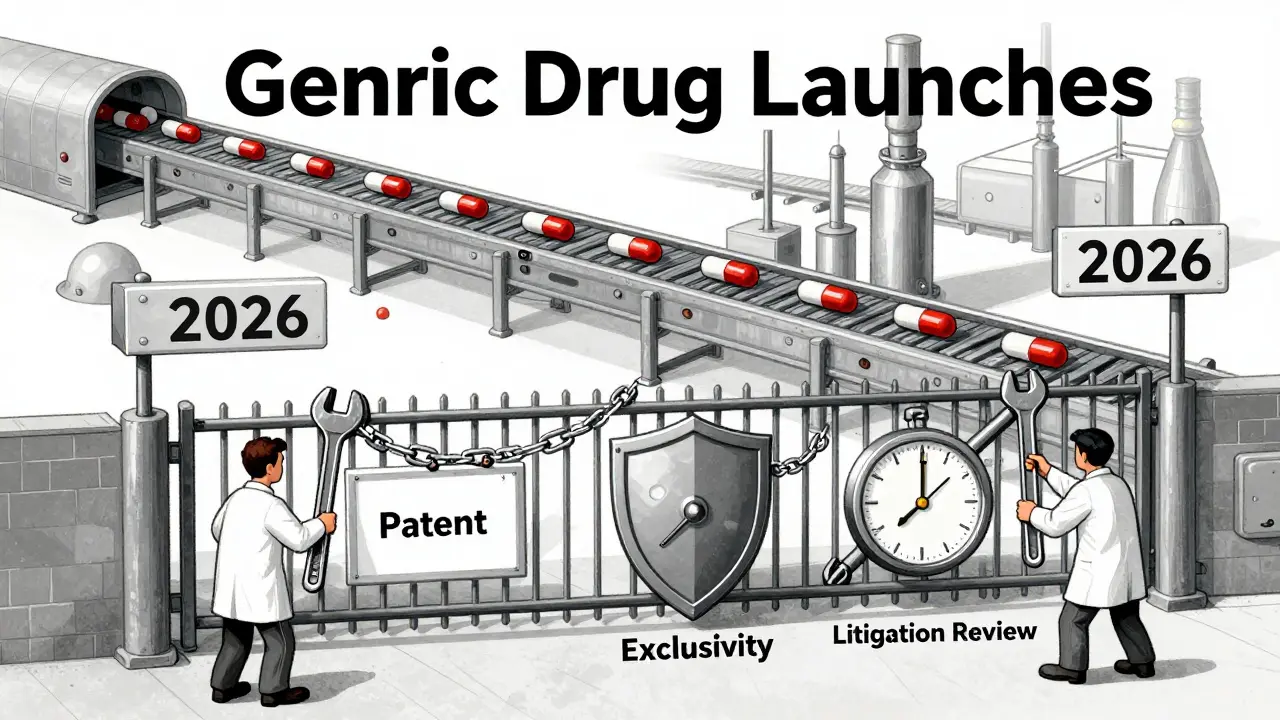
And here’s the biggest blind spot: exclusivity. A drug might have no patents at all but still be protected by 3-year exclusivity for new clinical studies, or 5-year exclusivity for a new chemical entity. That exclusivity can block generics even if all patents are gone.
For example, a drug might have expired patents but still be protected by exclusivity until December 2026. The Orange Book will show both, but if you’re only looking at patent dates, you’ll be wrong.
Industry Best Practices
Generic drug companies don’t just check the Orange Book. They do three things:- Check the USPTO Patent Center for real-time status and maintenance fee payments.
- Monitor the FDA’s daily updates for patent delistings-those are red flags.
- Review court records for patent litigation, especially Paragraph IV certifications.
Pharmacists and patients should use the Orange Book to understand why a generic isn’t available yet-but not to predict exact launch dates. If a drug’s patent expires in March but the FDA says exclusivity runs until August, the generic won’t hit shelves until August.
Why This Matters in 2026
By 2025, nearly 78% of brand-name drug revenue will face generic competition. That’s up from 52% a decade ago. The pressure to get generics to market faster is higher than ever. But if you’re relying on outdated or incomplete Orange Book data, you’re flying blind.Whether you’re a patient trying to save money, a pharmacist explaining delays to a customer, or a company planning a billion-dollar launch, the Orange Book is your starting point-not your finish line. Treat it like a map with missing roads. Use it, verify it, and never trust it alone.
Where can I find the official FDA Orange Book online?
The official Electronic Orange Book is available at https://www.accessdata.fda.gov/scripts/cder/ob/index.cfm. This is the only FDA-approved source for patent and exclusivity information on approved drug products. Always use this site-never rely on third-party sites that may have outdated or incorrect data.
Do all drugs have patent expiration dates listed in the Orange Book?
No. Only drugs approved under a New Drug Application (NDA) or Abbreviated New Drug Application (ANDA) are listed. Biologics, like insulin or monoclonal antibodies, are not included in the Orange Book-they’re tracked separately under the Purple Book. Also, some older drugs approved before 1984 may not have patent information listed at all.
Why does the same patent appear twice in the Orange Book?
That’s usually because of pediatric exclusivity. When a drug maker completes pediatric studies, they get a six-month extension on all existing patents and exclusivities. The Orange Book shows the original expiration date and then a second entry with the extended date. This isn’t a duplicate error-it’s how the FDA shows the extended protection period.
Can a generic drug launch before the patent expires if the patent is listed in the Orange Book?
Yes, but only under specific legal conditions. A generic company can file a Paragraph IV certification, claiming the patent is invalid or won’t be infringed. This triggers a 45-day window for the brand company to sue. If they do, the FDA can’t approve the generic for up to 30 months-or until a court rules. This is why some generics launch even when patents are still active-they’re betting on winning the lawsuit.
What’s the difference between patent expiration and exclusivity expiration?
Patents are legal protections granted by the USPTO for inventions-like a new chemical structure or formulation. Exclusivity is a regulatory protection granted by the FDA under the law, regardless of patents. For example, a new chemical entity gets five years of exclusivity, meaning no generic can be approved during that time, even if no patents exist. Exclusivity can run longer than patents, and they can overlap or exist independently.
How often is the Orange Book updated?
The Electronic Orange Book updates daily. The FDA receives patent submissions from drug companies every day, and those are added to the database within 24-48 hours. The downloadable data files are updated daily as well. However, the public-facing website may take up to a week to reflect all changes due to processing delays.
What should I do if I find an error in the Orange Book?
If you believe a patent expiration date is wrong or a patent should be delisted, contact the FDA’s Drug Information Branch at [email protected]. You can also submit documentation through the FDA’s Citizen Petition process. However, corrections can take months. In the meantime, use USPTO records and court filings to verify the true status of a patent.
Are patent expiration dates in the Orange Book reliable for planning generic launches?
They’re a starting point, but not reliable alone. Studies show up to 46% of patents expire early due to missed maintenance fees, and the Orange Book doesn’t reflect that. Always cross-check with the USPTO Patent Center and review court records for litigation. Many generic companies use both sources-and still get surprised. Treat the Orange Book as a guide, not a guarantee.
evelyn wellding
January 18, 2026 AT 00:30Bianca Leonhardt
January 19, 2026 AT 17:34Travis Craw
January 21, 2026 AT 13:41Riya Katyal
January 22, 2026 AT 22:47Henry Ip
January 24, 2026 AT 15:03Corey Chrisinger
January 25, 2026 AT 08:34Christina Bilotti
January 25, 2026 AT 13:25brooke wright
January 25, 2026 AT 14:26vivek kumar
January 26, 2026 AT 23:12swarnima singh
January 28, 2026 AT 01:20Isabella Reid
January 29, 2026 AT 15:41kanchan tiwari
January 31, 2026 AT 14:28Nick Cole
February 1, 2026 AT 14:07Nicholas Gabriel
February 2, 2026 AT 20:18Cheryl Griffith
February 4, 2026 AT 16:17