
By January 2026, there are still 270 active drug shortages in the U.S.-and nearly all of them are generic medications. These aren’t rare glitches. They’re systemic failures that force hospitals to scramble, pharmacists to spend hours tracking down substitutes, and patients to go without life-saving treatments. If you’ve ever been told your prescription is out of stock, or your doctor switched your meds last-minute, you’ve felt the ripple effect. This isn’t just inconvenient. It’s dangerous.
Why Generic Drugs Are the Most Vulnerable
Generic drugs make up 90% of all prescriptions filled in the U.S., but they’re responsible for over 70% of all shortages. Why? Because they’re cheap to make-and even cheaper to sell. A typical generic injectable drug might earn its manufacturer only 5-10% gross profit. Compare that to brand-name drugs, which can pull in 30-40%. When the profit margin is this thin, companies don’t invest in backup equipment, extra inventory, or quality upgrades. They run their lines at full speed, with no buffer. One machine breaks down, and the whole supply vanishes.Sterile injectables-like antibiotics, chemotherapy drugs, and IV fluids-are the worst hit. Why? Because they require clean rooms, specialized equipment, and highly trained staff. There are fewer facilities in the U.S. that can make them. And over 80% of the raw ingredients (active pharmaceutical ingredients, or APIs) come from just two countries: China and India. If a factory in Hyderabad gets shut down for a quality violation-or a port in Shanghai gets delayed-there’s no quick replacement.
One Factory, One Drug: The Single Point of Failure
For many generic drugs, there’s only one or two FDA-approved manufacturers. That’s not an accident. It’s the result of years of price competition. When a drug goes generic, multiple companies jump in to sell the same thing. Prices drop fast. The lowest bidder wins. Over time, the smaller players get squeezed out. The big ones consolidate. By 2024, the top 10 generic manufacturers controlled 60% of the market-up from 45% in 2015. Meanwhile, the number of U.S. manufacturing facilities for generics dropped by 22% between 2015 and 2024.This creates a terrifying fragility. Take vancomycin, a critical antibiotic used in hospitals for severe infections. As of mid-2025, it was out of stock for eight straight months. One manufacturer had a quality issue. Another had a production delay. The third? They didn’t have the capacity to ramp up. No backups. No alternatives. Nurses had to use older, less effective antibiotics-and patients paid the price.
What Happens When a Drug Disappears
When a generic drug vanishes, it doesn’t just disappear from the shelf. It reshapes care.Hospitals report spending an average of $213 million a year just managing these shortages. That’s not the cost of the drugs-it’s the cost of the chaos. Pharmacists spend 15-20 hours a week tracking down substitutes, updating electronic systems, and retraining staff. In 2025, 72% of hospitals said drug shortages made their existing staffing problems worse. Nurses are pulled from other duties. Pharmacists work extra shifts. And patients? They get delayed treatments, riskier alternatives, or nothing at all.
Oncology departments are especially vulnerable. Cisplatin, a chemotherapy drug used for lung, bladder, and testicular cancers, has been in short supply for over two years. When it’s unavailable, doctors switch to carboplatin. It’s less effective. It causes different side effects. Patients need more doses. Some skip treatments entirely because the alternative is too expensive or too risky.
Even chronic pain patients aren’t safe. When generic opioids like oxycodone or morphine are in short supply, pharmacies stop refilling them-even for patients with legitimate prescriptions. ER visits for uncontrolled pain have spiked. People who’ve been stable for years suddenly find themselves in crisis because a pill they’ve taken for a decade is suddenly unavailable.
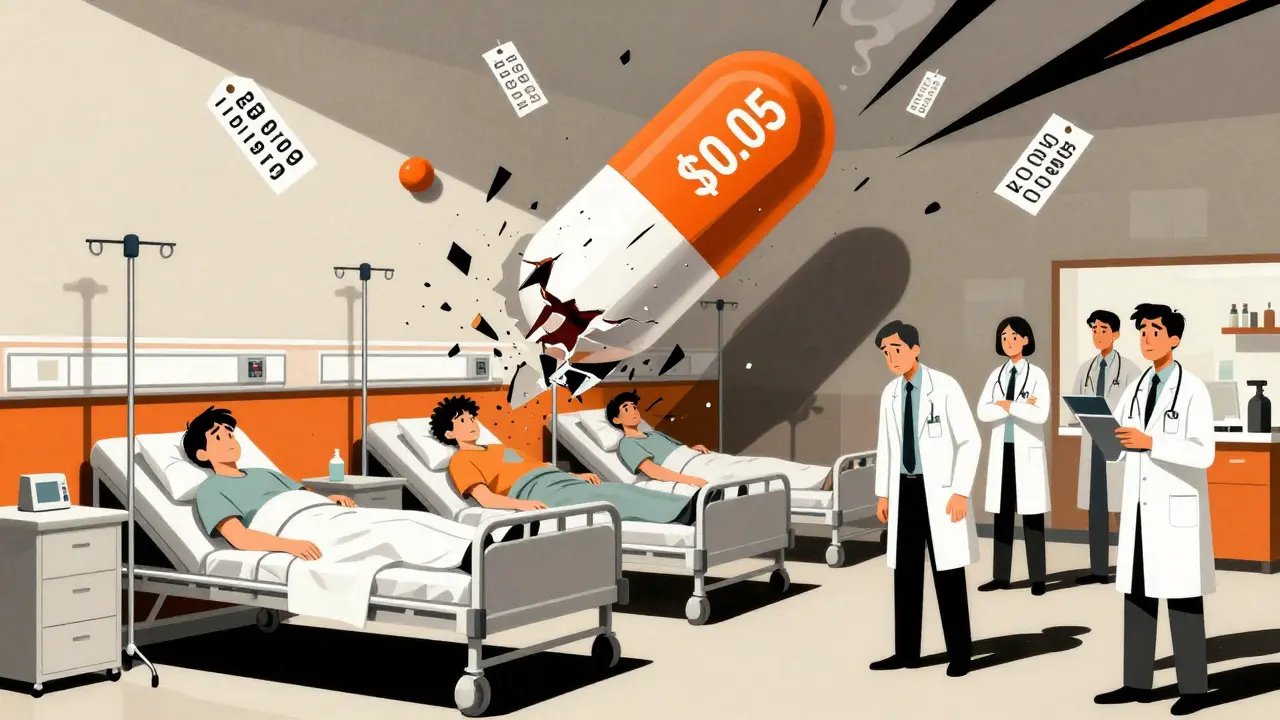
Price Goes Up-Even When the Drug Is Cheap
You’d think that when a cheap generic drug runs out, the price would stay low. It doesn’t. The median price increase for a generic drug in shortage is 14.6%. But that’s just the start. The substitute drug? Its price can jump three times higher. A patient on a $20 monthly generic antibiotic might end up paying $60 for the alternative-and insurance doesn’t always cover it.Independent pharmacies report that 43% of patients abandon prescriptions because they can’t afford the substitute. One pharmacist in Ohio told me: “I had a 72-year-old on insulin. When her generic ran out, the alternative cost $180 a month. She chose to skip doses. She ended up in the ER with diabetic ketoacidosis. That’s not a medical error. That’s a supply chain failure.”
Why the FDA Can’t Fix This Alone
The FDA knows the problem. Their 2024 Drug Shortage Task Force laid out a clear plan: diversify manufacturing, offer financial incentives, use new production tech, and build early warning systems. But none of these fix the core issue: the market rewards the lowest price, not the most reliable supply.The FDA can inspect factories. They can flag quality issues. They can even fast-track approvals for new manufacturers. But they can’t force a company to make a drug that loses money. In 2020, 62% of all drug shortages were caused by manufacturing and quality problems. By 2024, those citations had risen 35%. The system is breaking down because the incentives are broken.
Executive Order 14050, signed in 2020, helped reduce shortages of essential medicines by 32%-but that progress stalled in 2023. Now, shortages are climbing again. Proposed tariffs on imported drugs could make things worse. If a tariff adds 50-200% to the cost of APIs from India or China, manufacturers won’t make the drugs. They’ll just stop.
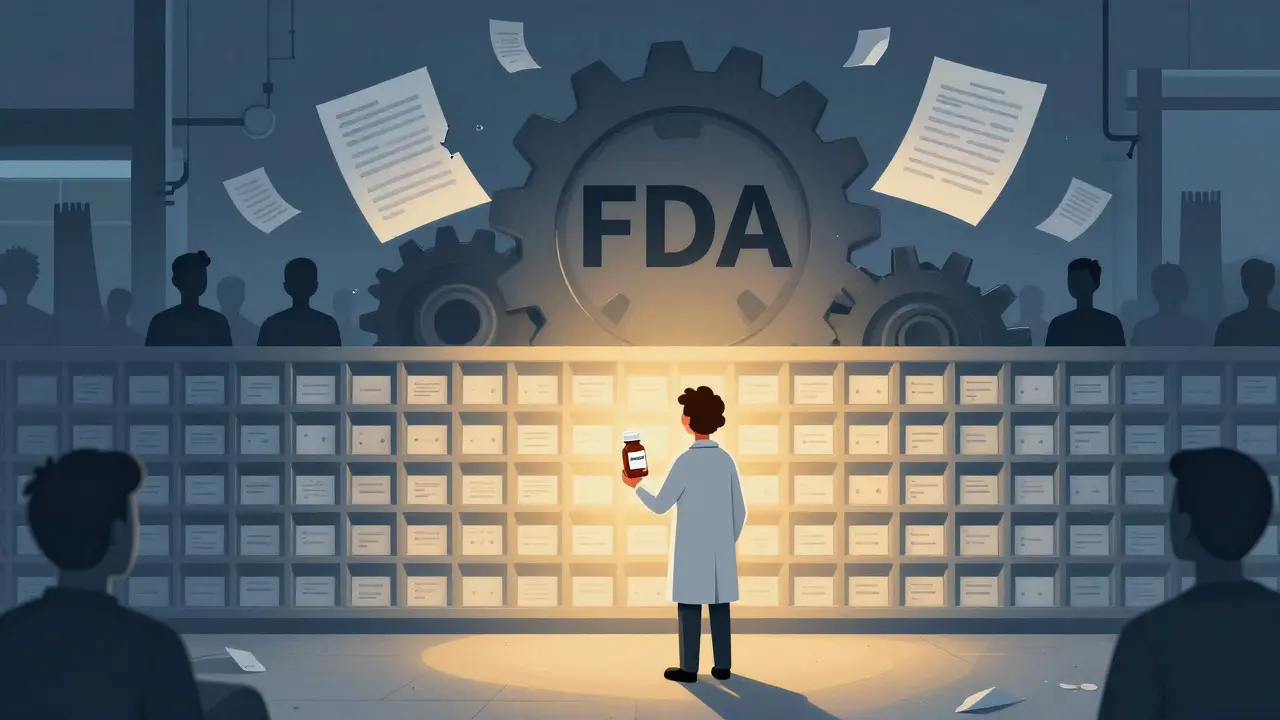
What Needs to Change
This isn’t a problem that will fix itself. It needs policy. Here’s what real change looks like:- Minimum inventory requirements for critical generics-like a 6-month buffer for antibiotics and chemo drugs.
- Government subsidies for manufacturers who maintain reliable production, even if the drug sells for less than $1 a pill.
- Financial penalties for companies that abandon markets without notice.
- Domestic manufacturing incentives to rebuild U.S.-based capacity for sterile injectables.
- Transparency-pharmacies and hospitals need real-time data on stock levels, not just alerts after the fact.
Right now, the system treats generic drugs like commodities-like toilet paper or paper clips. But they’re not. They’re the foundation of modern medicine. When you run out of insulin, penicillin, or heparin, you don’t just wait for the next shipment. You risk death.
What You Can Do
If you’re a patient: keep a list of your medications, including generic names. Ask your pharmacist if there’s an alternative-and if it’s covered. If you’re denied a refill, ask why. Push back. Document everything.If you’re a caregiver or advocate: talk to your local hospital, pharmacy board, or state health department. Demand transparency. Share your story. These shortages aren’t invisible-they’re quiet, and they’re killing people.
The next time you hear about a drug shortage, don’t think, “That’s not my problem.” It is. Because the next drug that disappears could be the one you-or someone you love-depends on.
Why are generic drugs more likely to be in short supply than brand-name drugs?
Generic drugs are more likely to be in short supply because they’re sold at very low prices, leaving manufacturers with razor-thin profit margins-often just 5-10%. This makes it hard to invest in backup equipment, quality controls, or extra inventory. Brand-name drugs, by contrast, have higher prices and profit margins, so companies can afford to maintain multiple production lines and stockpiles. Also, generic drugs often have only one or two manufacturers, so if one factory shuts down, there’s no backup.
Are drug shortages getting worse?
Yes. After peaking at 323 shortages in early 2024, the number dropped slightly to 270 by April 2025-but it’s still far above historical levels. In the 1990s, there were only 60-70 shortages a year. Now, it’s over 250. The trend is upward, especially for sterile injectables and essential medicines. Experts predict shortages could hit 350 by the end of 2026 without major policy changes.
Can the FDA stop drug shortages?
The FDA can identify problems, inspect factories, and approve new manufacturers-but it can’t force companies to make money-losing drugs. Most shortages stem from economic decisions, not regulatory failures. If a drug only makes $0.05 per pill and costs $1 million a year to produce, the company will quit the market. The FDA can’t subsidize that. Only government policy can fix the broken incentives.
How do drug shortages affect hospitals?
Hospitals spend an estimated $213 million a year just managing shortages. Pharmacists spend 15-20 hours per week tracking down alternatives, updating systems, and training staff. Oncology, ICU, and emergency departments are hit hardest. Many hospitals have to delay surgeries, switch to less effective drugs, or ration medications. In 2025, 89% of hospitals reported that shortages forced treatment delays.
What’s being done to fix this?
The FDA has a task force pushing for geographic diversification of manufacturing, financial incentives for reliable suppliers, and better early-warning systems. Some states have started stockpiling critical generics. But without changing how drugs are priced and reimbursed, these efforts won’t be enough. Experts agree: the market must stop rewarding the lowest bid and start rewarding reliability.
If you’ve ever waited days for a prescription because it was “out of stock,” you know this isn’t just a supply chain issue. It’s a safety issue. And until the system stops treating life-saving drugs like disposable commodities, it won’t get better.
Paul Bear
January 11, 2026 AT 11:51The systemic underpricing of generics is a textbook case of market failure disguised as consumer benefit. When you commoditize life-saving pharmaceuticals, you don't get efficiency-you get fragility. The profit margin on a vial of vancomycin is less than the cost of the glass it's packaged in. Manufacturers aren't 'cutting corners'-they're operating on zero economic surplus. This isn't negligence; it's rational behavior in a broken pricing regime. The FDA can inspect all they want, but they can't subsidize solvency. We need price floors tied to production cost + 15% margin for critical drugs, period. Anything less is just regulatory theater.
And let's not pretend tariffs on APIs will help. That's like blaming the printer for running out of ink because you bought the cheapest toner.
Bottom line: if you want reliable supply, you must pay for reliability. Period.
Jaqueline santos bau
January 11, 2026 AT 23:52I just got off the phone with my mom's oncologist-she's been on cisplatin for 18 months and now they're switching her to carboplatin. She's 74. She cried. She said, 'They're just swapping one poison for another.' I told her it's not the same. But it is. And now she's got to pay $300 more a month because insurance won't cover the 'alternative.' I'm not mad. I'm just... done. This isn't healthcare. It's a game of Russian roulette with your meds. And the worst part? No one even talks about it. Like it's normal for people to skip insulin because the substitute costs a mortgage payment. It's not normal. It's criminal.
Who do I call? Who do I scream at? My senator? The pharmacy? The FDA? They all say 'it's complicated.' But my mom's not complicated. She just wants to live.
And now I have to start a GoFundMe for her prescriptions. Again.
Kunal Majumder
January 12, 2026 AT 15:59Bro, I work in pharma manufacturing in Hyderabad. Saw this coming for years. One factory makes 70% of the API for a common antibiotic. No backups. No buffer. One power cut, one inspector flags a minor deviation, and boom-whole U.S. runs out. We’re not lazy. We’re trapped. The U.S. buyers demand $0.02 per pill. We can’t even afford to fix the air filters properly. And when we try to raise prices? They drop us. Then they blame us for shortages.
It’s not India’s fault. It’s the system. You want reliability? Pay for it. Don’t just say ‘Make it cheaper’ and then get mad when it disappears.
And yeah, we’re trying to build more capacity here. But without long-term contracts? Why invest? We’re not magicians.
Aurora Memo
January 14, 2026 AT 15:35Thank you for writing this. I’m a nurse in a rural ER. We’ve had to ration morphine twice this year. Patients with broken bones, post-op pain, cancer-told to wait. Or take ibuprofen. Or go home. I’ve seen people cry because they couldn’t get their usual generic. No one talks about the emotional toll on staff. We’re not just filling prescriptions-we’re managing grief, guilt, and helplessness every day.
I don’t have policy solutions. But I know this: when a patient says, ‘I’ve been on this pill for 12 years,’ and we can’t give it to them? That’s not a supply chain issue. That’s a moral failure.
Please don’t let this become just another statistic.
chandra tan
January 14, 2026 AT 18:20As someone who grew up in India and now works in U.S. pharma logistics-this is personal. The same factories that make your antibiotics also make the ones your cousin in Delhi uses. We’re all connected. But the U.S. acts like it’s the only one that matters. We get the scraps. The old machines. The low-priority orders. And when you get mad about shortages? You’re mad at the global supply chain you helped create by demanding dirt-cheap drugs.
Here’s the truth: if you want U.S.-made generics, pay for it. Or accept that your medicine comes from a place that’s already stretched too thin.
And no, building more factories in Ohio won’t fix it unless you fix the pricing model. We’re all in this together. Even if you pretend we’re not.
Dwayne Dickson
January 16, 2026 AT 09:52Let’s be clear: this isn’t a shortage crisis. It’s a moral hazard crisis. The market has been systematically incentivized to externalize risk and internalize profit. Manufacturers optimize for short-term ROI, knowing that the burden of failure-delayed surgeries, increased ER visits, patient morbidity-is absorbed by public hospitals, insurance systems, and individual families. The FDA is a regulatory body, not a fiscal agent. It cannot correct market failure with inspections alone.
The solution is not more bureaucracy. It’s structural economic intervention: mandatory minimum inventory reserves for critical therapeutics, coupled with risk-adjusted reimbursement models that reward reliability over price. The current system rewards the lowest bidder. That is not a feature. It is a fatal flaw.
And yes-I am aware that this will increase drug costs. But the alternative is a healthcare system that routinely sacrifices patients to balance sheets. That is not acceptable. It is not a policy debate. It is a matter of life and death.
Let’s stop pretending this is a technical problem. It is an ethical one.
anthony martinez
January 17, 2026 AT 13:15So let me get this straight. We’re blaming the manufacturers for not making drugs that lose money… while also blaming the FDA for not forcing them to? And we’re surprised people are dying? Wow. Just… wow. This is like blaming a grocery store for not stocking bread because the government won’t let them charge $10 a loaf. You can’t have a free market for life-saving medicine and then act shocked when it breaks. It’s not a bug. It’s a feature of capitalism with zero regulation.
Also, I’m pretty sure the FDA has more power than they’re letting on. They just don’t want to rock the boat. Because who wants to be the guy who says, ‘Hey, we need to pay more for insulin’? No one. So we all just suffer quietly. Classic.
Bradford Beardall
January 19, 2026 AT 09:40