
Every year, over 17 million people worldwide die from Heart Diseasea condition affecting the heart and blood vessels, often leading to heart attacks or strokes. The World Health Organization reports this accounts for nearly 1 in 3 global deaths. But here’s the critical point: up to 80% of premature heart disease and stroke can be prevented through lifestyle changes and risk management. This article breaks down the key risk factors-both those you can’t change and those you can-and shows exactly how to protect your heart.
Non-Modifiable Risk Factors: What You Can’t Change
Some risks are baked into your biology. Age is a major factor. Men face higher risk starting around 45, women after 55. Each decade of life adds 2-3% risk independently. By age 70, about 70% of men and 60% of women have some form of cardiovascular disease. The Framingham Heart Study confirms this pattern.
Family History increases risk by 30-75% if a parent or sibling developed heart disease before age 55 (men) or 65 (women). The INTERHEART study found this risk jumps to 60-75% when multiple relatives are affected. Specific genetic conditions like Familial Hypercholesterolemia-which affects 1 in 250 people globally-can multiply risk by 13-20 times if untreated.
Race and ethnicity also play roles. Race/Ethnicity disparities are stark: African Americans have a 30% higher heart disease death rate than non-Hispanic whites. Mexican Americans, American Indians, Hawaiians, and some Asian Americans face elevated risks too. These gaps often stem from systemic issues like access to care and socioeconomic factors.
Modifiable Risk Factors: What You Can Control
Smoking is the single most preventable cause of heart disease. Current smokers have 2-4 times higher risk than non-smokers. Even light smoking (1-5 cigarettes daily) increases risk by 50%. The CDC reports smoking causes 1 in every 4 cardiovascular deaths in the U.S. Quitting cuts risk by 50% in one year and nearly normalizes it after 15 smoke-free years.
High Blood Pressure affects 47% of U.S. adults (116 million people). Uncontrolled hypertension raises heart disease risk by 300-400%. The SPRINT trial showed targeting systolic pressure below 120 mmHg (instead of 140) reduces cardiovascular events by 25% in high-risk patients.
High Cholesterol impacts 38% of U.S. adults (94 million people). Levels above recommended thresholds increase risk by 50%. High-intensity statins like atorvastatin (40-80 mg) lower risk by 25-35% for those with existing heart disease.
Diabetes increases heart disease risk 2-4 times. About 68% of diabetes patients over 65 die from heart disease. SGLT2 inhibitors and GLP-1 agonists reduce cardiovascular risk by 14-26% beyond glucose control.
Physical Inactivity contributes to 6% of global coronary heart disease burden. Just 150 minutes of moderate exercise weekly can cut risk by 30%.
Unhealthy Diet causes 11 million deaths globally each year. Diets high in sodium, trans fats, and processed foods raise risk. The CDC’s Sodium Reduction Program cut sodium intake by 14% in communities, lowering hypertension rates by 5.8%.

How Risk Factors Multiply Your Danger
Risk factors don’t just add up-they multiply. Having both high blood pressure and diabetes increases risk by 8-10 times compared to having neither. The American Heart Association states that addressing just three modifiable risks-smoking, hypertension, and physical inactivity-could prevent 45% of cardiovascular deaths in the U.S. This synergy is why comprehensive management is crucial.
| Risk Factor | Impact on Risk | Modifiable? |
|---|---|---|
| Smoking | 2-4 times higher risk | Yes |
| High Blood Pressure | 300-400% higher risk when uncontrolled | Yes |
| High Cholesterol | 50% higher risk | Yes |
| Diabetes | 2-4 times higher risk | Yes |
| Family History | 30-75% higher risk | No |
| Age | 2-3% higher per decade | No |
| PM2.5 | 10-15% higher CVD mortality per 10 μg/m³ | Partially |
Measuring Your Heart Disease Risk
Doctors use tools like the ASCVD Risk Calculator (based on age, sex, cholesterol, blood pressure, diabetes, and smoking status) to estimate 10-year risk. A score of ≥20% is considered high risk. The Reynolds Risk Score adds family history and CRP levels for better accuracy. Newer models like the European SCORE2 include socioeconomic factors and provide country-specific estimates.
Polygenic Risk Scores are emerging tools. These analyze hundreds of genetic markers to predict risk. A high score (top 20% of population) confers a 2.5-3.0 times higher risk independent of traditional factors. While still evolving, they offer personalized insights for prevention.
Taking Action: Practical Steps to Reduce Risk
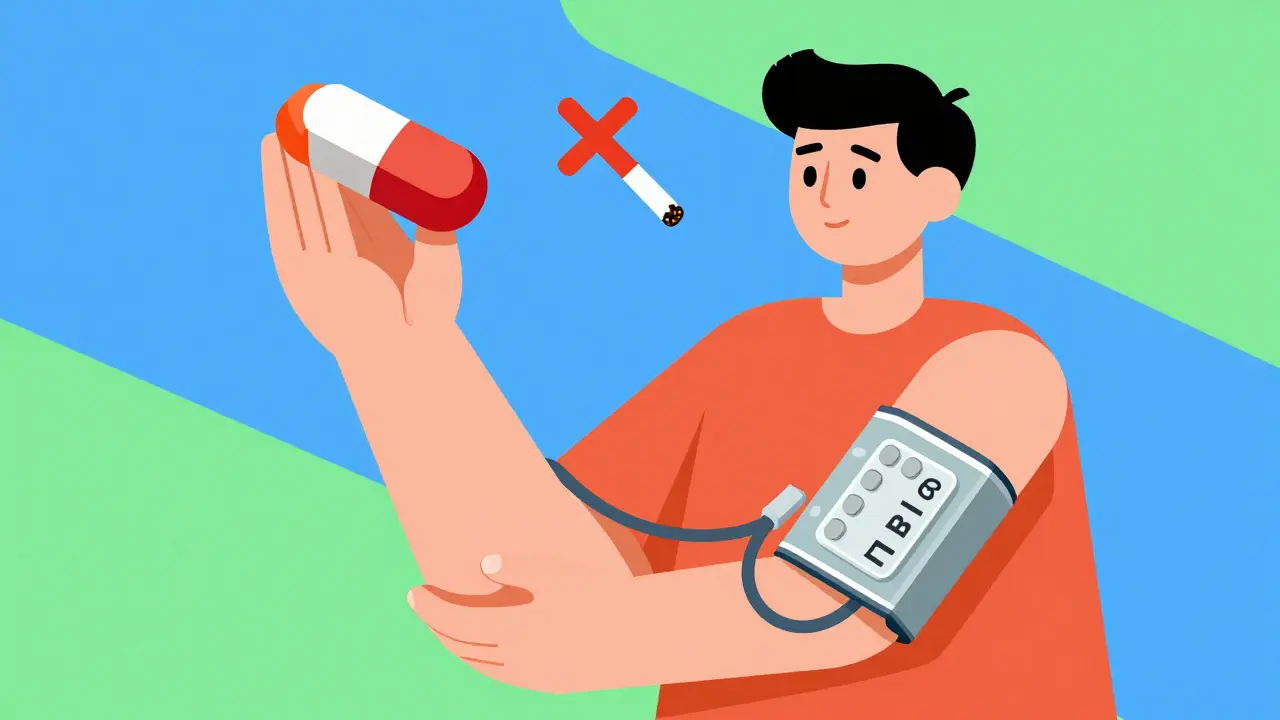
The CDC’s Million Hearts initiative recommends the ABCS approach: Aspirin when appropriate, Blood pressure control, Cholesterol management, and Smoking cessation. For blood pressure, aim for <120 mmHg systolic. For cholesterol, high-intensity statins are standard for high-risk patients. Quitting smoking is the single most effective step-every cigarette avoided lowers risk. Regular exercise and a diet rich in fruits, vegetables, and whole grains also make a huge difference. Even small changes add up: losing 5-10% of body weight can significantly improve heart health.
A real-world example: A 48-year-old man with multiple risk factors (smoking, hypertension, obesity, family history) reduced his 10-year ASCVD risk from 18.2% to 6.3% through comprehensive lifestyle changes and medication adherence over 18 months. His story proves prevention works.
Frequently Asked Questions
Can I lower my heart disease risk if I have a family history?
Absolutely. While family history is non-modifiable, managing other risk factors like quitting smoking, controlling blood pressure, and maintaining a healthy weight can significantly reduce your overall risk. Studies show that lifestyle changes can offset up to 50% of genetic risk.
How does smoking affect heart disease risk?
Smoking doubles or quadruples your risk of coronary heart disease. Even light smoking (1-5 cigarettes daily) increases risk by 50%. Quitting reduces risk by 50% within one year and reaches near-normal levels after 15 smoke-free years. The CDC confirms smoking causes 1 in every 4 cardiovascular deaths in the U.S.
What’s the biggest modifiable risk factor?
Smoking is the single most preventable cause. Addressing just smoking, hypertension, and physical inactivity could prevent 45% of cardiovascular deaths in the U.S. according to the American Heart Association. But high blood pressure and cholesterol also play major roles-managing all three is key.
How often should I check my blood pressure?
Check annually if your blood pressure is normal. If it’s elevated (120-129 systolic), check every 3-6 months. For hypertension (≥130 systolic), monitor monthly until controlled. Home monitoring is highly recommended-many people have "white coat hypertension" where readings spike only at clinics.
Can diet changes really help?
Yes. A Mediterranean diet (rich in olive oil, fish, nuts, and vegetables) reduces heart disease risk by 30%. Cutting sodium by 1,000 mg daily lowers blood pressure by 5-6 mmHg. The CDC’s Sodium Reduction Program achieved a 14% drop in sodium intake in communities, translating to a 5.8% reduction in hypertension rates.
Pamela Power
February 5, 2026 AT 20:37Smoking is the least of our worries. The real danger is systemic neglect of environmental factors. Air pollution, specifically PM2.5, contributes to 10-15% higher CVD mortality per 10 μg/m³ increase. Yet the CDC's ABCS initiative is a hollow PR campaign. They focus on individual behaviors while ignoring corporate polluters. The table in the article lists PM2.5 as 'partially modifiable'-that's laughable. It's entirely modifiable through policy. Why aren't they pushing for stricter emissions standards? The real culprits are industries that profit from pollution. This article is a disservice to public health. It's all about blaming individuals instead of holding corporations accountable. We need systemic change, not just 'lifestyle changes'. The fact that African Americans face a 30% higher death rate is due to systemic racism, not genetics. This piece completely ignores the social determinants of health. It's time to stop the charade. Real prevention requires addressing these root causes. Otherwise, we're just rearranging deck chairs on the Titanic.
anjar maike
February 6, 2026 AT 06:09Air pollution is a silent killer 😷
Cole Streeper
February 7, 2026 AT 22:06The government is using 'heart disease' as an excuse to push vaccines and surveillance. Did you know the CDC is funded by Big Pharma? The real cause of heart disease is 5G radiation and chemtrails. They're lying about the numbers to scare people. It's all part of the New World Order agenda. Wake up, sheeple! The truth is out there. Check the sources-there's no real evidence for any of this. They're just trying to sell you pills and control your life. Don't believe the hype. The real threat is the government and corporations working together. This is why I don't trust any medical advice. It's all a scam. They're hiding the truth about air pollution. The real villains are the corporations polluting our environment. Wake up before it's too late.
Dina Santorelli
February 8, 2026 AT 14:37I agree with the systemic issues, but your tone is too aggressive. It's not just about corporations-individual choices matter too. Maybe we need to balance both. But yeah, the CDC's focus is too narrow. I've seen how healthcare disparities affect people. It's frustrating. But we can't ignore personal responsibility either. It's a complex issue. We need both policy changes and individual action. Maybe we should focus on community health initiatives. But the article didn't mention that. It's all so complicated. We have to address both sides to make real progress.
divya shetty
February 9, 2026 AT 08:12Moral implications of lifestyle choices are ignored. Smoking and poor diet are personal failures that lead to preventable diseases. We must hold individuals accountable for their health decisions. The government should not subsidize unhealthy behaviors. It's time for personal responsibility. The statistics cited are misleading; they ignore cultural factors. In India, traditional diets prevent heart disease. Why isn't this discussed? The focus should be on education and discipline, not blaming systems. This is a dangerous oversimplification. People need to take ownership of their health. No amount of policy will help if individuals don't change. It's time to stop making excuses.
Phoebe Norman
February 9, 2026 AT 14:525G radiation is not scientifically proven to cause heart disease data shows no correlation chemtrails are a myth CDC funding is transparent real issue is systemic healthcare access we need evidence-based approaches stop spreading misinformation its harmful
Albert Lua
February 10, 2026 AT 19:30In my culture, traditional foods are heart-healthy. Turmeric in Indian cuisine has anti-inflammatory properties. The Mediterranean diet is another great example. It's all about community and shared meals. We should celebrate these cultural practices instead of just focusing on Western medicine. Heart health isn't just about pills-it's about lifestyle and culture. Let's learn from each other!
Katharine Meiler
February 11, 2026 AT 08:15Absolutely agree. Cultural dietary practices are underutilized in prevention strategies. The Mediterranean diet has been extensively studied for cardiovascular benefits. Polyphenols in olive oil and omega-3s from fish reduce inflammation. But we need more research on non-Western diets. Community-based interventions could integrate traditional knowledge with modern science. This synergy is key for global health equity. I'm excited about this approach. It's time to move beyond one-size-fits-all solutions. We must embrace diverse approaches to health. This is the future of preventive medicine.
Rene Krikhaar
February 13, 2026 AT 00:45Yes community-based approaches work. Local health workers bridge gaps. Traditional healers should be part of the team. Empathy crucial in healthcare. We need to listen to communities. It's not just science but trust. This saves lives