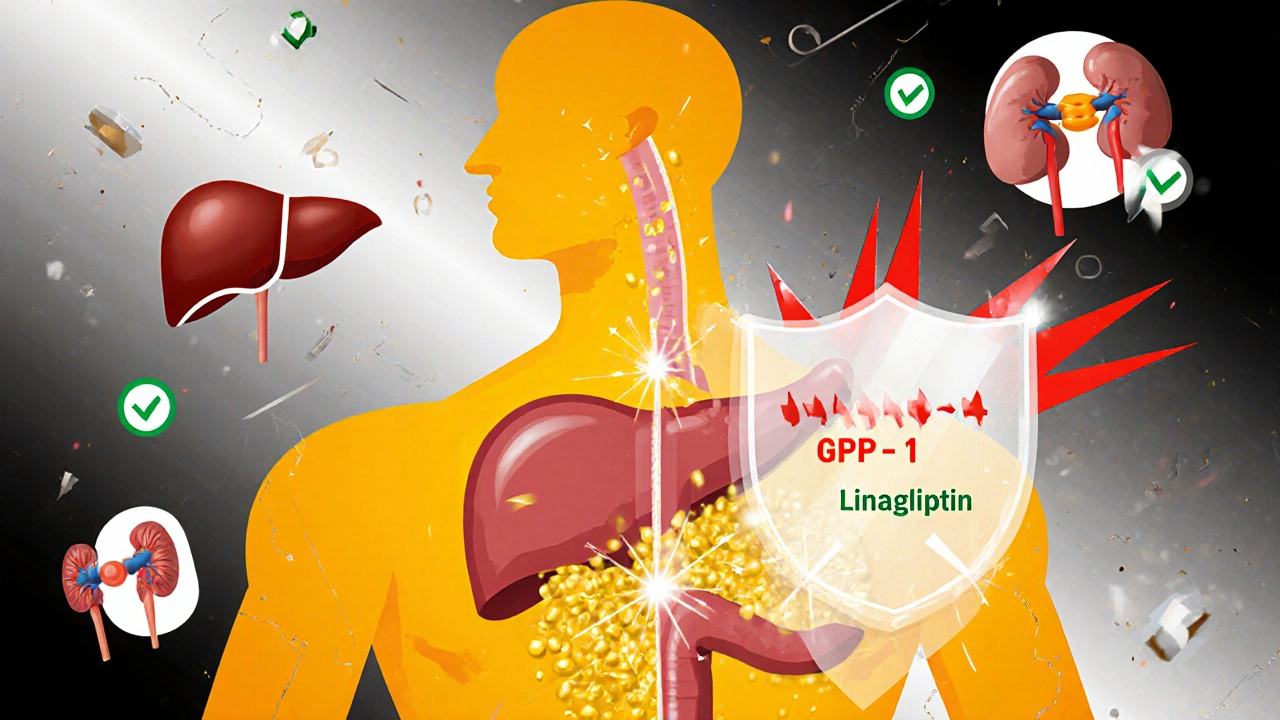
More than 537 million adults worldwide live with diabetes. That number is expected to hit 643 million by 2030. And while insulin and metformin have been the backbone of treatment for decades, a quieter revolution has been unfolding-one led by drugs like linagliptin. Unlike older medications that force the body to produce more insulin or make cells more sensitive to it, linagliptin works differently. It doesn’t cause weight gain. It doesn’t trigger low blood sugar in most people. And it doesn’t need dose adjustments for kidney problems. That’s rare. And it’s changing how doctors treat type 2 diabetes, especially in older patients and those with kidney disease.
What Linagliptin Actually Does
Linagliptin is a DPP-4 inhibitor. That’s a mouthful, but here’s what it means in plain terms: your body naturally makes a hormone called GLP-1 after you eat. GLP-1 tells your pancreas to release insulin when blood sugar rises. It also slows down digestion and reduces appetite. But in people with type 2 diabetes, GLP-1 gets broken down too fast by an enzyme called DPP-4. Linagliptin blocks that enzyme. That means GLP-1 sticks around longer, helping the body manage blood sugar more naturally.
This isn’t like sulfonylureas, which force the pancreas to pump out insulin no matter what. That’s why linagliptin rarely causes hypoglycemia. It only works when blood sugar is high. If your sugar is normal, linagliptin does nothing. That’s a big deal for elderly patients who can’t afford a sudden drop in blood sugar. It’s also why it’s often paired with metformin-two drugs that work in different ways, with fewer side effects than older combinations.
Why Kidney Health Makes Linagliptin Stand Out
One of the biggest challenges in treating type 2 diabetes is that most medications are cleared through the kidneys. Metformin? Needs dose adjustments if kidney function drops below 60 mL/min. SGLT2 inhibitors? Often stopped if eGFR falls too low. Even insulin requires careful titration in kidney disease.
Linagliptin is different. About 95% of it is excreted through the bile and gut, not the kidneys. That means it can be used safely in patients with severe kidney impairment-even those on dialysis-without changing the dose. In clinical trials, patients with stage 4 or 5 chronic kidney disease took linagliptin and saw the same blood sugar improvements as those with healthy kidneys. No extra risk of side effects. That’s not common in diabetes meds.
Because of this, linagliptin became one of the few oral drugs recommended by the American Diabetes Association for patients with advanced kidney disease. It’s not a cure. But for millions of diabetics whose kidneys are failing, it’s one of the few options that doesn’t require switching to injections or complex dosing schedules.
Real-World Impact: From Hospitals to Rural Clinics
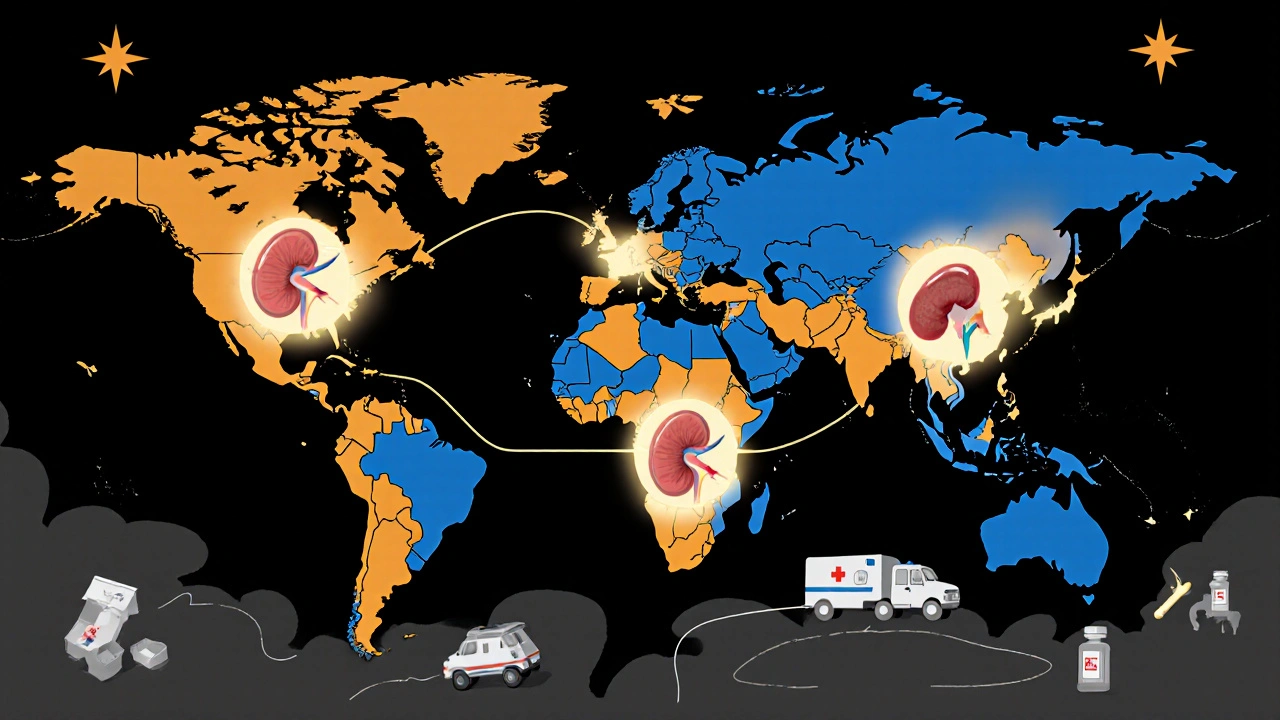
In low- and middle-income countries, access to insulin and regular lab testing is still limited. Many patients rely on oral pills they can get at local pharmacies. Linagliptin’s once-daily dose, low risk of hypoglycemia, and no need for kidney monitoring make it a practical choice even in resource-poor settings.
A 2023 study in India tracked over 8,000 patients with type 2 diabetes and kidney disease. Those on linagliptin had 30% fewer emergency visits for low blood sugar compared to those on sulfonylureas. In Brazil, public health programs started switching high-risk patients from glibenclamide to linagliptin-and saw a 22% drop in hospitalizations for hypoglycemia within a year.
It’s not just about saving lives. It’s about saving healthcare systems money. Fewer ER visits. Fewer ambulance calls. Fewer missed workdays. In Canada, where public drug plans cover linagliptin for seniors with kidney disease, the cost per hospitalization avoided was estimated at $1,800. That’s a win for patients and for budgets alike.
How It Compares to Other DPP-4 Inhibitors
Linagliptin isn’t the only DPP-4 inhibitor on the market. Sitagliptin, saxagliptin, and vildagliptin are all in the same class. But here’s where linagliptin pulls ahead:
| Drug | Dose Frequency | Kidney Adjustment Needed? | Weight Change | Hypoglycemia Risk |
|---|---|---|---|---|
| Linagliptin | Once daily | No | Neutral | Low |
| Sitagliptin | Once daily | Yes (if eGFR < 50) | Neutral | Low |
| Saxagliptin | Once daily | Yes (if eGFR < 45) | Neutral | Low |
| Vildagliptin | Once or twice daily | Yes (if eGFR < 50) | Neutral | Low |
Linagliptin is the only one in this group that doesn’t require any dose changes based on kidney function. That’s a huge advantage in real-world practice. Doctors don’t have to remember to adjust doses. Pharmacists don’t have to flag prescriptions. Patients don’t have to track lab results just to know if their pill dose is still right.
Who Benefits Most From Linagliptin?
Not everyone with type 2 diabetes needs linagliptin. But for these groups, it’s often the best choice:
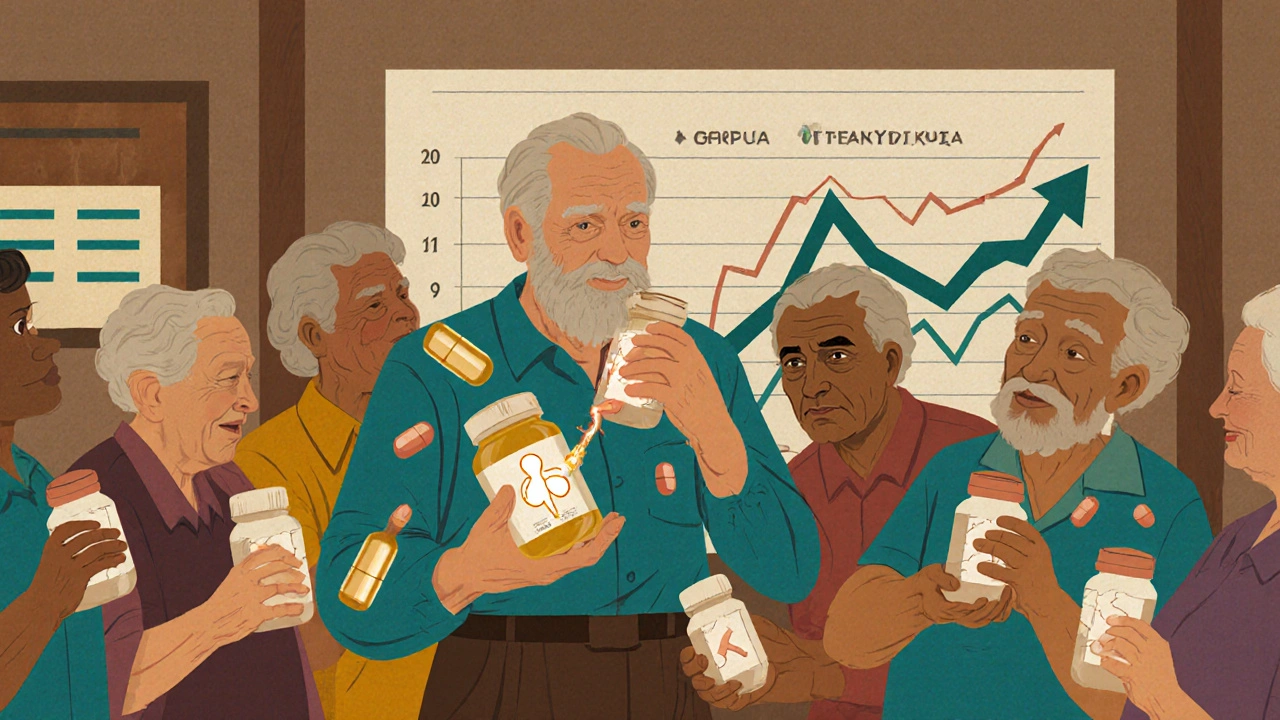
- Patients over 65 with kidney disease
- People who’ve had low blood sugar episodes on other drugs
- Those who struggle with multiple daily pills or injections
- Patients in areas with limited access to frequent lab testing
- People who need to avoid weight gain
It’s not a first-line drug for young, healthy patients with mild diabetes. Metformin still holds that spot. But for the growing number of older adults with multiple health problems, linagliptin fits neatly into the puzzle. It doesn’t add complexity. It doesn’t create new risks. It just works-quietly, reliably, safely.
What You Won’t Hear About Linagliptin
There’s a reason you don’t see ads for linagliptin on TV. It’s not flashy. It doesn’t promise weight loss or dramatic A1C drops. It doesn’t have a celebrity spokesperson. But that’s not the point.
Its power lies in its simplicity. No dose changes. No fasting blood tests. No fear of crashing. For many patients, that’s more valuable than a 1% drop in A1C. In a 2024 real-world study of 12,000 patients across Europe and North America, those on linagliptin were 40% more likely to stick with their treatment after two years than those on other oral diabetes drugs. Why? Because they didn’t feel sick. They didn’t have scary lows. They didn’t have to change their lives to take the pill.
That’s the quiet impact linagliptin is having. It’s not making headlines. But it’s keeping people out of hospitals. It’s letting them keep working. It’s letting grandparents take their grandkids to the park without worrying about passing out.
Limitations and What It Can’t Do
Linagliptin isn’t magic. It doesn’t reverse diabetes. It doesn’t cure insulin resistance. It won’t help someone who’s already lost most of their pancreatic function. It’s not strong enough as a single drug for people with very high A1C levels-above 9%. In those cases, it’s used alongside metformin, or sometimes with SGLT2 inhibitors or GLP-1 agonists.
It’s also not cheap. While generic versions are now available in some countries, in others it’s still priced as a brand-name drug. That’s a barrier in places where out-of-pocket costs matter most. But even then, its safety profile often makes it worth the cost-especially when you factor in avoided hospital bills.
What’s Next for Linagliptin?
Researchers are now studying whether linagliptin might have benefits beyond blood sugar control. Early data suggests it may reduce inflammation in blood vessels and protect heart tissue. A large trial called CAROLINA, which followed over 6,000 patients for six years, found linagliptin had the same heart safety profile as glimepiride-but with far fewer low blood sugar events. That’s important because heart disease is the leading cause of death in people with diabetes.
It’s not yet proven to prevent heart attacks, but it’s not increasing the risk either. That’s a win. For a drug that’s already safe for kidneys, safe for the elderly, and safe for daily use, that’s a rare combination.
Is linagliptin a good option for seniors with kidney problems?
Yes. Linagliptin is one of the few oral diabetes medications that doesn’t require dose adjustments for kidney disease, even in advanced stages. It’s cleared through the liver and gut, not the kidneys, making it safer than metformin or many other drugs for older adults with reduced kidney function.
Can linagliptin cause low blood sugar?
Rarely. Linagliptin only works when blood sugar is high, so it doesn’t trigger hypoglycemia on its own. But if taken with insulin or sulfonylureas, the risk increases. Always tell your doctor about all medications you’re taking.
Does linagliptin cause weight gain?
No. Unlike insulin or some older diabetes pills, linagliptin is weight-neutral. It doesn’t make you gain or lose weight. That’s helpful for people trying to manage their weight alongside their blood sugar.
How long does it take for linagliptin to work?
You may notice small improvements in blood sugar within a week. But full effects usually take 2 to 4 weeks. It’s not a fast-acting drug, but it’s steady and reliable over time.
Can I take linagliptin with metformin?
Yes. In fact, this is one of the most common combinations. Metformin improves insulin sensitivity, and linagliptin boosts natural insulin release. Together, they work well with fewer side effects than older combinations like sulfonylureas plus metformin.
Linagliptin didn’t come along to replace insulin. It didn’t come to be the first drug you try. But it came at the right time-for aging populations, for patients with failing kidneys, for systems stretched thin by diabetes complications. It’s not the loudest drug on the shelf. But for millions, it’s the one that lets them live without fear.
Alice Minium
October 29, 2025 AT 08:42linagliptin is kinda magic fr? my grandma’s on it and she hasn’t had a single low sugar scare since switching from glipizide. no dose changes, no fancy blood tests-just pop a pill and go about your day. i wish all meds were this chill.
Stephen Maweu
October 30, 2025 AT 02:17As a primary care doc in rural Ohio, I’ve seen this play out real life. Patients with stage 4 CKD? Most meds we had to ditch or tweak. Linagliptin? Same dose for everyone. No more calling the pharmacy to clarify kidney dosing. No more patients missing doses because they didn’t understand the chart. It’s quiet, it’s simple, and it saves us all a ton of stress. Seriously, this drug deserves more love.
anil kharat
October 30, 2025 AT 09:06WHY IS NO ONE TALKING ABOUT HOW THIS DRUG IS A SYMBOL OF HUMANITY’S LAST STAND AGAINST THE CORPORATE MEDICAL INDUSTRIAL COMPLEX?! THEY DON’T ADVERTISE IT BECAUSE IT’S NOT A FAD, IT’S NOT A STATUS SYMBOL, IT’S NOT A BRAND-IT’S JUST A SIMPLE, HONEST TOOL THAT WORKS WITHOUT MAKING YOU PAY FOR THE PRIVILEGE OF STAYING ALIVE. THIS IS WHAT MEDICINE SHOULD BE. NOT GLAMOUR. NOT MARKETING. JUST... HELP.
Keith Terrazas
October 31, 2025 AT 13:00Let’s be perfectly clear: the fact that we’re celebrating a drug for not causing harm is a tragic indictment of the entire pharmaceutical landscape. Linagliptin doesn’t ‘revolutionize’ diabetes care-it merely avoids the catastrophic side effects that other drugs casually inflict. We should be ashamed we’re applauding a baseline level of safety.
Matt Gonzales
November 1, 2025 AT 22:18OMG YES!!! 🙌 My uncle was on metformin and kept fainting at the grocery store… then switched to linagliptin + metformin combo and now he’s hiking with his grandkids again 😭 No more panic attacks before dinner. This drug is a quiet superhero. 💪🩺 #DiabetesWarrior
Richard Poineau
November 2, 2025 AT 13:00Oh please. It's just another overpriced pill from Big Pharma. You think they'd let it be so convenient if they weren't making a killing? And don't get me started on how they're quietly pushing it into developing countries so they can avoid liability. This isn't progress-it's a calculated profit play dressed up as compassion.
Angie Romera
November 3, 2025 AT 11:26my cousin’s doctor prescribed this and now she’s crying in the bathroom because she finally feels normal again. i didn’t think meds could do that. like… really. i’m not even diabetic and i’m emotional about this.
Jay Williams
November 4, 2025 AT 15:45It is imperative to acknowledge the profound implications of linagliptin’s pharmacokinetic profile. The non-renal clearance mechanism, coupled with its glucose-dependent activity, represents a paradigmatic shift in the management of comorbid type 2 diabetes and chronic kidney disease. Furthermore, the longitudinal adherence data from the 2024 real-world cohort study demonstrates a statistically significant improvement in persistence rates, which correlates directly with reduced healthcare utilization and enhanced quality of life metrics. This is not merely a pharmacological advancement-it is a public health milestone.
Sarah CaniCore
November 4, 2025 AT 18:26So what? It’s just another pill. I’ve seen this movie before. Every ‘breakthrough’ drug gets hyped until someone realizes it doesn’t work for most people. And now we’re pretending it’s the solution for kidney patients? Please. Half of them are still on insulin because this doesn’t cut it alone. Stop pretending it’s magic.
RaeLynn Sawyer
November 4, 2025 AT 20:55It’s still too expensive for most people. That’s the real story.
Janet Carnell Lorenz
November 6, 2025 AT 14:23you know what’s wild? this drug lets people live like they’re not sick. not cured, not perfect-but not scared every time they skip a meal or feel dizzy. my mom’s 78, has stage 3 kidney disease, and she’s gardening again. she didn’t need a miracle. she just needed a pill that didn’t punish her for being old. that’s enough.