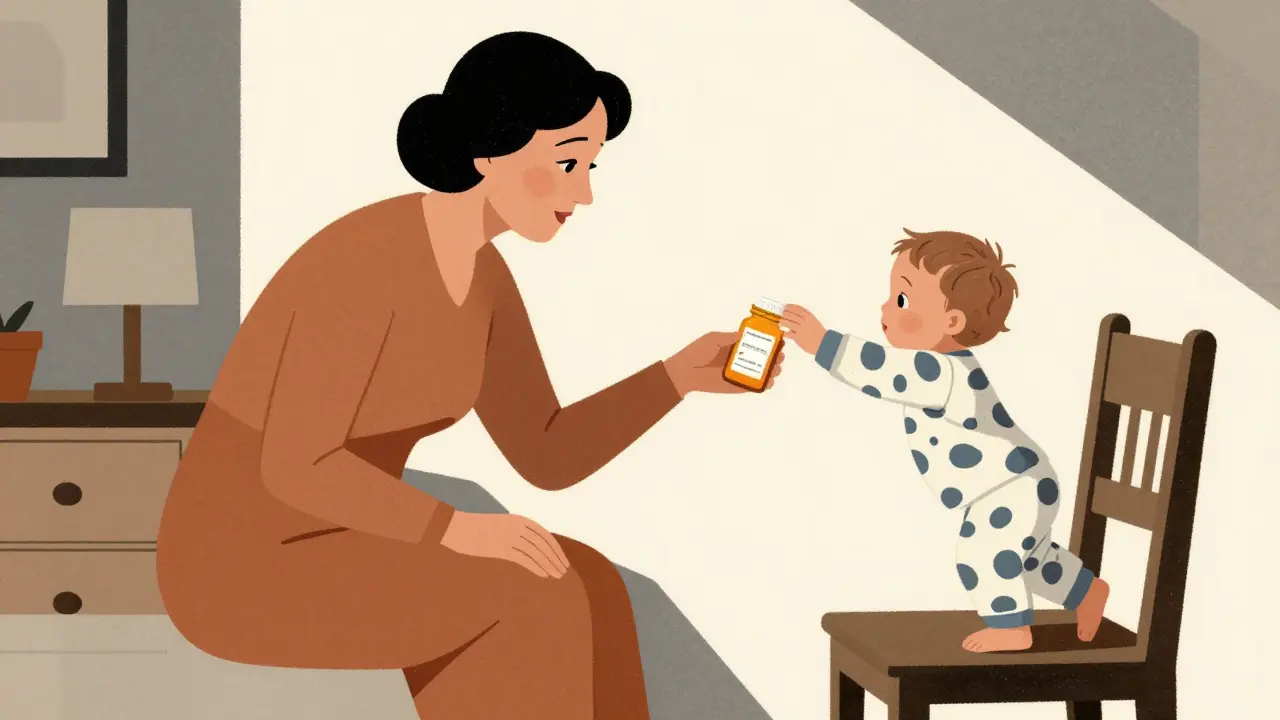
Every year, more than 58,000 children under five end up in the emergency room because they got into medicine they weren’t supposed to. And in nearly four out of ten of those cases, the medicine came from a grandparent’s purse, nightstand, or kitchen counter. It’s not because grandparents are careless. It’s because they don’t realize how quickly a curious toddler can find and open a pill bottle-even one with a child-resistant cap.
Why Grandparents Are at the Center of This Problem
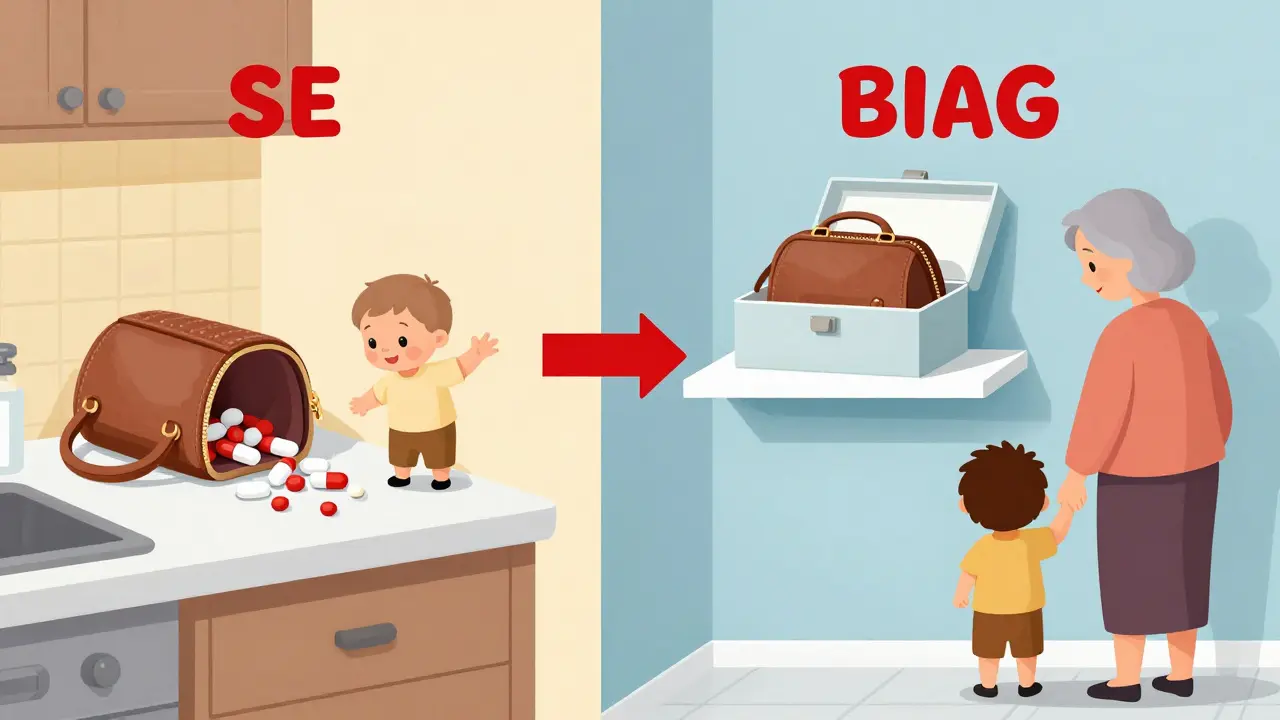
Grandparents are more likely than parents to take multiple medications daily. On average, they’re on 4.7 prescriptions or supplements. That’s more than double what most parents take. And with over seven million grandparents in the U.S. living with or regularly caring for their grandchildren, the risk is real. A 2023 poll from the University of Michigan found that 34% of grandparents take daily medication. Many keep their pills in places that are easy for them to reach-like the bathroom cabinet, bedside table, or handbag. But those are exactly the spots a child can reach too.Here’s the scary part: 29% of grandparents transfer pills out of their original bottles into weekly pill organizers or small containers. These often don’t have child-resistant caps. And 12% keep meds on their nightstands or dressers. Even when they store pills in a cabinet, 45% still keep them in the bathroom-where kids can climb up and open the door. A 2017 study showed that after a simple 15-minute safety talk, grandparents who received the guidance improved safe storage from 39% to 78% in just a few months.
What Grandparents Think vs. What Actually Happens
Many grandparents believe child-resistant caps are enough. But that’s not true. According to Consumer Product Safety Commission testing, about 30% of 4-year-olds can open those caps in under five minutes. And 62% of grandparents still think their grandkids couldn’t get into the bottle-even though the data says otherwise.Parents are more likely to lock up meds. About 58% of parents use locked storage. Grandparents? Only 22%. And while 63% of parents say they always check where medicine is stored, only 38% of families have a clear conversation with grandparents about it. That gap is dangerous.
One grandmother on Reddit shared how her 3-year-old grandson found her blood pressure pills in her purse. She didn’t even realize they were still there after a doctor’s visit. "Thankfully I caught him before he put one in his mouth," she wrote. Now she keeps them in a locked box in her closet and tells her grandson, "These are Grandma’s special vitamins-only grown-ups can touch them."
But not everyone is open to change. Some grandparents feel criticized when asked to lock up their meds. One man on a parenting forum said, "My wife said it’s insulting to suggest we’re not careful." That’s why the message matters. You don’t say, "You’re putting the kids at risk." You say, "Let’s make sure we’re both keeping our grandkids safe."
The PROTECT Initiative: What Works
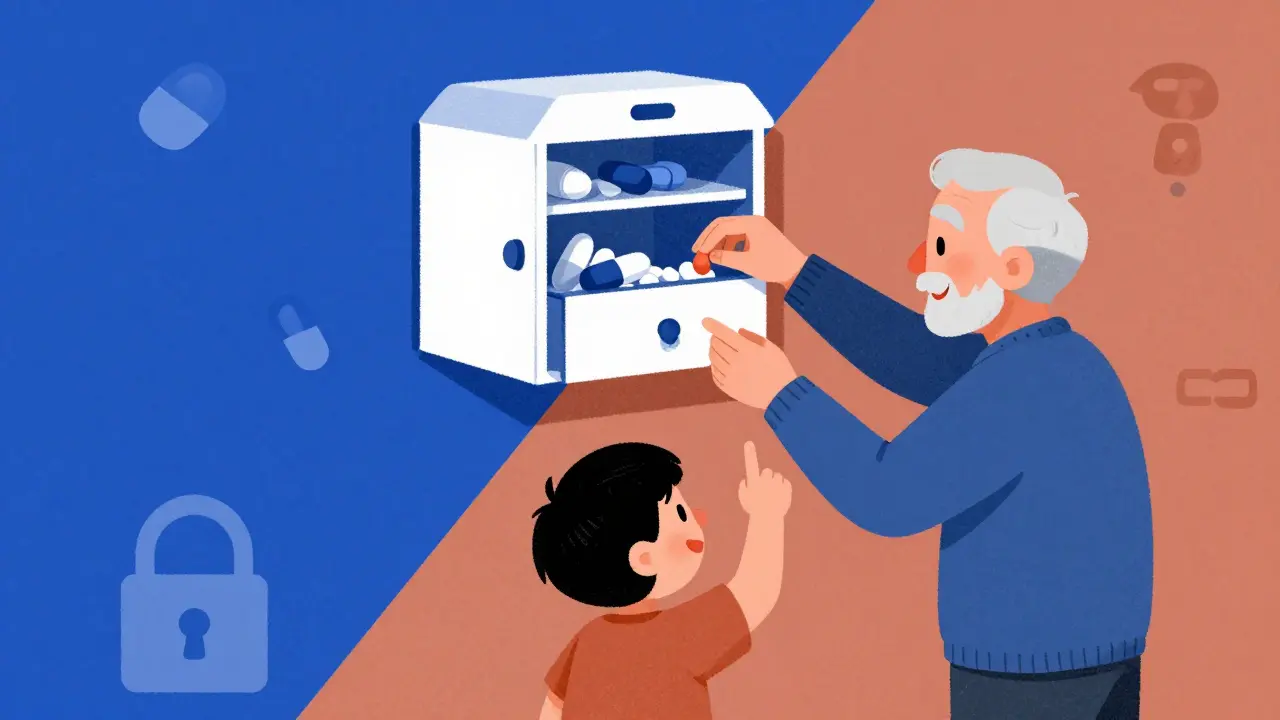
The CDC and Consumer Healthcare Products Association launched the "Up & Away and Out of Sight" campaign over a decade ago. It’s still the gold standard. Here’s what it teaches:- Keep all medicine-prescription, over-the-counter, vitamins, and supplements-in a locked cabinet or box.
- Store it up high-above 4 feet, where kids can’t reach.
- Always use the original bottle with the child-resistant cap.
- Never leave medicine on a table, nightstand, or in a purse-even for a minute.
- Dispose of old or expired meds properly. Many pharmacies take them back for free.
A 2017 NIH study showed that when grandparents got a 15-minute session with a pharmacist or nurse showing them how to lock a cabinet and open a child-resistant cap, safe storage jumped from 39% to 78%. And it stuck-90 days later, 100% remembered what to do. That’s way better than handing out a pamphlet.
How to Talk to Grandparents Without Offending Them
The biggest barrier isn’t ignorance-it’s defensiveness. Grandparents love their grandkids. They don’t want to be seen as careless. So the way you ask matters.Instead of saying, "You need to lock your meds," try:
- "Let’s make sure we’re both doing everything we can to keep the kids safe."
- "I heard the CDC has a great tip about where to store medicine-want to hear it?"
- "My daughter and I are working on a safety plan for when the kids come over. Can we make one together?"
Use stories, not lectures. Say, "A friend’s grandchild got into her blood pressure pills last month. She didn’t even know they were still in her purse." That opens the door without blame.
Practical Steps for Grandparents and Caregivers
Here’s what you can do right now:- Find a locked box or cabinet. It doesn’t have to be fancy. A small lockbox from the hardware store costs under $20. Install it on a high shelf or inside a closet.
- Put all meds back in original bottles. Throw away those weekly pill organizers if kids visit often. They’re not childproof.
- Check your purse, coat pockets, and nightstand. If medicine is there, move it. Even one pill can be dangerous.
- Use the "Safety Talk" with grandkids. Say it like this: "Medicine is not candy. Only adults give medicine. If you find medicine, tell an adult right away." Say it often. Kids remember.
- Dispose of old meds safely. Take them to a pharmacy that offers a take-back program. Don’t flush them or toss them in the trash.
What Parents Can Do to Help
Parents, you’re not off the hook. You need to talk to grandparents, too.- Ask: "Where do you keep your meds when the kids are here?" Be calm. Be curious.
- Offer to buy a lockbox. Make it a gift. "I got this for you because I know how much you care about the kids."
- Send a quick text with a link to the CDC’s "Up & Away" video. It’s short, in multiple languages, and shows real examples.
- Make a simple chart: "When the kids come over, here’s where we keep meds: Locked box in the closet."
One family started a "Medicine Safety Day" every time their grandkids visited. They’d sit together and go through the grandparents’ meds, toss expired ones, and put the rest in the lockbox. The kids even drew pictures of "medicine monsters" that had to be locked away. It turned a scary topic into something fun and memorable.
What’s New in 2026
In January 2024, the CDC launched a free digital toolkit for grandparents with short videos in English, Spanish, and Mandarin. The videos show exactly how to lock a cabinet, open a child-resistant cap, and dispose of pills. Early results show 85% of viewers watch all the way through.There’s also a new NIH-funded app called GRAND SAFE that sends gentle reminders to grandparents before holidays or visits-when the risk is highest. It’s still being tested, but early feedback is strong.
And in 2023, the American Geriatrics Society added pediatric medication safety to its official guidelines for senior care. That means doctors are now supposed to ask older patients: "Do you care for young children? Let’s talk about where you keep your meds."
What Doesn’t Work
Don’t rely on:- Just telling grandparents to "be careful." It doesn’t stick.
- Handing out flyers. Only 12% of grandparents say they’ve ever gotten safety info from a doctor or pharmacist.
- Assuming child-resistant caps are enough. They’re not.
- Waiting until after an accident happens. Prevention is the only safe option.
And don’t blame. Grandparents want to protect their grandkids. They just need clear, kind, practical help.
Final Thought: It’s Not About Control. It’s About Care.
This isn’t about telling grandparents they’re doing it wrong. It’s about working together to make sure no child ever has to go to the ER because they found a pill they thought was candy.One grandmother told a nurse, "I didn’t know my grandkids could open those caps. I thought they were foolproof." After the demo, she smiled and said, "I’ll put them in the closet. And I’ll tell them these are my secret vitamins."
That’s the moment change happens-not with a lecture, but with a conversation, a lockbox, and a shared love for the little ones.
Why are grandparents more likely to cause pediatric medication poisonings than parents?
Grandparents are more likely to take multiple medications daily-on average 4.7 prescriptions or supplements-and often store them in places that are easy for them to reach, like nightstands, purses, or bathroom cabinets. Many also transfer pills into non-childproof containers like weekly pill organizers. While parents are more likely to lock up meds and check storage regularly, grandparents may not realize how easily young children can open child-resistant caps or reach high shelves.
Is child-resistant packaging enough to keep kids safe?
No. While child-resistant caps are required by law, testing shows that about 30% of 4-year-olds can open them in under five minutes. That’s why storing medicine in a locked cabinet above 4 feet is the only reliable protection. Relying only on the cap gives a false sense of security.
What’s the best way to store medicine if I have grandchildren visiting?
Store all medications-prescription, OTC, vitamins, and supplements-in a locked box or cabinet that’s out of reach and sight, ideally above 4 feet. Keep them in their original bottles with child-resistant caps. Never leave them on countertops, nightstands, or in purses. A simple lockbox from a hardware store costs under $20 and makes a big difference.
How can I talk to my grandparent about medicine safety without making them feel criticized?
Use phrases like, "Let’s make sure we’re both keeping the kids safe," or "I heard this tip from the CDC and thought you might find it helpful." Share a story-not a lecture. Offer to help by buying a lockbox as a gift. The goal is teamwork, not blame. Most grandparents want to protect their grandkids-they just need clear, kind guidance.
Can I use a weekly pill organizer if my grandkids visit?
No. Weekly pill organizers usually don’t have child-resistant caps and are easy for children to open. Even if they’re stored in a cabinet, they’re still a risk. Keep all medications in their original bottles with caps intact. If you need help managing multiple pills, ask your pharmacist for a lockable pill dispenser designed for safety.
Where can I get a free lockbox for medicine?
Many major pharmacy chains, including CVS, Walgreens, and Rite Aid, offer free medicine lockboxes to customers over 60-especially during the holidays or when picking up prescriptions. Some community health centers and AARP chapters also give them out. Call your local pharmacy and ask: "Do you have a free lockbox for grandparents who care for young kids?"
What should I do if my grandchild gets into medicine?
Call Poison Control immediately at 1-800-222-1222. Don’t wait for symptoms. Don’t try to make them vomit. Have the medicine bottle ready when you call-they’ll need the name, amount, and time of exposure. Keep this number saved in your phone and posted on your fridge. Every second counts.
Sonal Guha
January 11, 2026 AT 07:29Grandparents keep meds in purses because they forget they put them there. Not negligence. Just human. I’ve done it. My grandma had blood pressure pills in her coat pocket for three weeks. No one told her it was dangerous. Now she uses a lockbox. No drama. Just done.
TiM Vince
January 12, 2026 AT 07:30I’m a grandpa. I didn’t know 30% of kids can crack those caps. I thought the caps were magic. Now I’ve got my pills in a locked box on the top shelf. My grandkids think it’s a treasure chest. I tell them it’s for my ‘magic beans.’ They believe it. Works better than any lecture.
laura manning
January 13, 2026 AT 01:02It is imperative to acknowledge that the current paradigm of relying on child-resistant packaging as a primary safety mechanism is fundamentally flawed and statistically indefensible. Empirical data from the Consumer Product Safety Commission demonstrates a 30% failure rate among four-year-olds; this constitutes a systemic public health vulnerability. Furthermore, the transfer of pharmaceuticals into non-compliant containers-such as weekly pill organizers-represents an egregious deviation from established safety protocols. It is not merely a matter of convenience; it is a preventable catastrophe waiting to occur. Mandatory pharmacist-led interventions, coupled with standardized, federally funded educational materials, must be implemented immediately to mitigate this escalating crisis.
Sumit Sharma
January 14, 2026 AT 00:59You’re all missing the point. This isn’t about grandparents being careless-it’s about systemic failure. Why aren’t pharmacies automatically giving lockboxes with every script for patients over 60? Why isn’t this in the Medicare counseling? Why are we blaming the elderly instead of fixing the system? I’m a geriatric nurse. I’ve seen 17 kids in the ER this year from pill exposure. All of them from grandparent homes. The solution isn’t ‘talk nicely.’ It’s policy. Mandate lockboxes. Fund them. Train pharmacists. Stop asking nicely. Start requiring it.
Jay Powers
January 15, 2026 AT 21:58I love how this post doesn’t blame anyone. That’s the whole key. My mom used to keep her meds on the nightstand. I didn’t say ‘you’re dangerous.’ I just brought over a little lockbox for her birthday with a note: ‘For your magic pills.’ Now she shows off the box like it’s a trophy. Kids think it’s cool. We made it about care, not control. It’s that simple.
Prachi Chauhan
January 17, 2026 AT 21:01It’s funny how we think kids are stupid. They’re not. They’re curious. They watch. They learn. My granddaughter figured out how to open my pill bottle before she could tie her shoes. I thought the cap was enough. I was wrong. Now I keep them in the closet with the door locked. I tell her, ‘These are Grandma’s secret powers.’ She nods. She knows not to touch. Sometimes, the best safety tool is a good story.
Katherine Carlock
January 18, 2026 AT 21:57Just did this with my mom last week! Bought her a lockbox from CVS (free, btw!) and we sat down and sorted her meds. She cried. Said she felt like a bad grandma. I told her, ‘No, you’re just human. And now you’re a superhero grandma.’ We even made a little chart with stickers. The kids love helping ‘lock the monsters away.’ 😊 Now she texts me every time she visits: ‘All meds locked and loaded!’
beth cordell
January 20, 2026 AT 03:59My mom got the free lockbox from Walgreens. She put it in the closet. Now my kids call it the ‘magic medicine chest.’ 🧙♀️💊 They think it’s a wizard’s box. They don’t touch it. They ask me to open it. I say, ‘Only grown-ups.’ They believe me. It’s not about fear. It’s about making it fun. And free lockboxes? YES. Tell everyone. 🙌
Craig Wright
January 21, 2026 AT 04:41As a British citizen, I find this American preoccupation with lockboxes and child-resistant caps somewhat excessive. In the UK, we trust common sense. Grandparents are not reckless; they are experienced. The solution is not more boxes, but better education. Why not integrate this into the NHS’s annual health checks? Why are we treating elderly caregivers like children? We must not infantilize them. A simple conversation, delivered with respect, is more effective than a $20 plastic box.
Lelia Battle
January 23, 2026 AT 03:51I’ve been a nurse for 32 years. I’ve seen children die from one pill. The tragedy isn’t the lack of awareness-it’s the lack of action. The data is clear. The tools are cheap. The solution is simple. But we keep waiting for someone else to fix it. Grandparents aren’t the problem. Our silence is. If you love a child, act. Not tomorrow. Today. Buy the lockbox. Ask the question. Make it normal. It’s not dramatic. It’s necessary.
Alice Elanora Shepherd
January 25, 2026 AT 02:58It’s worth noting that the CDC’s ‘Up & Away’ initiative has been replicated internationally-with similar success rates in Canada, Australia, and even rural India. The key isn’t the lockbox-it’s the consistent, repeated messaging delivered by trusted figures: pharmacists, nurses, community health workers. One 15-minute session, delivered with empathy, changes behavior permanently. Yet, most primary care systems still don’t screen for grandparent caregivers. That’s the real gap. We need to ask: ‘Do you care for young children?’-on every intake form. It’s not extra work. It’s standard care.
Christina Widodo
January 26, 2026 AT 21:01Wait-so if I’m a grandparent who lives with my grandkids and takes 5 meds, and I’ve been using a pill organizer for 10 years, and now I’m supposed to buy a $20 lockbox and reorganize everything… what if I can’t afford it? What if I live in a tiny apartment? What if I can’t reach the top shelf? This feels like a middle-class solution. We need affordable, accessible options-not just ‘buy a box.’
Lauren Warner
January 27, 2026 AT 03:11Of course grandparents are the problem. They ignore warnings. They refuse to change. They think they’re entitled to keep their pills wherever they want. This isn’t about ‘being nice.’ It’s about survival. If you don’t lock your meds, you’re putting a child’s life at risk. No more sugarcoating. No more ‘let’s work together.’ If you can’t keep your pills safe, you shouldn’t be babysitting. Simple.