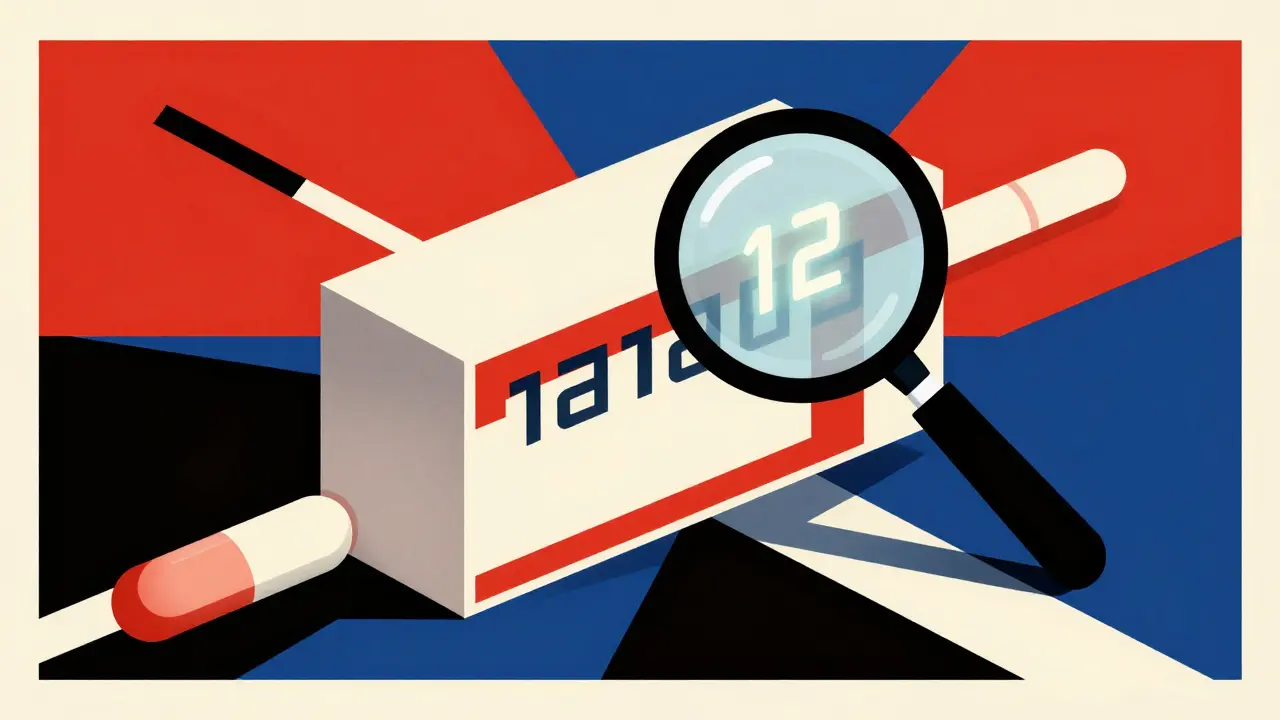
Imagine picking up a prescription, trusting the pill in your hand, only to find out later it contains chalk or, worse, a toxic filler. It sounds like a movie plot, but the World Health Organization estimates that 1 in 10 medical products in low- and middle-income countries is substandard or falsified. With a counterfeit pharmaceutical market now worth roughly $200 billion, the risk isn't just a theoretical problem-it's a global health crisis. While you can't always tell a fake pill by looking at it, there are now high-tech systems in place to ensure what you're taking is the real deal.
Quick Takeaways for Staying Safe
- Serialization: Most modern medicines use unique serial codes to track a pack from the factory to the pharmacy.
- Regional Differences: The EU requires verification at the moment of sale, while the US focuses on tracking ownership changes.
- Advanced Tech: Spectroscopy and molecular tags are the gold standard for 100% confirmation, though they usually stay in the lab.
- Red Flags: Always check for damaged packaging, missing serial numbers, or unusually low prices from unverified online sources.
The Digital Shield: Serialization and Track-and-Trace
The most common way we fight fakes today is through Serialization. Think of this as a digital fingerprint for every single box of medicine. Instead of just one barcode for the whole product line, each individual package gets its own unique identity.
In Europe, the Falsified Medicines Directive (FMD) has changed the game. Since 2019, pharmacists there use a 12-digit serial code to cross-check a database before handing the medicine to the patient. It's a tight loop-if the code has already been scanned elsewhere or doesn't exist in the system, the alarm goes off immediately. In the US, the Drug Supply Chain Security Act (DSCSA) handles things slightly differently. It focuses on the "hand-off." Every time a drug changes owners-from manufacturer to wholesaler to pharmacy-the transaction must be verified. While the US system is incredibly strong for the supply chain, it hasn't historically required a final scan at the patient level, though the FDA is working to close that gap by 2027.
| Feature | EU FMD (Europe) | US DSCSA (USA) |
|---|---|---|
| Verification Point | Point of dispensing (Patient level) | Point of ownership transfer |
| Verification Rate | 100% at pharmacy | High, but varies by stage |
| Primary Tool | Unique 12-digit serial code | Electronic tracing/interoperable systems |
| Main Goal | Prevent fakes from reaching patient | Secure the entire supply chain |
High-Tech Detection: Spectroscopy and Molecular Tags
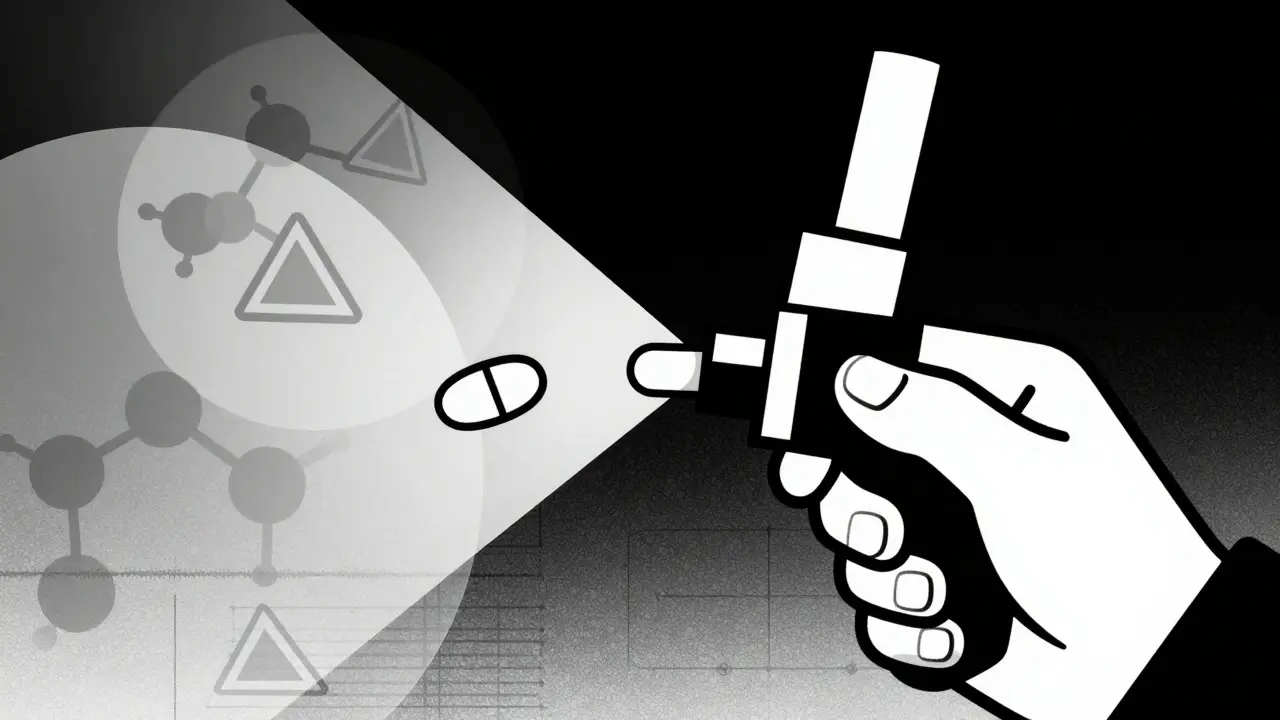
If a serial code is like a passport, Spectral Analysis is like a DNA test. Some counterfeits are so good they can even mimic a real serial code. To beat this, scientists use light. Using techniques like Raman spectroscopy or Near-Infrared (NIR), they can scan a pill and see its unique "product signature." If the chemical makeup doesn't match the reference database, it's a fake.
While these used to be giant machines in a basement, handheld spectroscopic devices are hitting the field. Their accuracy in the real world has jumped from around 78% in 2018 to about 92% in 2022. However, for a 100% guarantee, you still need a full laboratory setup.
Then there are Physical Chemical Identifiers (PCIDs). These are essentially "invisible inks" or molecular taggants mixed directly into the drug or the packaging. They are incredibly hard to forge because the counterfeiters don't know exactly what chemical marker the manufacturer used. While this is the most secure method, it adds a small cost (about 3 to 15 cents per unit), which is why it's usually reserved for high-value or high-risk medications.
The Role of Blockchain and AI in 2026
We're seeing a shift toward Blockchain for drug authenticity. Instead of a single database that can be hacked or crashed, blockchain creates a shared, unchangeable ledger of every move a drug makes. Some of the world's biggest pharma companies have adopted this, seeing verification accuracy hit nearly 99.8%. The downside? It's expensive. Implementing a full blockchain system can cost a company millions of dollars in IT infrastructure.
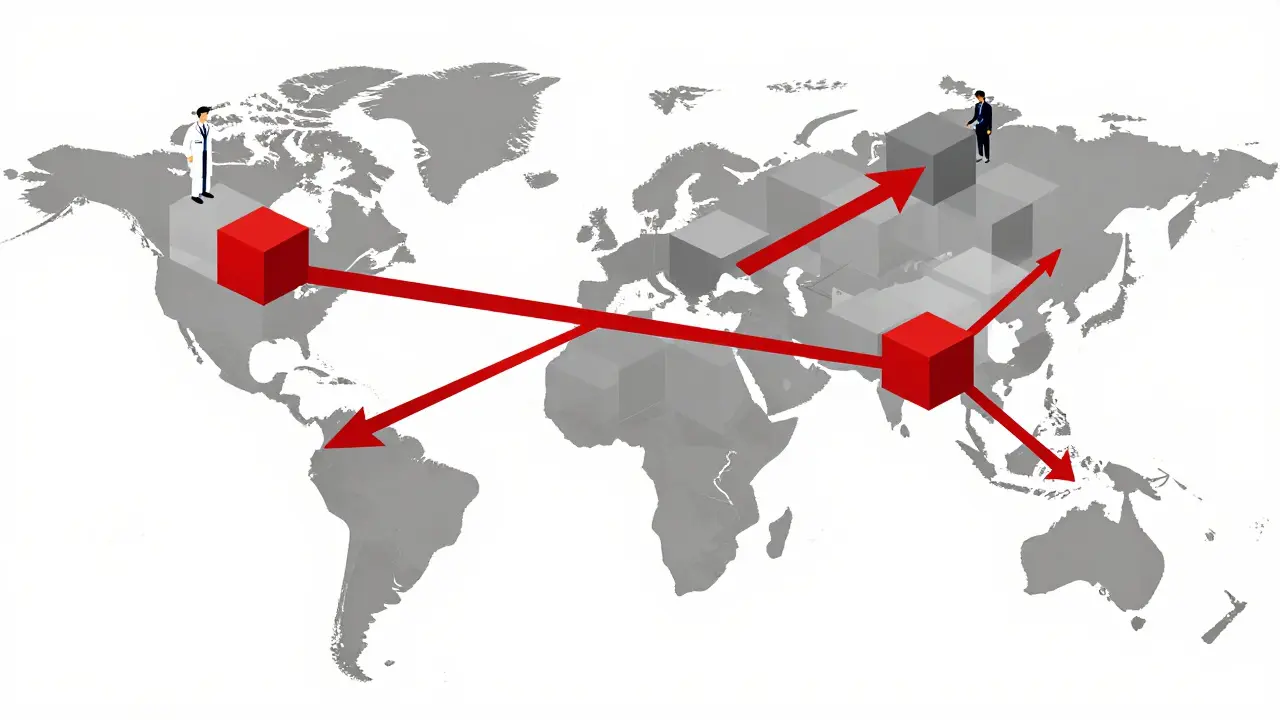
Artificial Intelligence is also entering the chat. The European Medicines Agency is now piloting AI-powered anomaly detection. Instead of just checking if a code exists, the AI looks for patterns. For example, if a batch of medicine that was supposed to be in Germany suddenly pops up in a pharmacy in Spain ten times in one hour, the AI flags it as a potential diversion or counterfeit ring before a human would even notice.
Real-World Challenges: Why Tech Isn't Always Enough
Even with all this tech, humans are often the weakest link. The World Health Organization suggests that over 70% of counterfeit detection failures are actually due to human error.
Take the EU FMD system: when it first rolled out, many pharmacists found the warning pop-ups confusing. About 43% of them mistook a "counterfeit alert" for a simple "already dispensed" notification. Because pharmacists are often rushed during peak hours-with verifications taking about 3.2 seconds per item-it's easy to click "OK" and ignore a red flag. This is why many hospitals are now moving toward audio alerts (beeps or sirens) rather than just visual warnings.
In regions with poor internet or mobile coverage, the struggle is even worse. SMS-based verification systems, which are popular in some African countries, only work about 68% of the time. If you can't get a signal, you can't verify the drug, leaving vulnerable populations at risk.
Practical Checklist for Patients and Providers
You don't need a Raman spectrometer to stay safe, but you should be vigilant. Here is a practical way to approach drug authenticity:
- Source Check: Only buy from licensed pharmacies. If a website offers a "too good to be true" price on a brand-name drug, it's likely a fake.
- Visual Inspection: Look for inconsistencies. Are the pills different colors? Is the printing on the blister pack blurry? Is the box seal broken?
- Serial Verification: If the medication comes with a QR code or a verification link, use it. Smartphone scanning has reached about 92% accuracy in recent field tests.
- Consult the Pharmacist: Ask if the medication has been verified through the local supply chain system (like the EU Hub or DSCSA-compliant software).
- Report Anomalies: If a drug doesn't work as expected or looks weird, report it to your national health authority immediately.
Can I verify my medication at home?
While you can't do a chemical analysis, many manufacturers now include QR codes or SMS verification systems on the packaging. Scanning these with your smartphone can often confirm if the batch is authentic. However, always remember that visual checks and buying from reputable, licensed pharmacies are your first and best line of defense.
What is the difference between a "substandard" and "falsified" drug?
A substandard drug is an authentic product that was made poorly or degraded due to bad storage (like heat exposure). A falsified (counterfeit) drug is one that is deliberately and fraudulently mislabeled or misrepresented-essentially a fake designed to look like a real brand.
Are generic drugs more prone to counterfeiting?
Not necessarily. Counterfeiters usually target high-demand, expensive brand-name drugs because the profit margins are higher. However, any drug with a high street value or high demand is a target. The goal is to target the most profitable items, regardless of whether they are generic or brand-name.
How does blockchain actually stop fake drugs?
Blockchain creates an immutable record. Every time a drug moves from the factory to a truck, then to a warehouse, then to a pharmacy, that "hand-off" is recorded. Because no one can go back and change the history of the ledger, it's nearly impossible to slip a fake batch into the system without it being obvious that there is no valid origin record.
What should I do if I suspect my medication is counterfeit?
Stop taking the medication immediately. Keep the packaging and the remaining pills, as these are needed for evidence. Contact your pharmacist and your healthcare provider, and report the incident to your national regulatory body (like the FDA in the US or the EMA in Europe) so they can trace the batch and warn other patients.
Next Steps and Troubleshooting
For Patients: If you are traveling in regions where drug authenticity is a known issue, stick to large, reputable hospital pharmacies rather than small street kiosks. If a pill looks different than it did last month, don't ignore it-ask your pharmacist for a new batch.
For Pharmacy Staff: To avoid "alert fatigue," consider implementing customized notification colors or audio signals for counterfeit warnings. Ensure your staff receives at least 16-24 hours of specific training on authentication protocols to reduce the high rate of human error associated with scanning systems.