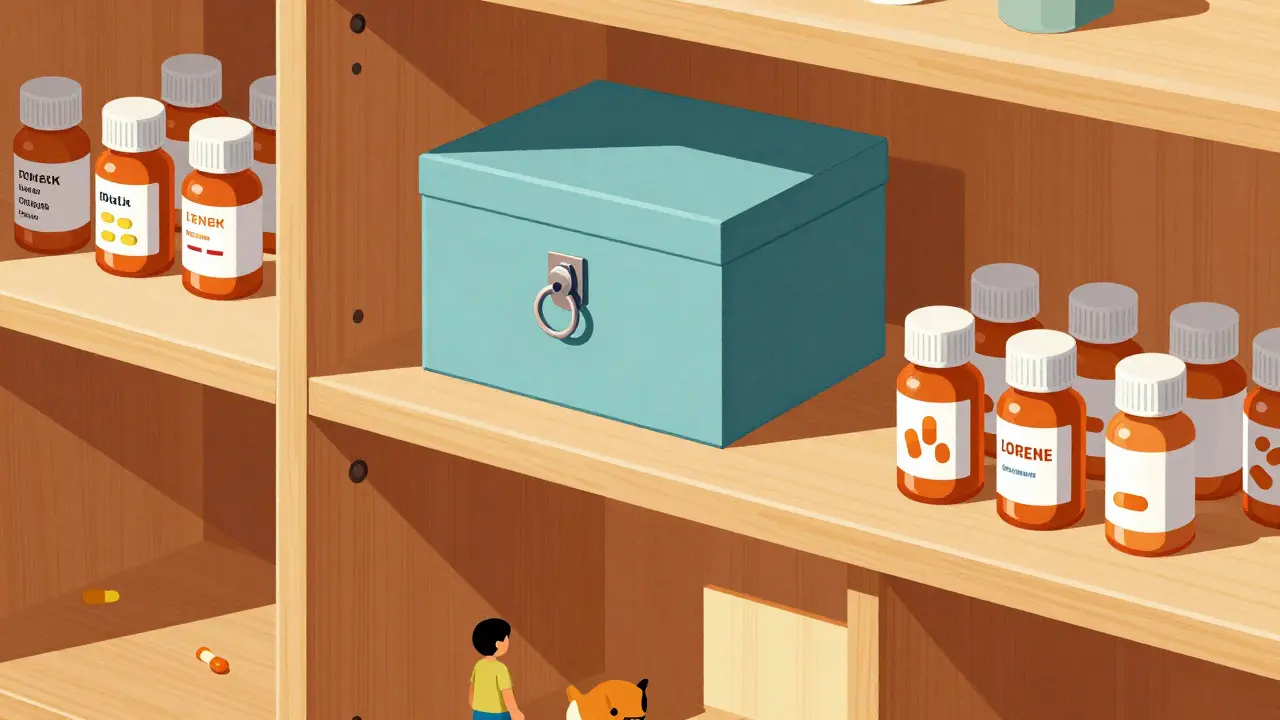
Every year, millions of unused or expired medications end up in medicine cabinets, toilets, or trash cans - often without anyone realizing the risks they pose. Storing pills the wrong way or tossing them in the sink might seem harmless, but it’s not. Improper handling of prescriptions contributes to drug misuse, environmental contamination, and even accidental poisonings. The good news? Simple, clear steps can keep your home safer and the environment cleaner.
How to Store Medications Safely
Most medications need to be kept in a cool, dry place away from sunlight and moisture. The bathroom cabinet? That’s a bad idea. Steam from showers and temperature swings from the heater can break down pills, making them less effective or even unsafe. The best spot is a high shelf in a bedroom closet or a locked drawer in a main living area - somewhere out of reach of kids and pets.Temperature matters. Many pills are stable between 68°F and 77°F (20°C-25°C). But some, like insulin or certain antibiotics, need refrigeration at 36°F-46°F (2°C-8°C). Always check the label. If you’re unsure, call your pharmacist. They’ll tell you exactly how to store each drug.
Controlled substances - like opioids, benzodiazepines, or stimulants - require extra care. These drugs are regulated by the DEA because of their high risk for abuse. They must be kept in a locked container, like a medicine lockbox. Don’t just put them in a drawer. Lockboxes are inexpensive, easy to install, and widely available at pharmacies or online. If you live with teens or guests, this isn’t optional - it’s a safety must.
What Not to Do With Old Medications
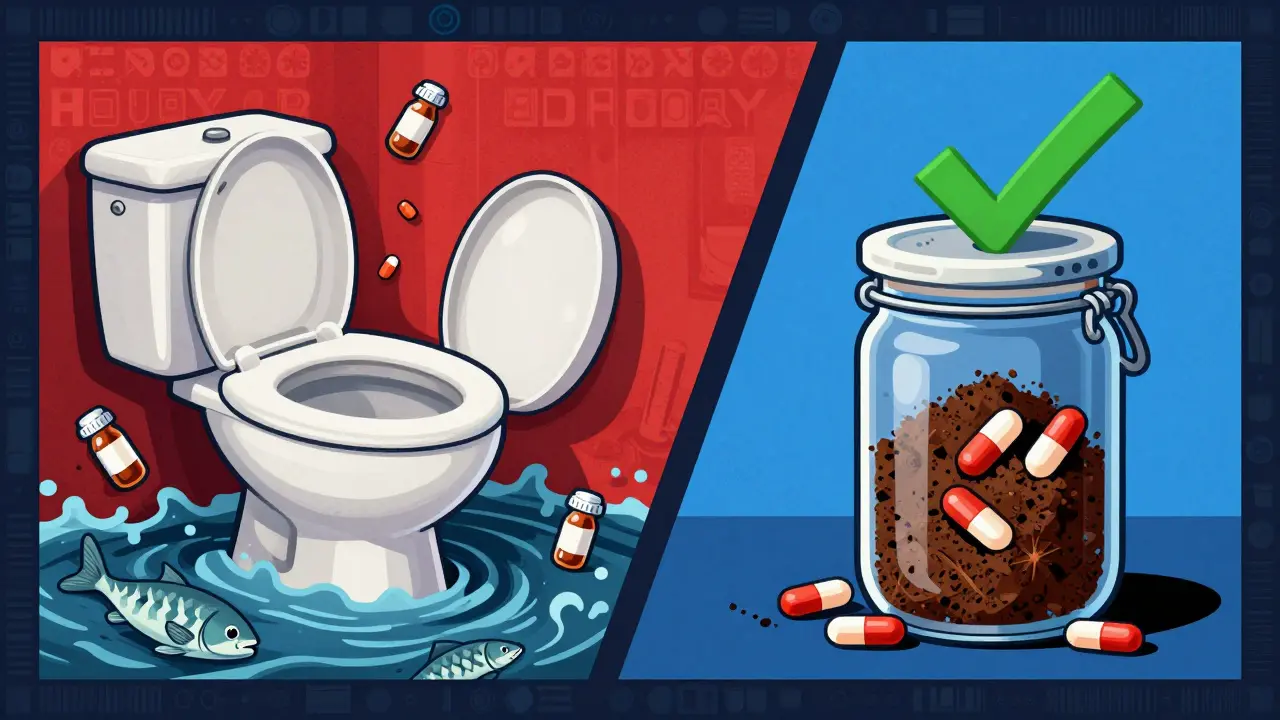
Flushing pills down the toilet used to be common advice. But since 2019, the EPA’s Subpart P rule has banned flushing hazardous pharmaceutical waste. Why? Because flushing sends drugs into waterways. Studies show pharmaceuticals have been detected in drinking water sources across the U.S., even in trace amounts. While the health impact on humans is still being studied, fish and wildlife are already showing hormonal disruptions from these chemicals.Another myth: throwing pills straight into the trash. That’s risky too. Curious kids, pets, or even scavengers can dig through garbage and find them. A 2022 FDA survey found that 61% of Americans still believe it’s okay to flush most medications. That’s dangerously wrong.
And don’t just dump pills into a plastic bag and toss them. That’s not disposal - that’s leaving a hazard behind.
The Right Way to Dispose of Medications at Home
The FDA says the safest option for home disposal is a take-back program. These are organized by the DEA, local police departments, or pharmacies. You can find one near you using the DEA’s Take Back Day locator or by asking your pharmacist. Since 2010, these programs have collected over 14 million pounds of unused drugs.But what if you can’t get to a take-back site? The FDA has a clear backup plan:
- Remove pills from their original bottles.
- Mix them with something unappealing - like used coffee grounds, cat litter, or dirt. Don’t crush them; just mix.
- Put the mixture in a sealed container - a jar with a lid or a plastic bag.
- Scratch out your name and prescription number on the empty bottle before tossing it.
- Put the sealed container in your household trash.
This method reduces the risk of misuse and prevents drugs from leaching into groundwater. Studies show it cuts contamination by 99.8% compared to flushing.
The Flush List - When Flushing Is Still Allowed
There’s one exception. The FDA maintains a flush list of medications that are dangerous enough to warrant flushing if no take-back option exists. These are mostly potent opioids and one benzodiazepine. As of 2023, the list includes:- Remifentanil
- Fentanyl patches
- Oxycodone extended-release
- Hydrocodone/acetaminophen
- Morphine sulfate extended-release
- Meperidine
- Tapentadol
- Alprazolam (Xanax)
- And 7 others - full list on FDA.gov
If you have one of these, and you can’t get to a take-back event within 24 hours, flushing is the safer option. Why? Because these drugs are so potent that even one pill can be fatal to a child or pet. Waiting for a disposal event isn’t worth the risk.
What Healthcare Facilities Do Differently
Hospitals, nursing homes, and pharmacies face stricter rules. They can’t just use home disposal methods. Under EPA Subpart P, any healthcare facility that generates pharmaceutical waste must classify each drug as either hazardous or non-hazardous.About 5-10% of all pharmaceutical waste is classified as hazardous by the EPA - mostly chemotherapy drugs, certain antibiotics, and some neurotoxins. These must be incinerated at licensed facilities. They can’t go down the drain. They can’t go in regular trash. They must be stored in labeled, leak-proof containers, kept in well-ventilated areas, and tracked with a manifest that includes the generator, transporter, and disposal site.
Controlled substances are handled separately. Even if they’re not hazardous, they still require special documentation under DEA rules. A pharmacy can’t just throw them in a dumpster. They must work with Environmental Health and Safety (EHS) teams, maintain destruction records for three years, and get a certificate of destruction within 45 days of disposal.
It’s complex. A 2021 study found 42% of nurses were confused about which drugs were hazardous. Many facilities spend over $12,500 a year just to comply. But the system exists for a reason: one improperly disposed vial of chemotherapy can poison a water supply.
Why This Matters - Real Consequences
Improper disposal isn’t just a paperwork issue. It’s a public health crisis.In 2022, the EPA estimated that 247 million pounds of pharmaceuticals enter U.S. waterways every year - mostly from flushing and landfill leaching. That’s not just about fish. It’s about future drinking water. Some studies suggest long-term exposure to low-dose pharmaceuticals in water could affect hormone systems, especially in developing children.
And then there’s misuse. The CDC reports that over 60% of prescription opioid misuse starts with drugs taken from family medicine cabinets. In 2022, nearly 70% of teens who misused painkillers got them from a relative’s stash. Proper storage prevents that.
Every unused pill you store safely or dispose of correctly reduces the chance someone else will misuse it - or that the environment will pay the price.
What’s Changing in 2025 and Beyond
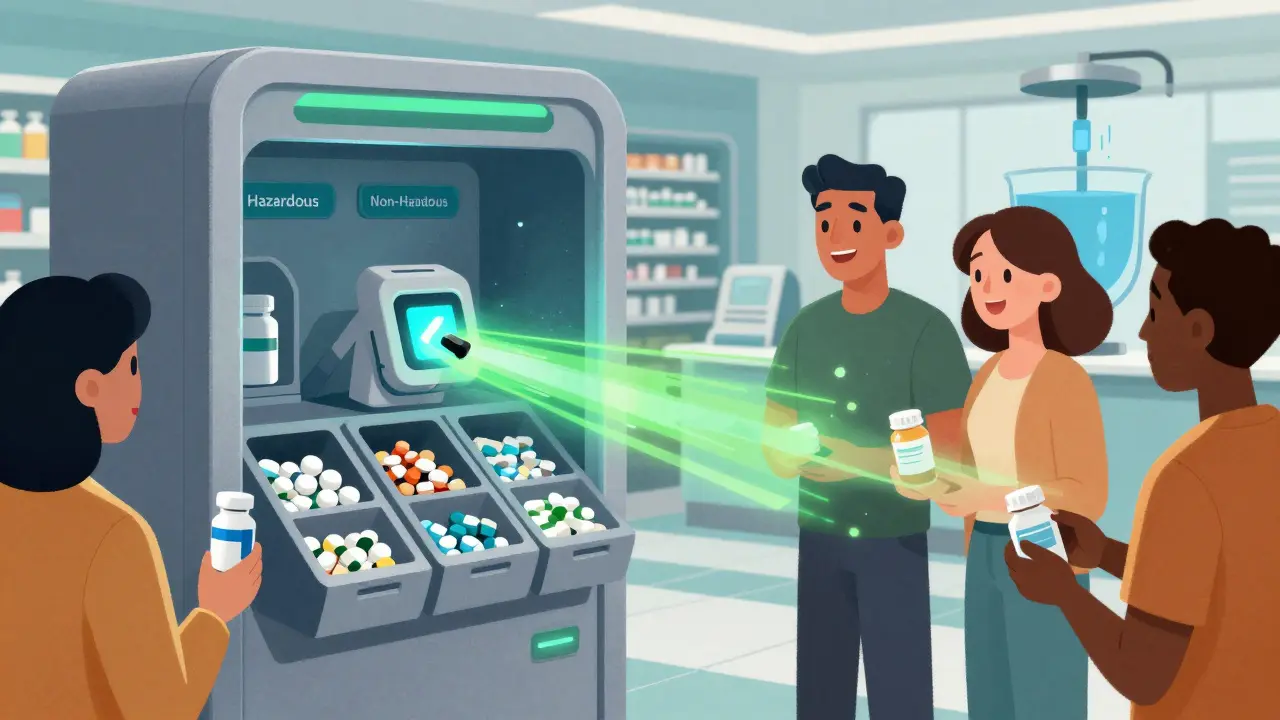
New technology is helping. Smart disposal kiosks are being tested in 127 hospitals. These machines scan your prescription bottle, identify the drug, and sort it into the right disposal stream - no guesswork needed. By 2025, the EPA is expected to propose new water quality standards for pharmaceuticals, and more states are passing laws requiring pharmacies to offer free take-back bins.Manufacturers are also starting to foot the bill. The concept of “producer responsibility” is gaining traction - meaning drug companies, not consumers or taxpayers, pay for disposal programs. Already, 89% of healthcare executives say they’re integrating waste management into their sustainability goals.
The message is clear: Proper handling of prescriptions isn’t optional anymore. It’s a responsibility - for patients, for providers, and for the planet.
Can I just throw old pills in the trash without mixing them?
No. Throwing pills directly into the trash leaves them accessible to children, pets, or people who might misuse them. Always mix them with an unappealing substance like coffee grounds or cat litter first, then seal them in a container before tossing them. This makes them unattractive and unsafe to consume.
Are take-back programs really effective?
Yes. Since 2010, DEA-authorized take-back programs have collected over 14 million pounds of unused medications. These programs prevent drugs from entering water systems and reduce the risk of accidental overdose or abuse. They’re free, safe, and available at over 11,000 locations nationwide.
What if I can’t find a take-back location near me?
Use the FDA’s at-home disposal method: remove pills from their containers, mix them with coffee grounds or cat litter, seal them in a plastic bag or jar, scratch out your personal info on the bottle, and put it in the trash. This is the next best option when take-back isn’t available.
Why can’t I flush all my expired meds?
Flushing sends drugs into rivers, lakes, and drinking water supplies. Even tiny amounts can harm aquatic life and may eventually enter human water systems. Since 2019, the EPA banned flushing hazardous pharmaceuticals. Only the FDA’s specific flush list drugs should be flushed - and only if no take-back option exists.
Do I need to store all medications in a locked box?
Only controlled substances - like opioids, benzodiazepines, and stimulants - require a locked container. But if you have kids, teens, or visitors in your home, it’s smart to lock up all prescriptions. It only takes one pill to cause an overdose.
What happens if I dispose of hazardous waste improperly?
For individuals, there’s no direct legal penalty - but the environmental and public health risks are real. For healthcare facilities, improper disposal can lead to EPA fines, DEA violations, and even loss of licensure. The system exists to protect everyone - not just to punish.
Stephon Devereux
February 14, 2026 AT 04:36Let’s be real - this isn’t just about pills in a cabinet. It’s about systemic neglect. We treat pharmaceutical waste like it’s disposable trash because we’ve been conditioned to think of medicine as a commodity, not a hazardous substance. The EPA’s 247 million pounds statistic? That’s not a number - it’s a warning siren. Every time someone flushes a pill because they don’t know better, we’re poisoning future drinking water. And no, your ‘I’ll just mix it with coffee grounds’ isn’t enough if you’re not doing it right. The FDA’s guidance is clear because science says so - not because bureaucrats are bored.
But here’s the kicker: we’re not talking about individual responsibility. We’re talking about infrastructure failure. Why should a single mom in rural Ohio have to drive 40 miles to drop off her expired Xanax? Why aren’t take-back bins in every CVS, Walmart, and grocery store? This isn’t a personal failing - it’s a policy failure. And until drug manufacturers are legally forced to fund disposal programs, we’re just rearranging deck chairs on the Titanic.
Ernie Simsek
February 14, 2026 AT 08:52bro i just threw my old oxycodone in the trash last week 😅 i mean come on it’s not like anyone’s gonna dig through my trash right??
Skilken Awe
February 15, 2026 AT 17:28Oh great. Another 8-page manifesto on how to handle your expired Adderall like a corporate compliance officer. Let me guess - you also recycle your Tums and label your Advil bottles with QR codes. This isn’t rocket science. You don’t need a manifest. You don’t need a locked box. You don’t need to mix it with cat litter like it’s a science experiment. Just don’t give your 14-year-old access to the medicine cabinet. That’s it. That’s the whole fucking checklist. Everything else is performative virtue signaling dressed up as public health.
And for the love of god, stop acting like flushing is some kind of environmental apocalypse. Trace amounts in water? So what? We’ve got pharmaceuticals in our tap water from 50 different sources. You think your coffee grounds are gonna fix that? Wake up. The real problem is the 70% of teens getting pills from their parents’ cabinet. That’s a parenting failure. Not a disposal protocol failure.
Craig Staszak
February 15, 2026 AT 22:58Interesting breakdown but honestly the real issue is accessibility. Take-back programs are great but if you live in a town with no pharmacy, no police station, and no DEA drop-off - what then? I live in rural Montana. The nearest drop-off is 80 miles away. So I do the FDA method. Mix with coffee grounds. Seal in ziplock. Toss. Done. No one’s gonna dig through my trash. And if they do? They’re gonna get a nasty surprise. That’s the point. The system should adapt to people not the other way around.
Alyssa Williams
February 17, 2026 AT 04:26I’ve been doing this right since my dad had a heart attack and we found his old painkillers in the bathroom drawer. Scary stuff. Now I keep everything in a locked box on the top shelf. I mix everything with coffee grounds before tossing. I scratch off my name. It takes 5 minutes. It’s worth it. If you’ve got kids or guests? Do it. It’s not hard. Just don’t be lazy.
Joanne Tan
February 18, 2026 AT 02:58OMG this is so important i had no idea about the flush list!! I’ve been throwing everything in the trash like a moron 😳 now i’m going to check my cabinet right now. Also lockboxes are like 12 bucks on amazon?? why have i not done this sooner??
steve sunio
February 19, 2026 AT 06:43yea right so flushin is bad but mixin with cat litter is good? like wtf? who even uses cat litter anymore? and who the hell is gonna dig through trash? its not like people are scavenging for pills like its 2008. also 14 million pounds? that sounds like a lot but like… 14 million pounds of what? candy? paper? this whole thing feels like a scam to make pharmacists rich. also i live in nigeria and we just throw it in the river. no one cares here. so why should i care?
Neha Motiwala
February 19, 2026 AT 08:04Okay but what if the lockbox gets stolen? What if the take-back program is a government trap to track who’s taking opioids? What if the coffee grounds are laced with surveillance microchips? What if the EPA is secretly using our discarded pills to manipulate our hormones through the water supply? I’ve read 17 articles and watched 3 documentaries - they’re all connected. I don’t trust any of this. I’m keeping my pills in a sealed jar buried under my porch. That’s the only safe place.
Robert Petersen
February 19, 2026 AT 19:26Love this breakdown. Seriously. I used to toss everything in the trash too - until my niece nearly swallowed a whole bottle of my dad’s blood pressure meds. Scared the hell out of me. Now I use the FDA method every time. It’s easy. Takes 3 minutes. And I keep my meds locked up. It’s not about being paranoid - it’s about being responsible. If we all just did this one small thing, we’d cut down on so many overdoses. You’re not just protecting your home - you’re protecting someone else’s kid. That’s powerful.
alex clo
February 21, 2026 AT 09:10While the information presented is largely accurate and well-sourced, I would like to suggest a minor correction regarding the EPA Subpart P rule. The regulation pertains specifically to healthcare facilities and not individual consumers. The EPA’s 2019 guidance on flushing was advisory, not a legal ban. Enforcement mechanisms are not applicable to households. The distinction is critical to avoid conflating regulatory obligations across sectors. For private citizens, the FDA’s home disposal guidelines remain the appropriate standard.