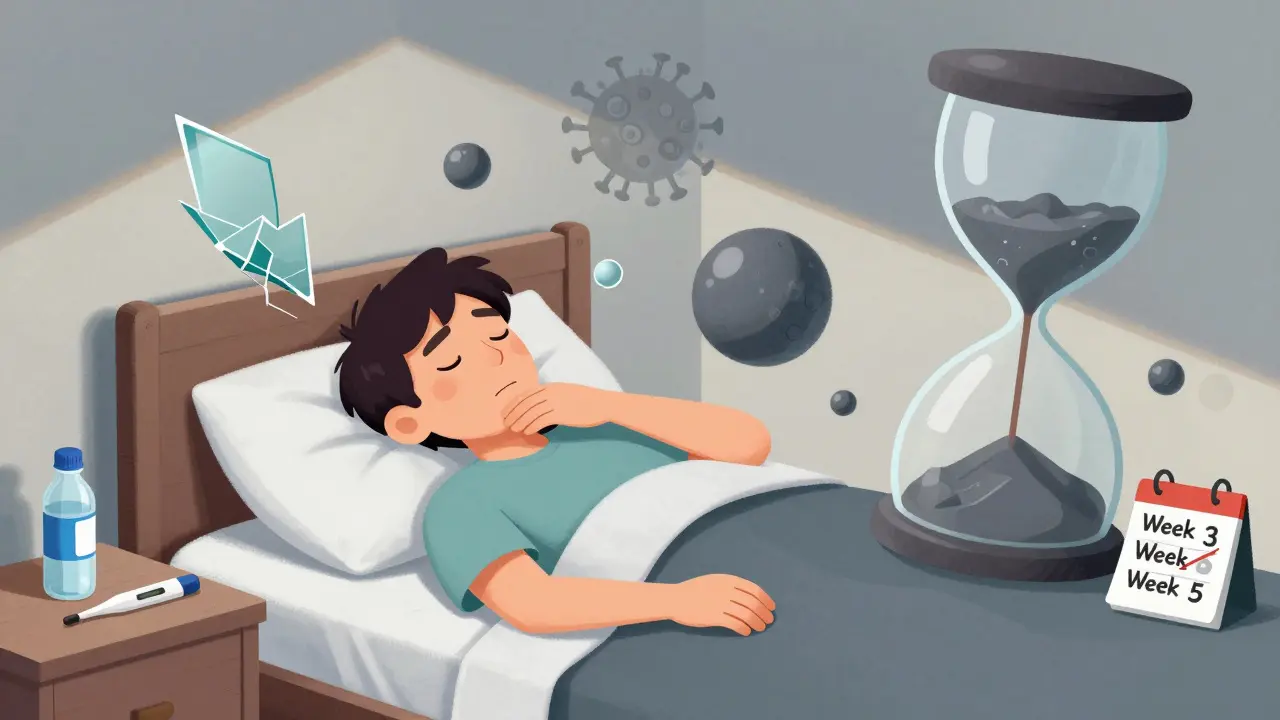
When you feel completely drained, your throat hurts like you swallowed glass, and your lymph nodes feel like marbles under your skin, it’s easy to think you’ve got the flu. But if you’re a teen or young adult and the fatigue won’t quit-even after a week or two-it might be something else: mononucleosis. Often called "mono" or "the kissing disease," it’s not just a bad cold. It’s a viral infection driven by the Epstein-Barr virus (EBV), and it doesn’t play by the rules of typical infections.
What Exactly Is Mononucleosis?
Mononucleosis is caused by the Epstein-Barr virus, a member of the herpes family. It’s not rare-it’s everywhere. About 95% of Americans have been exposed to EBV by age 35, according to the Cleveland Clinic. But most people never know it. Kids often get it with mild symptoms, like a low fever or tiredness, and brush it off as a passing bug. The real trouble starts in teens and young adults. That’s when the classic symptoms hit hard: extreme fatigue, swollen tonsils with white patches, swollen glands in the neck, and a fever that lingers. The virus spreads through saliva. That’s why it’s called the kissing disease. But you don’t need a kiss to catch it. Sharing a drink, a fork, or even a toothbrush can do it. The scary part? You can spread it for weeks before you even feel sick. And once you’ve had it, the virus stays in your body for life. It goes quiet, hiding in your B-cells. Most people never have another issue. But in rare cases, especially if your immune system is weak, it can reactivate.The Symptoms: More Than Just a Sore Throat
Most people think mono is just a bad sore throat. It’s not. The real villain is fatigue. In fact, 98% of people with mono report extreme tiredness-so bad that even brushing your teeth can leave you winded. That fatigue doesn’t fade in a few days. It hangs on for weeks, sometimes months. A Reddit user shared: "I thought I was recovering at week 3, then hit a wall at week 5. Just showering exhausted me. It took 11 weeks to return to part-time work." Other common symptoms include:- Fever between 101°F and 104°F
- Swollen lymph nodes, especially in the neck
- Sore throat that doesn’t improve with antibiotics
- Swollen tonsils with white or gray patches
- Headaches and muscle aches
- Loss of appetite
How Is It Diagnosed?
Your doctor won’t just guess. They’ll test. The first test is the Monospot, which looks for antibodies your body makes in response to EBV. It’s about 85% accurate by the second week of illness. But if you get tested too early-say, in the first week-it can come back negative even if you have mono. That’s why some people need a second test. For a clearer picture, doctors can order EBV-specific antibody tests:- VCA-IgM: Shows up in early infection
- VCA-IgG: Stays in your body for life
- EBNA: Appears 2-3 months after infection, meaning you’re past the acute phase
There’s No Cure-So What Do You Do?
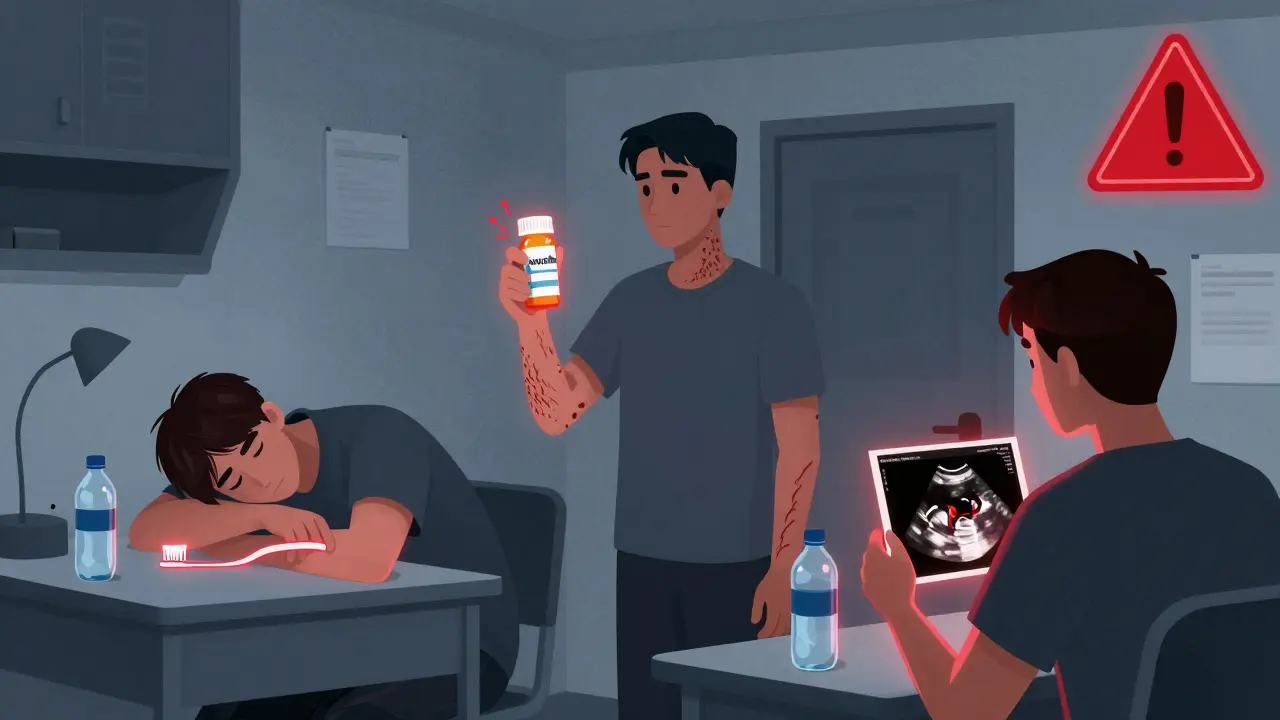
No antiviral drug cures mono. No pill makes it go away faster. That’s hard to accept. But the good news? It gets better on its own. Your immune system handles it. Treatment is about managing symptoms and avoiding complications. Here’s what actually works:- Rest-yes, really. Not just a few days. Listen to your body. If you feel tired, sit down. Pushing through makes recovery longer.
- Hydration-drink water. Lots of it. Fatigue gets worse when you’re dehydrated.
- Pain and fever relief-acetaminophen (Tylenol) is safe. Avoid NSAIDs like ibuprofen if your platelets are low (which can happen with mono).
- Sore throat relief-saltwater gargles, throat lozenges, cool drinks.
Recovery: The Long Haul
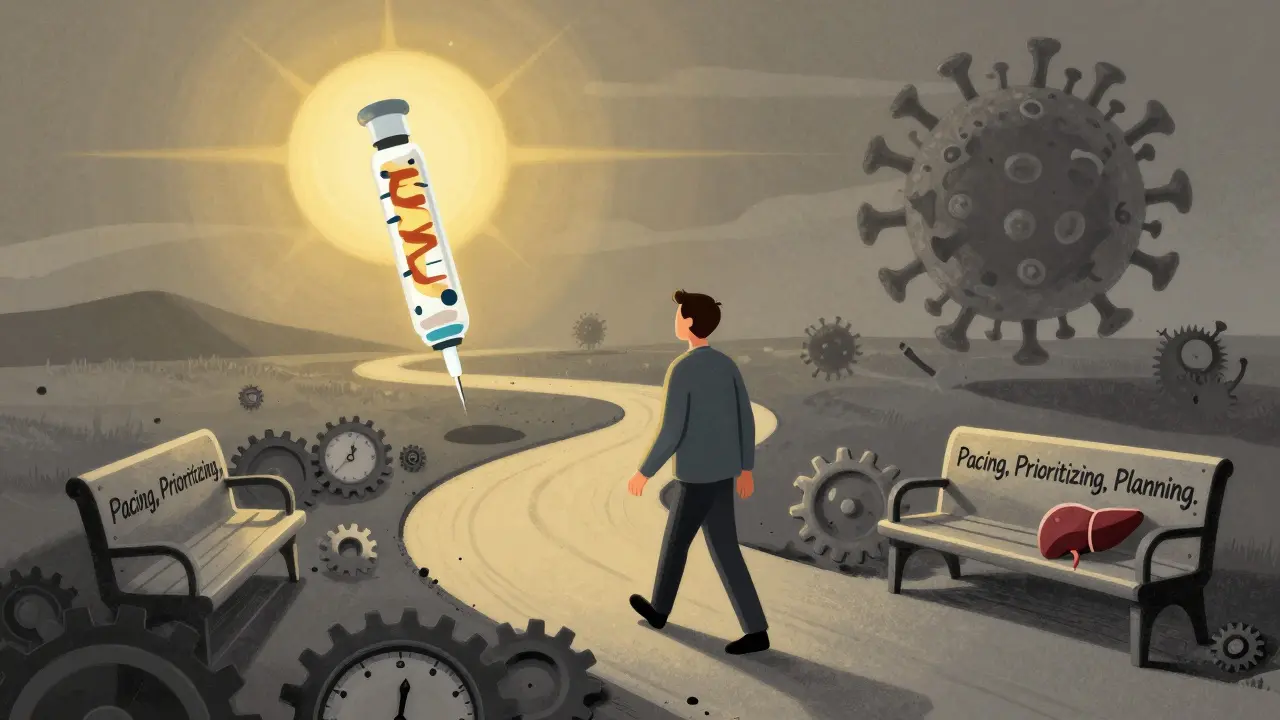
This is where people get stuck. You think you’re fine after two weeks. You go back to school, work, or the gym. Then-bam-you crash again. That’s normal. Fatigue from mono doesn’t follow a straight line. It’s bumpy. One day you feel okay. The next, you’re back in bed. Stanford’s Fatigue Management Clinic developed a simple method called "Pacing, Prioritizing, Planning." It’s not fancy, but it works:- Pacing: Start at 50% of your pre-illness energy level. If you used to work out for an hour, now you walk for 20 minutes. If you used to study for 4 hours, now you do 2.
- Prioritizing: Pick one or two things you must do each day. Let everything else wait.
- Planning: Schedule rest between activities. Try the 20-20-20 rule: 20 minutes of activity, 20 minutes of rest, 20 ounces of water.
What to Avoid
There are three big no-nos:- No contact sports. Not for 4 weeks. Not until your spleen is checked with an ultrasound. Even then, ease back in.
- No antibiotics. Unless you have a confirmed bacterial infection (like strep), they won’t help-and they’ll likely give you a rash.
- No pushing through fatigue. Rest isn’t laziness. It’s medicine.
Long-Term Risks and New Research
Most people recover fully. But mono isn’t over when the symptoms fade. Studies show people who’ve had mono have a 1.3 times higher risk of developing multiple sclerosis (MS) later in life. That sounds scary, but the absolute risk is still tiny-about 0.03%. Still, it’s why researchers are now looking at EBV as a possible trigger for MS. Exciting new developments are happening. In April 2023, Moderna started a Phase I trial for an mRNA vaccine against EBV. Early results show 92% of participants developed protective antibodies. If it works, it could prevent mono-and maybe even reduce MS cases in the future. Another breakthrough? Researchers at Mount Sinai found that high levels of IL-10 (a protein in your immune system) predict who will have long-term fatigue. That means one day, doctors might be able to tell you, "You’re at high risk for lingering fatigue," and start treatment early.Who Gets Mono-and Why Now?
Mono hits hardest between ages 15 and 24. College students are 3 to 5 times more likely to get it than non-students. Why? Close living quarters, shared spaces, stress, sleep deprivation, and social habits-all perfect conditions for EBV to spread. In the U.S., about 500,000 cases are diagnosed every year. The peak? September through January. Coincides with the start of school and holiday gatherings. That’s not random. It’s timing.Final Thoughts: Be Patient With Yourself
Mono is not a quick fix. It’s not something you can power through. It’s a reminder that your body needs time to heal-and that healing doesn’t follow a calendar. If you’ve got it, give yourself grace. Rest. Drink water. Avoid alcohol. Don’t rush back into your old routine. Your energy will come back, but only if you let it. And if you’re a parent, teacher, or coach-know this: when a teenager says they’re too tired to go to school or practice, they’re not faking it. They’re fighting a virus that’s still in their system. Patience, not pressure, is the best treatment.Is mononucleosis contagious?
Yes. Mononucleosis spreads through saliva, so kissing, sharing drinks, utensils, or toothbrushes can pass the Epstein-Barr virus. You can spread it even before you feel sick and for weeks after symptoms start. It’s not as contagious as the flu or a cold, but it does spread easily in close settings like dorms or sports teams.
How long does fatigue last with mono?
Fatigue usually lasts 2 to 4 weeks, but it can drag on for 2 to 6 months in some cases. Most people feel better within a month, but full energy recovery often takes longer. Pushing too hard too soon can cause setbacks. Gradual activity increases, with plenty of rest, lead to the best outcomes.
Can you get mono twice?
It’s very rare. Once you’ve had mono from Epstein-Barr virus, your body usually builds lifelong immunity. But the virus stays dormant in your body and can reactivate without causing symptoms. In very rare cases, especially with a weakened immune system, symptoms can return-but it’s not common.
Why do I get a rash if I take antibiotics for mono?
Antibiotics like ampicillin or amoxicillin trigger a non-allergic rash in 80-90% of people with mono. It’s not a true allergy-it’s a reaction between the virus and the drug. The rash is usually flat, red, and doesn’t itch much. It goes away on its own after stopping the antibiotic. This is why doctors avoid giving antibiotics unless they’re sure it’s strep throat.
When can I return to sports after mono?
You should avoid contact sports for at least 4 weeks after diagnosis. Even then, you need an ultrasound to confirm your spleen has returned to normal size. In severe cases, it can take up to 12 weeks. Returning too early risks spleen rupture, which is a medical emergency. Always get clearance from your doctor before getting back in the game.
Is there a vaccine for mononucleosis?
Not yet, but one is in development. Moderna started a Phase I clinical trial in April 2023 for an mRNA vaccine targeting Epstein-Barr virus. Early results showed 92% of participants developed protective antibodies. If successful, this vaccine could prevent mono and may even reduce the risk of related conditions like multiple sclerosis in the future.
Shanna Sung
January 4, 2026 AT 01:48Allen Ye
January 5, 2026 AT 01:39John Ross
January 5, 2026 AT 21:58Clint Moser
January 6, 2026 AT 20:48Ashley Viñas
January 8, 2026 AT 00:35Mandy Kowitz
January 9, 2026 AT 05:03Justin Lowans
January 11, 2026 AT 04:30Michael Rudge
January 11, 2026 AT 20:48Doreen Pachificus
January 12, 2026 AT 08:07Akshaya Gandra _ Student - EastCaryMS
January 12, 2026 AT 16:28en Max
January 13, 2026 AT 19:11Angie Rehe
January 15, 2026 AT 14:01Jacob Milano
January 16, 2026 AT 13:16Peyton Feuer
January 17, 2026 AT 19:29Cassie Tynan
January 18, 2026 AT 01:52