Most people taking SSRIs for depression or anxiety don’t think twice about adding a common painkiller or herbal supplement. But mixing these drugs can be dangerous-sometimes deadly. Serotonin syndrome isn’t rare. It’s underdiagnosed, misunderstood, and often triggered by combinations that seem harmless on the surface. If you’re on an SSRI like sertraline, escitalopram, or fluoxetine, and you’re also taking tramadol, St. John’s wort, or even certain cough syrups, you’re at risk.
What SSRIs Do-and Why That Matters
SSRIs work by blocking serotonin reabsorption in the brain. More serotonin floating around means better mood regulation. That’s why they’re prescribed for depression, OCD, and anxiety disorders. About 13% of U.S. adults take them. In 2022, over 276 million SSRI prescriptions were filled in America alone. The most common ones are sertraline (Zoloft) and escitalopram (Lexapro), both favored for their balance of effectiveness and side effects. But here’s the catch: serotonin isn’t just a mood chemical. It’s also involved in muscle control, body temperature, and nerve signaling. When too much builds up-especially when another drug adds to it-the system goes haywire. That’s serotonin syndrome.How Serotonin Syndrome Happens
Serotonin syndrome isn’t caused by taking too much of one SSRI. It’s caused by combining SSRIs with other substances that also boost serotonin. The body can’t handle the overload. Symptoms start mild-shivering, sweating, restlessness-and can spiral into muscle rigidity, high fever, seizures, and organ failure. The Hunter Criteria are used by doctors to diagnose it: if you have spontaneous clonus (involuntary muscle contractions) or inducible clonus with fever and sweating, it’s serotonin syndrome until proven otherwise. The risk isn’t theoretical. Between 2018 and 2022, the FDA received over 1,800 reports of serotonin syndrome linked to SSRIs. Two-thirds involved drug combinations. One Reddit user, 'AnxietyWarrior87', described being hospitalized after taking tramadol with sertraline: "My temperature hit 104.2°F. My legs wouldn’t stop jerking. I thought I was having a seizure."High-Risk Combinations You Need to Know
Not all drug interactions are equal. Some are red flags. Others are barely noticeable. Here’s what the data shows:- MAOIs (like phenelzine, selegiline): Never mix with SSRIs. This combo can be fatal. Mortality rates hit 30-50% when both are taken together. A 2023 review from EMCrit calls this the "worst possible interaction."
- Linezolid (antibiotic): A 2022 JAMA study found patients over 65 on SSRIs had nearly 3 times the risk of serotonin syndrome when taking linezolid. Even a short 5-day course can trigger it.
- Tramadol, dextromethorphan, pethidine: These opioids aren’t like morphine or oxycodone. They directly increase serotonin. Tramadol raises risk by nearly 5 times when paired with SSRIs. Dextromethorphan, found in many cough syrups, is just as dangerous.
- SNRIs (like venlafaxine, duloxetine): Combining an SSRI with an SNRI increases serotonin syndrome risk by 3.2 times. Many doctors still prescribe this combo for "treatment-resistant" depression, but it’s a gamble.
- St. John’s wort, tryptophan, buspirone: These aren’t prescription drugs, but they’re powerful serotonin boosters. A user on Drugs.com reported confusion and shivering after taking St. John’s wort with Prozac for just three days.
Meanwhile, morphine, codeine, oxycodone, and buprenorphine show little to no increased risk. If you need an opioid and you’re on an SSRI, these are safer choices.
Who’s Most at Risk?
It’s not just about what you take-it’s about how many things you take. The average American over 65 is on five or more medications. That’s a recipe for accidental overdose. In Toronto, where I live, nearly 22% of seniors take SSRIs. About 18% use opioids for chronic pain. That’s a huge overlap. Genetics also play a role. People who are CYP2D6 poor metabolizers-about 7% of the population-break down tramadol and other drugs slower. For them, even a standard dose can cause serotonin overload. A 2023 UCSF study found these individuals had 2.4 times the risk of serotonin syndrome when taking tramadol with SSRIs.What Doctors and Pharmacies Are Doing
The system is catching up. In 2021, the Canadian Pharmacists Association updated guidelines requiring pharmacists to screen for serotonin interactions during medication reviews. A 2023 study found pharmacist-led interventions reduced serotonin syndrome events by 47% in Medicare patients. Electronic health records now flag dangerous combos. Epic Systems’ 2022 update cut high-risk SSRI-opioid prescriptions by 32% across 200 U.S. hospitals. The FDA now requires all e-prescribing systems to include mandatory serotonin syndrome alerts by 2024. But the biggest defense is still you.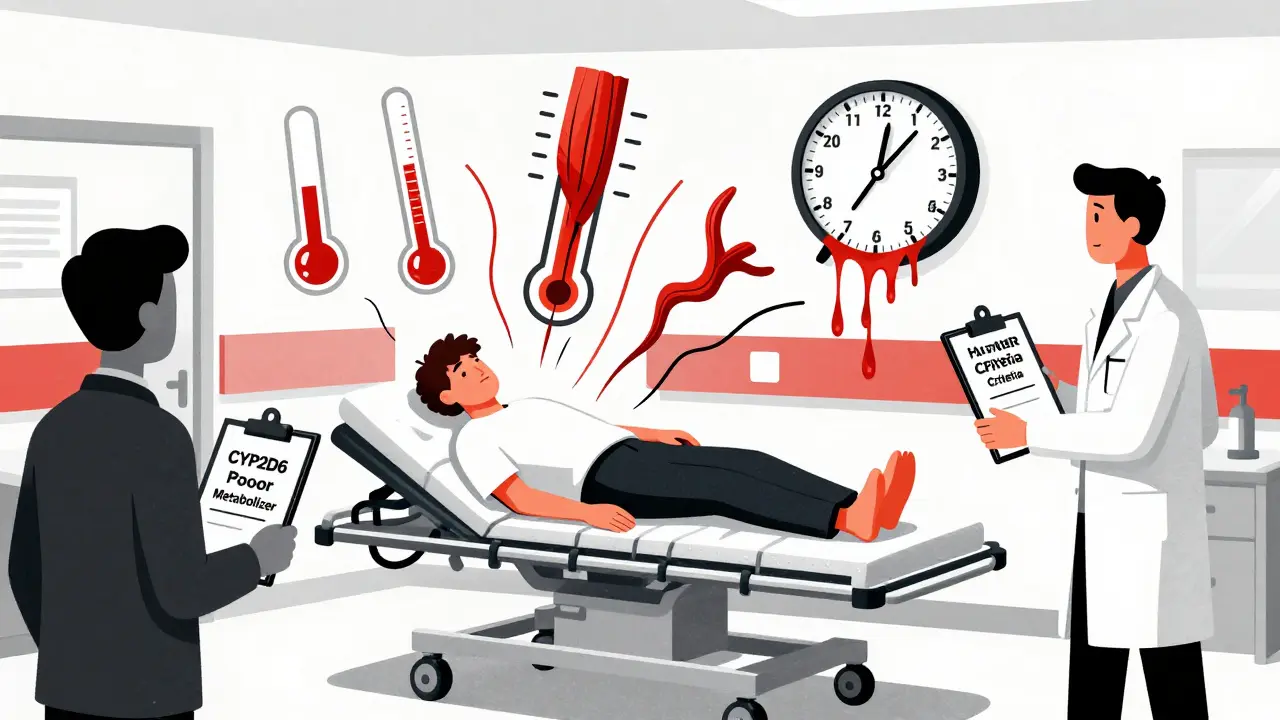
What You Should Do
If you’re on an SSRI, here’s your action plan:- Know your meds. Write down every pill, supplement, and OTC drug you take. Include cough syrup, sleep aids, and herbal products.
- Ask your doctor. Don’t assume it’s safe. Say: "I’m on an SSRI. Is this new medication safe to combine?" Especially if it’s for pain, cough, or sleep.
- Watch for the 5 S’s. Shivering, Sweating, Stiffness, Seizures (rare), Sudden confusion. If you notice any of these after starting a new drug, stop it and call your doctor-or go to the ER.
- Wait before switching. If you’re switching from an SSRI to an MAOI, wait at least 2 weeks. For fluoxetine, wait 5 weeks. Its metabolite sticks around for weeks.
- Don’t self-medicate. St. John’s wort, 5-HTP, or tryptophan supplements aren’t "natural" in a safe way. They’re potent serotonin boosters.
What to Do If You Think You Have Serotonin Syndrome
This isn’t something to wait out. Symptoms can worsen rapidly. If you’re shivering, sweating, confused, and your muscles feel tight-go to the ER. Tell them you’re on an SSRI and recently started a new medication. Don’t say "I think I have serotonin syndrome." Say: "I’m on sertraline and took tramadol yesterday, and now I’m shaking, hot, and stiff. I’m scared." Emergency treatment includes stopping the offending drugs, giving benzodiazepines to calm muscle spasms, and cooling the body. In severe cases, patients need ICU care. The average hospital stay costs over $28,000.The Bottom Line
SSRIs are safe when used alone. But they’re not safe when mixed with other serotonin boosters. The risk isn’t rare. It’s common. And it’s preventable. You don’t need to stop your SSRI. But you do need to be smarter about what you combine it with. Ask questions. Keep a list. Know the warning signs. Your life could depend on it.Can I take ibuprofen with an SSRI?
Yes, ibuprofen and other NSAIDs like naproxen are generally safe with SSRIs. They don’t affect serotonin levels. But both can increase bleeding risk, especially in older adults. Talk to your doctor if you’re on blood thinners or have stomach issues.
Is serotonin syndrome the same as an allergic reaction?
No. Allergic reactions involve the immune system and usually cause hives, swelling, or trouble breathing. Serotonin syndrome is a neurological toxicity-it’s about too much serotonin in your brain and spinal cord. Symptoms include muscle rigidity, fever, and involuntary movements. It’s not an allergy; it’s a drug interaction.
How long does serotonin syndrome last?
If caught early and the triggering drug is stopped, symptoms usually resolve within 24 to 72 hours. But if you’ve taken a long-acting SSRI like fluoxetine, it can take weeks for serotonin levels to normalize. In severe cases, symptoms can last longer and require intensive care.
Can I take melatonin with an SSRI?
Melatonin is generally considered low risk with SSRIs. It doesn’t directly increase serotonin like St. John’s wort or tramadol. But some studies suggest it may slightly enhance serotonin effects. If you’re prone to anxiety or tremors on SSRIs, start with a low dose (0.5-1 mg) and monitor for restlessness or sweating.
Why don’t more doctors warn patients about this?
Many don’t. Serotonin syndrome is under-taught in medical school. Doctors often mistake it for infection, heatstroke, or anxiety. Also, patients rarely mention OTC meds or supplements unless asked directly. The burden is on you to bring up everything you’re taking-including herbal teas and cough syrup.
Are there any new tests to diagnose serotonin syndrome?
Not yet for routine use. Diagnosis is still clinical-based on symptoms and medication history. But a blood test called SerotoninQuant is in phase 3 trials at Mayo Clinic and could be available by 2026. It measures serotonin levels in the blood, which may help confirm the diagnosis when it’s unclear.
Jon Paramore
December 20, 2025 AT 23:23SSRIs + tramadol is a classic pharmacokinetic trap. CYP2D6 inhibition + serotonin reuptake blockade = perfect storm. Even therapeutic doses can trigger clonus in poor metabolizers. The Hunter Criteria are gold standard-spontaneous clonus is diagnostic. No labs needed. Just history + exam. Most ER docs miss it because they’re looking for sepsis or neuroleptic malignant syndrome. Don’t wait for hyperthermia. Early intervention = benzodiazepines + discontinuation. No need for cyproheptadine unless severe.
Erika Putri Aldana
December 22, 2025 AT 21:00so like... if i take a little tramadol for my back and my zoloft... am i gonna turn into a human tremor? 😅
Swapneel Mehta
December 24, 2025 AT 17:03Thanks for laying this out so clearly. I’ve seen people dismiss this as ‘overblown medical fear’ but the data doesn’t lie. I’m on escitalopram and just started melatonin-glad to know it’s low risk. Still, I’ll keep an eye out for shivering or stiffness. Better safe than sorry.
Jerry Peterson
December 24, 2025 AT 17:56As someone who’s lived in three countries and seen how differently meds are prescribed, this is wild. In India, people just mix St. John’s wort with SSRIs like it’s tea. No one checks. No one warns. Here in the US, pharmacists grill you about every OTC pill. Both extremes are dangerous. Education needs to be global-not just regulatory.
Sandy Crux
December 25, 2025 AT 10:31...and yet, we’re told to ‘trust the science’-but the science is fragmented, siloed, and often financially incentivized. The FDA receives 1,800 reports? That’s the tip of the iceberg. How many asymptomatic cases go unreported? How many deaths are buried under ‘cardiac arrest’ or ‘septic shock’? The pharmaceutical-industrial complex thrives on ambiguity. You’re told to ‘ask your doctor’-but your doctor was trained by the same system that markets these combos as ‘safe.’
What’s truly dangerous isn’t the drugs-it’s the illusion of safety.
Peggy Adams
December 26, 2025 AT 16:00So let me get this straight... the government is forcing e-prescribing systems to add alerts by 2024... but they still let Big Pharma push drugs like tramadol and dextromethorphan without black box warnings? Coincidence? I don’t think so. They want you to think it’s your fault for mixing things... but they knew. They always knew.
Dan Adkins
December 27, 2025 AT 00:18It is imperative to underscore that the pharmacodynamic interplay between selective serotonin reuptake inhibitors and serotonergic agents constitutes a well-documented, potentially lethal, iatrogenic phenomenon. The prevalence of underdiagnosis stems not from clinical negligence per se, but from the pervasive epistemological gap in medical curricula regarding neuropharmacological synergies. Furthermore, the conflation of serotonin syndrome with other syndromes-such as neuroleptic malignant syndrome or acute intoxication-is not merely a diagnostic error, but a systemic failure in pharmacovigilance. It is therefore incumbent upon the prescriber to conduct a comprehensive medication reconciliation, inclusive of all nutraceuticals, and to educate the patient regarding the semantic distinction between ‘natural’ and ‘benign.’
The assertion that ibuprofen is ‘safe’ is misleading; while it does not modulate serotonin, it potentiates gastrointestinal bleeding via COX-1 inhibition, particularly in elderly populations on concurrent anticoagulants. Thus, the term ‘safe’ is semantically inadequate. One must instead evaluate risk-benefit ratios on an individualized, context-dependent basis.
Moreover, the assertion that melatonin is ‘low risk’ is empirically unsupported in longitudinal studies. The 2021 meta-analysis in the Journal of Clinical Psychopharmacology demonstrated a 27% increase in nocturnal serotoninergic activity when melatonin was co-administered with SSRIs in patients with comorbid insomnia and MDD. The absence of overt symptoms does not equate to absence of physiological perturbation.
Therefore, I must respectfully challenge the author’s conclusion that ‘you don’t need to stop your SSRI.’ The more prudent course is to reassess the necessity of the SSRI itself in light of polypharmacy burden, particularly in geriatric populations where polypharmacy is the norm rather than the exception.
Let us not mistake caution for fear. Let us not mistake education for alarmism. Let us instead embrace the rigor of clinical pharmacology as a non-negotiable pillar of patient safety.
Grace Rehman
December 28, 2025 AT 14:15lol so the solution is to not take anything ever? because apparently even breathing near someone who took a cough drop could be a death sentence? 🤡
you know what’s worse than serotonin syndrome? living in constant fear that your tea, your ibuprofen, your sleep aid, your damn vitamin D might kill you. we’re not lab rats. we’re people. and if you’re so scared of drugs, maybe don’t take them. but don’t scare the rest of us into paralysis.
also-st john’s wort is a herbal supplement. not a weapon. chill.
mukesh matav
December 28, 2025 AT 23:13My grandma was on sertraline and took dextromethorphan for a cold. She got really shaky for a day but didn’t go to the hospital. She just stopped the cough syrup and rested. She’s fine now. Maybe not every combo is a disaster. Listen to your body. Don’t panic. But don’t ignore it either.