SEARCH
Latex Allergy: Symptoms, Triggers, and How to Stay Safe
When your body reacts to latex, a natural rubber protein found in gloves, balloons, and medical devices. Also known as natural rubber latex allergy, it can trigger anything from itchy skin to life-threatening anaphylaxis. Unlike chemical allergies, this is an immune response to proteins in the rubber tree sap used to make latex products. It’s not rare—about 1 in 10 healthcare workers develop it, and people with spina bifida or frequent surgeries are at higher risk.
Common triggers include medical gloves, especially powdered ones that carry latex particles into the air, catheters, bandages, and even some toothbrushes or condoms. You don’t need to eat or inject latex to react—inhaling airborne particles from gloves or touching a latex balloon can be enough. Symptoms show up fast: redness, hives, runny nose, wheezing, or swelling. In severe cases, your throat closes, your blood pressure drops, and you need emergency epinephrine.
Many people don’t realize they have a latex allergy, because symptoms are often mistaken for irritation or eczema. If you’ve had unexplained reactions during dental visits, surgeries, or even after handling rubber bands, get tested. Skin prick tests and blood tests can confirm it. Once diagnosed, the only real treatment is avoidance. Hospitals and clinics now offer latex-free products, including synthetic gloves made from nitrile or vinyl, but you still need to speak up. Tell every doctor, nurse, and technician—even the one doing your annual checkup.
It’s not just about hospitals. Latex is in sneakers, sports equipment, and even some electronics. Reading labels helps, but not all products list it clearly. When in doubt, ask. Carrying a medical alert card or bracelet can save your life if you’re unconscious during an emergency. And if you’re allergic, your family should know how to use an EpiPen.
You’ll find real stories here—from nurses who switched careers after a reaction, to parents who learned to spot hidden latex in their child’s toys, to patients who avoided surgery complications by demanding latex-free protocols. These aren’t theoretical risks. They’re daily realities for millions. The posts below show you how to recognize the signs, navigate medical settings safely, and find alternatives that actually work—without guessing or risking your health.
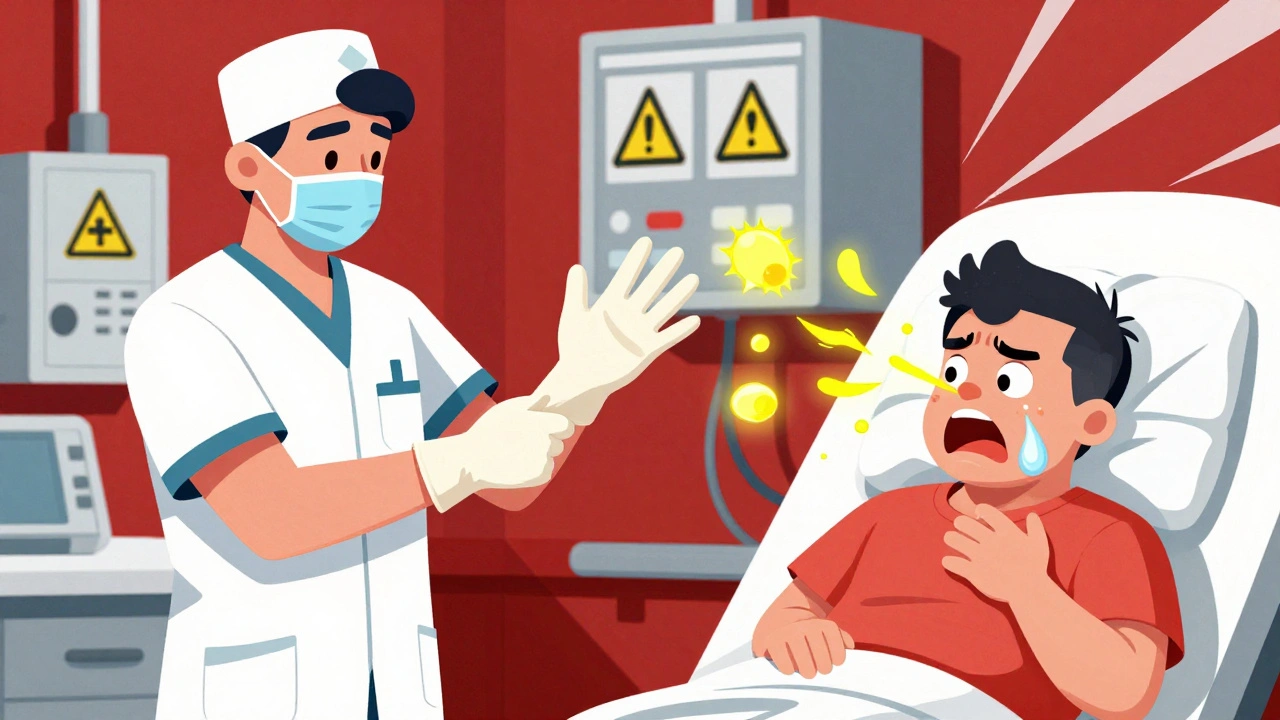
Latex Allergy: Cross-Reactivity and Workplace Management
Latex allergy can cause life-threatening reactions and cross-react with foods like bananas and avocados. Learn how workplace changes, like switching to nitrile gloves, have reduced cases-and what you need to do to stay safe.
Continue reading