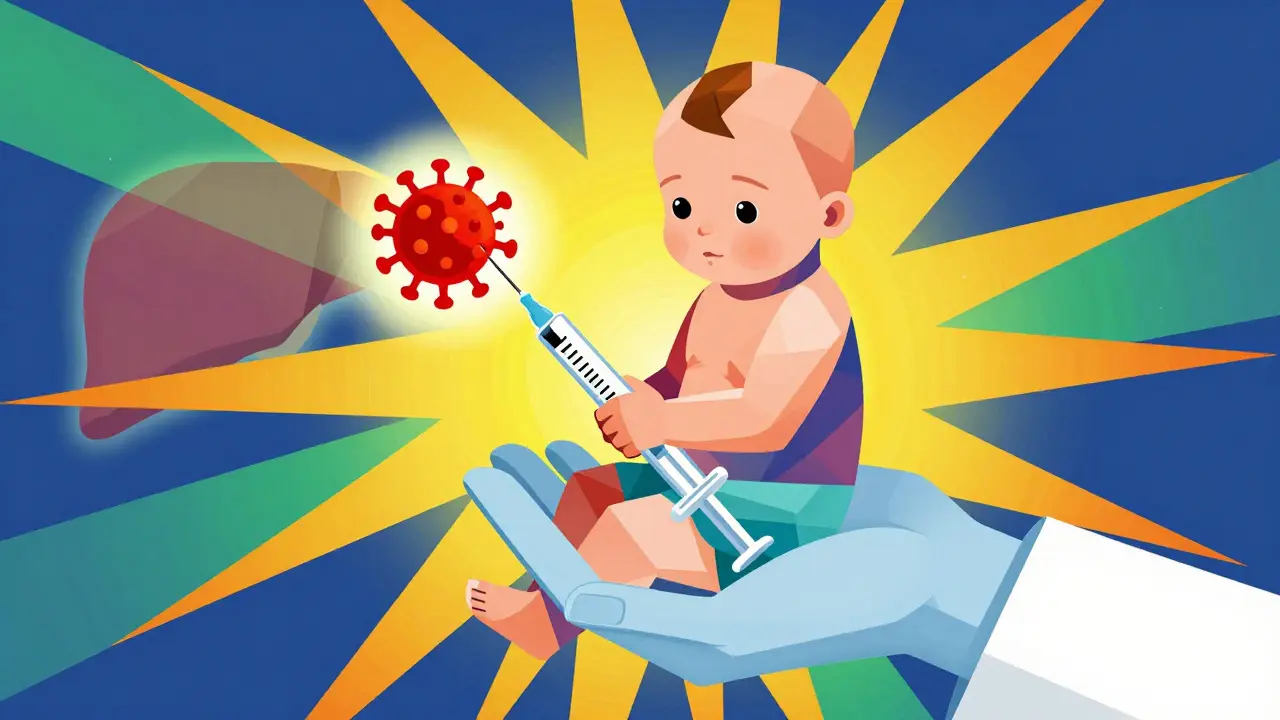
Getting vaccinated against hepatitis A and B isn’t just about avoiding a bad case of the flu. It’s about protecting your liver - a silent but vital organ that processes everything you eat, drink, and take. Hepatitis A and B can lead to serious liver damage, cirrhosis, or even liver cancer. The good news? Both are preventable with safe, effective vaccines. The tricky part? Knowing exactly when to get them, how many doses you need, and which schedule works best for your life.
Why Hepatitis Vaccines Matter More Than Ever
Since the 1990s, hepatitis B vaccination for infants has cut new infections in kids by over 95%. That’s not a guess - it’s CDC data. But adults? The story’s different. Only about one in three adults between 19 and 49 have completed the full hepatitis B vaccine series. And for people over 50? It’s worse - barely 12% are protected.
Hepatitis A doesn’t cause chronic disease like hepatitis B, but it spreads fast - through contaminated food, water, or close contact. Outbreaks still happen in restaurants, schools, and even among travelers. Hepatitis B, on the other hand, spreads through blood and bodily fluids. It’s why newborns get their first shot within 24 hours of birth. That birth dose is the single most important step in stopping the virus from becoming a lifelong infection.
The World Health Organization says 194 countries now include hepatitis B in their routine immunization programs. But if you’re not in one of those countries, or if you missed your shots as a kid, you’re still at risk. And the good news? It’s never too late to start.
Hepatitis B Vaccine: The Standard Schedule for Kids and Adults
For babies, the hepatitis B vaccine is a three-dose series:
- First dose: Within 24 hours of birth (as long as the baby weighs at least 2,000g and is medically stable)
- Second dose: At 1 to 2 months old
- Third dose: Between 6 and 18 months old - but not before 24 weeks of age
This schedule gives over 98% of babies long-lasting protection. Missing the birth dose? That’s a problem. Every day delayed increases the chance of chronic infection, especially if the mother has hepatitis B.
For adults who weren’t vaccinated as kids, the same three-dose schedule applies:
- First dose: Any time you start
- Second dose: One month later
- Third dose: Six months after the first
Brand matters here. Most adults get either Engerix-B or Recombivax HB. Both are safe, effective, and require three shots. But there are newer options.
Newer Hepatitis B Options: Faster, Fewer Shots
If you’re an adult and want to get done faster, Heplisav-B is a two-dose vaccine given one month apart. Clinical trials show it works better than the old three-dose series - especially for people over 40, diabetics, or those with weakened immune systems. It’s 90-100% effective at triggering protective antibodies.
But here’s the catch: Heplisav-B has a black box warning from the FDA for rare but serious heart issues. That means it’s not for people with a history of heart disease. Your doctor will weigh the risks.
Another newer option is PreHevbrio, a three-dose vaccine given at 0, 1, and 6 months - same timing as the old one. But it’s designed to trigger stronger immune responses in adults. It’s a good alternative if Heplisav-B isn’t right for you.
Hepatitis A Vaccine: Two Doses, Six Months Apart
Hepatitis A vaccine is simpler. Two shots. Minimum six months between them. First dose is given between 12 and 23 months of age. If you’re an adult and never got it, you can start anytime.
Two brands are common: Havrix and Vaqta. Both work the same way. No need to match brands for the second dose - mixing them is fine.
Why two doses? One shot gives some protection, but it fades after a year. The second shot boosts immunity for life. Most people who get both shots are protected for decades - possibly for life.
Twinrix: One Vaccine, Two Viruses
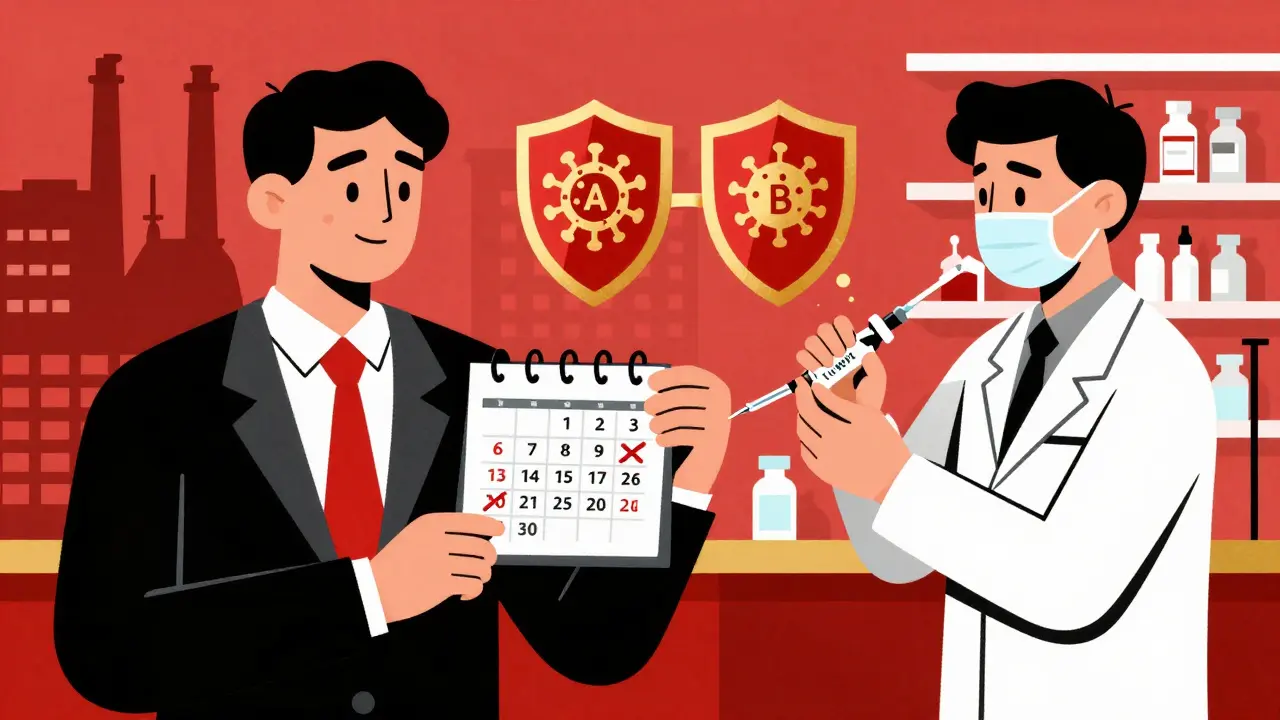
If you need protection from both hepatitis A and B - especially if you’re traveling, a healthcare worker, or have liver disease - Twinrix is the combination vaccine. It’s available in two schedules:
- Standard: Three doses at 0, 1, and 6 months
- Accelerated: Four doses - at 0, 7, and 21-30 days, with a booster at 12 months
The accelerated schedule is a game-changer for last-minute travelers. In 21 days, 94% of people have protective antibodies against both viruses. That’s way faster than getting separate vaccines. But you still need that fourth shot at 12 months to make sure it lasts.
Downside? Twinrix costs about $150-$180 per dose. Standalone hepatitis B shots are $60-$80. Insurance doesn’t always cover the combo - especially if you’re not in a high-risk group. Check your plan before you commit.
Special Cases: What If You’re Immunocompromised?
If you’re on dialysis, have HIV, or take immunosuppressants, your body doesn’t respond to vaccines the same way. You need higher doses or extra shots.
- For hemodialysis patients: Four doses of Engerix-B (2 mL each) at 0, 1, 2, and 6 months
- For people with HIV: Three doses of Recombivax HB (40 mcg/mL) at 0, 1, and 6 months
After the last dose, your doctor should check your blood to confirm you developed antibodies. If not, you may need another full series.
What Happens If You Miss a Dose?
You don’t have to start over. That’s a myth.
If you missed the second hepatitis B shot, just get it as soon as you can. The third shot still needs to be at least 8 weeks after the second and 16 weeks after the first. No need to restart.
For hepatitis A, if you waited 10 months between doses instead of 6, that’s fine. Just get the second shot. The immune system remembers.
For Twinrix, if you missed the booster at 12 months, get it as soon as possible. You’re still protected - but the booster ensures lifelong immunity.
Why So Many People Don’t Finish the Series
Here’s the ugly truth: 41% of adults who start the hepatitis B vaccine never finish it. Why?
- Insurance won’t cover it
- They forget
- They think one shot is enough
- They don’t feel at risk
One Reddit user, a 45-year-old with diabetes, said his insurer denied PreHevbrio and made him pay $450 out of pocket. Another said his clinic didn’t schedule follow-ups - so he just stopped going.
But here’s what works: standing orders in clinics. That means nurses can give the shot without waiting for a doctor’s order. In federally funded health centers, that boosted adult vaccination rates by 28%.
Pharmacies are another win. In 22 states, pharmacists can now give hepatitis vaccines. Early results show a 23% jump in adult vaccination rates just from that change.
Real-World Challenges: Birth Doses and Travelers
Even with all the science, gaps remain. In U.S. hospitals, 22% of newborns miss the birth dose because of staffing issues during night shifts. That’s 1 in 5 babies left vulnerable on day one.
Travelers using Twinrix’s accelerated schedule report great results - 87% felt protected for their trips. But 12% never came back for the 12-month booster. That’s a problem. Without it, protection may fade.
And in low-income countries, WHO is testing fractional doses - one-fifth of the normal amount - to stretch supply. Early results show it still works. That could change the game for millions.
What’s Next? The Future of Hepatitis Vaccines
Science isn’t standing still. Valneva is testing a new two-dose vaccine that protects against both A and B - potentially replacing Twinrix. The NIH is working on a single-dose hepatitis B vaccine using new technology. If it works, it could eliminate the whole scheduling headache.
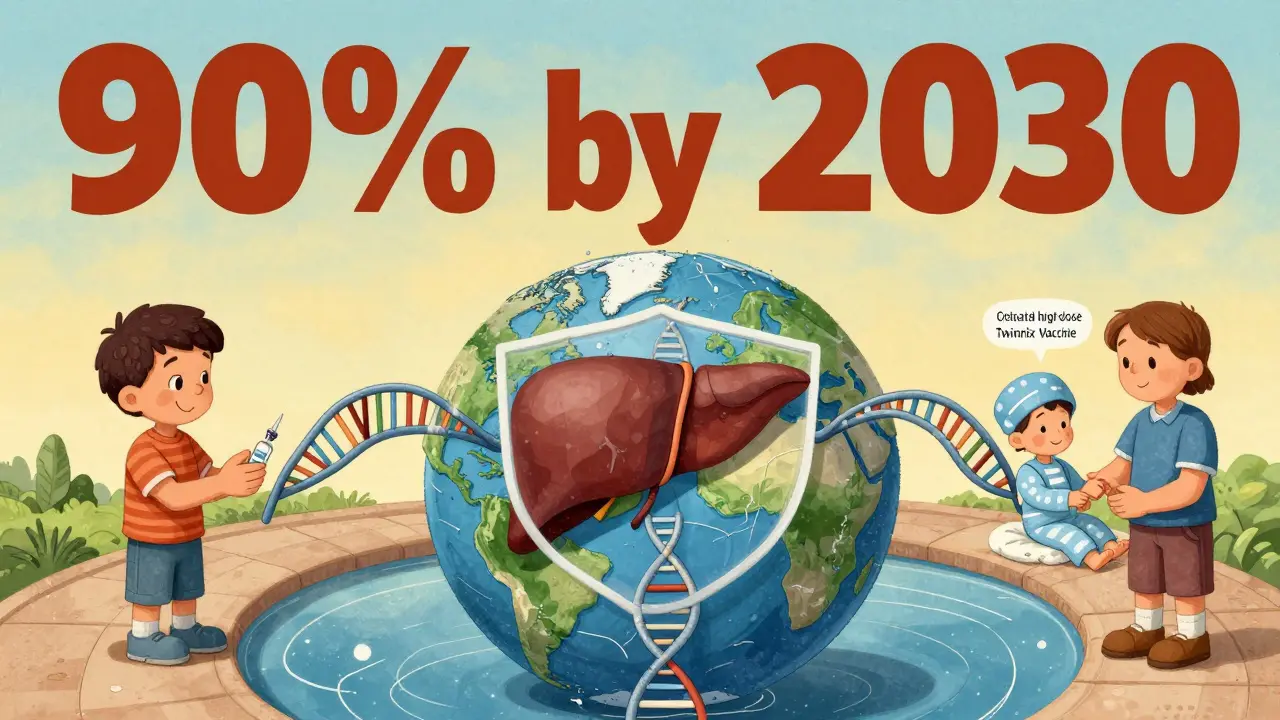
Right now, the CDC’s goal is to get 90% of adults vaccinated by 2030. That’s ambitious. But with pharmacy access, better insurance coverage, and simpler schedules, it’s possible.
Don’t wait for an outbreak. Don’t wait until you’re traveling. Don’t wait until you’re told you’re at risk. If you’ve never been vaccinated, start now. Your liver doesn’t ask for permission - it just keeps working. You owe it to yourself to protect it.
Do I need both hepatitis A and B vaccines?
It depends. Hepatitis A is common in areas with poor sanitation and can spread through food or water. Hepatitis B spreads through blood and bodily fluids - sex, needles, or from mother to baby. If you’re a traveler, healthcare worker, or have liver disease, you should get both. For most adults, getting both is the safest bet. Twinrix gives you both in one shot, but you can also get them separately.
Can I get hepatitis B from the vaccine?
No. The hepatitis B vaccine contains only a small piece of the virus - not the live virus. It can’t cause infection. The same goes for hepatitis A. Both vaccines are inactivated or recombinant, meaning they’re made in a lab without any infectious material. Side effects are mild: sore arm, low fever, fatigue.
How long does protection last after the hepatitis B vaccine?
For most people, protection lasts at least 30 years - and likely for life. Studies of people vaccinated as infants show they still have antibodies decades later. You don’t need routine boosters unless you’re immunocompromised. Even if antibody levels drop, your immune system remembers how to fight the virus.
Is the hepatitis A vaccine safe during pregnancy?
Yes. The hepatitis A vaccine is inactivated, meaning it doesn’t contain live virus. The CDC considers it safe during pregnancy, especially if you’re at risk - traveling to high-risk areas, working in healthcare, or have chronic liver disease. Talk to your doctor, but don’t delay if you need it.
What if I already had hepatitis A or B?
If you’ve had hepatitis A, you’re immune for life - no vaccine needed. For hepatitis B, a blood test can tell you if you’ve been infected or vaccinated. If you had it and recovered, you’re protected. If you’re still infected, the vaccine won’t help - but you need medical care. Never get the vaccine if you’re already infected with hepatitis B.
Can I get the hepatitis B vaccine if I’m over 60?
Absolutely. The CDC recommends hepatitis B vaccination for all adults up to age 59. But it’s also advised for adults 60+ who are at risk - including those with diabetes, chronic liver disease, or who live in close quarters. The vaccine still works, though response rates drop with age. If you’re over 60 and unsure, ask your doctor to check your antibody levels first.
eric fert
January 26, 2026 AT 14:11Okay but let’s be real - who actually gets all these shots? I got the first Hep B dose in 2018 and still haven’t gone back. My doctor said ‘just come back in a month’ and then I forgot. Now I’m just living on the edge like a true American. My liver’s probably judging me right now. 🤷♂️
Allie Lehto
January 28, 2026 AT 11:56it’s sad how we let big pharma decide what’s ‘necessary’... i mean, sure, vaccines are ‘science’... but what if our bodies just need to detox naturally? i’ve been eating turmeric and lemon water for 3 years and my liver feels like a mountain stream 🌿💧 #holistichealth
Dan Nichols
January 28, 2026 AT 13:59Heplisav-B has a black box warning? That’s not a feature it’s a red flag. If your heart can’t handle a vaccine you shouldn’t be getting it period. And why are we still using three-dose schedules in 2025? Lazy medicine. Fix the system not the dosage.
Renia Pyles
January 28, 2026 AT 20:09So let me get this straight - you’re telling me a 45-year-old diabetic had to pay $450 out of pocket for a vaccine that’s supposed to be routine? That’s not healthcare that’s extortion. If your liver fails because you couldn’t afford a shot, who’s to blame? The system. Not the person.
Rakesh Kakkad
January 30, 2026 AT 18:31Dear colleagues, I have reviewed the CDC guidelines with great care. The accelerated Twinrix schedule is scientifically sound, particularly for travelers. However, I must emphasize that the fourth dose at 12 months is not optional - it is the cornerstone of durable immunity. Many in India receive only three doses due to logistical constraints, but this compromises long-term protection. I urge all to adhere strictly to protocol.
Nicholas Miter
January 31, 2026 AT 08:29Just got my second Hep A shot last week - 10 months after the first. Didn’t panic. Didn’t restart. Just showed up. My nurse said ‘it’s fine’ and I believe her. Seriously, if you missed a dose, don’t stress. Just go back. Your liver will thank you. 🙏
Suresh Kumar Govindan
January 31, 2026 AT 11:12WHO recommends fractional doses? This is a Trojan horse. The West is exporting diluted vaccines to the Global South to reduce costs. The real goal? Population control. Don’t be fooled. Trust your body. Don’t inject foreign proteins.
Geoff Miskinis
February 1, 2026 AT 13:33Let’s not pretend the pharmaceutical industry is altruistic. Twinrix costs $180 a dose. Standalone shots are $70. The math doesn’t add up unless you’re profiting from complexity. The real solution? Single-dose vaccines. But that’s not profitable. So they keep us on schedules.
Ryan W
February 2, 2026 AT 01:38Why are we vaccinating everyone? I’m a proud American. My ancestors survived smallpox without shots. My liver’s tougher than your iPhone. If you’re not a needle-junkie or a traveler, stop wasting money. This is globalist overreach disguised as medicine.
Henry Jenkins
February 2, 2026 AT 13:50I’m 58 and got Hep B at 55 after my doctor insisted. Took the Heplisav-B. Two shots. Done. My antibody levels came back strong. But here’s the thing - I didn’t know about it until my pharmacist mentioned it. Why isn’t this common knowledge? Why do we have to hunt down info like it’s a secret? We need better public education, not just better science.
George Rahn
February 4, 2026 AT 10:32They call it a vaccine. I call it a biological handshake with the machine. We’ve traded ancestral immunity for corporate convenience. The liver doesn’t care about your insurance card. It remembers everything. Every chemical. Every dose. Every delay. And one day, it will whisper back - not with words, but with silence.
Karen Droege
February 5, 2026 AT 03:16I work in a clinic and I’ve seen it: people show up, get shot one, then vanish. So we started sending automated texts. ‘Hey, your second Hep B is due in 2 weeks.’ Boom. 30% more people come back. It’s not magic - it’s just remembering people are human. We don’t need more science. We need more reminders. And maybe a little kindness.
Shweta Deshpande
February 6, 2026 AT 19:51Just wanted to say thank you for this post! I’m from India and my son got all his shots on time - birth dose, then 1 month, then 6 months. We didn’t miss one. I know how lucky we are. Not everyone has access. But reading this made me feel like we’re doing something right. Keep sharing this info - it saves lives. 💛